


Co-Founder

A calculator app is a digital tool for performing calculations, eliminating the need for physical calculators. It provides instant, accurate results for everyday and specialized computations on mobile devices.
According to Statista, in the report titled "Distribution of iOS App Downloads by Category," published by Laura Ceci in February 2022, utility apps, including calculators, accounted for approximately 8% of all downloads on the Apple App Store.
The common types of calculator apps are basic calculators, scientific calculators, financial calculators, graphing calculators, and specialized calculators. Basic calculators perform arithmetic operations like addition and subtraction. Scientific calculators handle advanced functions such as trigonometry and logarithms. Financial calculators are used for budgeting, interest rate calculations, and loan planning. Graphing calculators plot equations and graphs. Specialized calculators address specific needs, such as BMI calculators for fitness or unit converters for engineering.
Core features of calculator apps include a user-friendly design for easy navigation, cross-platform compatibility for Android and iOS, and real-time calculations for instant accuracy. Customizable features like adjustable themes and layouts enhance usability for diverse needs.
The primary benefits of a calculator app are portability, cost-effectiveness, efficiency, and specialized functionality. Portability provides access to calculation tools on smartphones. Cost-effectiveness reduces the need for physical calculators, as many apps are free or affordable. Efficiency allows quick solutions for complex problems. Specialized features support tasks in fields like finance, engineering, and health.
Developing a calculator app involves defining the target audience and features, designing an intuitive interface, and writing code to integrate functionalities like real-time calculations and cross-platform compatibility. The app development cost depends on factors such as the complexity of features, platform compatibility, and the development team's expertise. Rigorous testing ensures functionality before deploying the app on platforms like Google Play or the App Store.
A calculator app is a mobile application designed to perform mathematical calculations directly on smartphones or other digital devices. It replaces physical calculators by offering the same functionality in a more portable and accessible format.
The primary purpose of a calculator app is to simplify calculations for everyday use and specialized tasks. It provides instant solutions to arithmetic operations, complex equations, and value conversions, enhancing productivity and saving time.
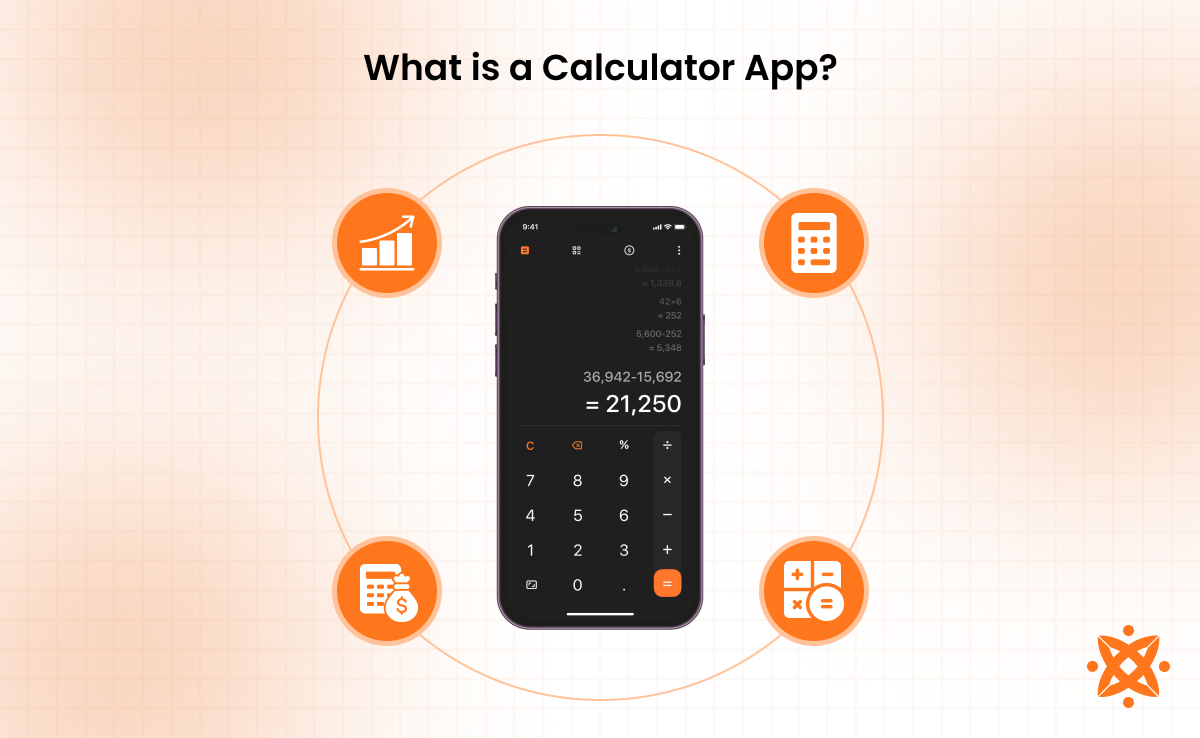
Calculator apps work by using algorithms and programming logic to process user inputs and produce accurate outputs in real-time. These apps often include predefined formulas and libraries to support various functions, from simple arithmetic to advanced computations.
The history of calculator apps began with the rise of personal computers and early mobile phones in the 1980s and 1990s. Early software-based calculators were basic in functionality, evolving alongside advancements in mobile technology to include scientific, financial, and graphing capabilities.
A calculator is a tool used to perform mathematical computations, from basic arithmetic to complex equations. It exists as a physical device or digital application and is widely used in education, business, and science. Calculators process user inputs using algorithms to provide accurate results in real-time.
The different types of calculator apps are basic calculator apps, scientific calculator apps, graphing calculator apps, financial calculator apps, engineering calculator apps, math problem solver apps, and specialized calculator apps.
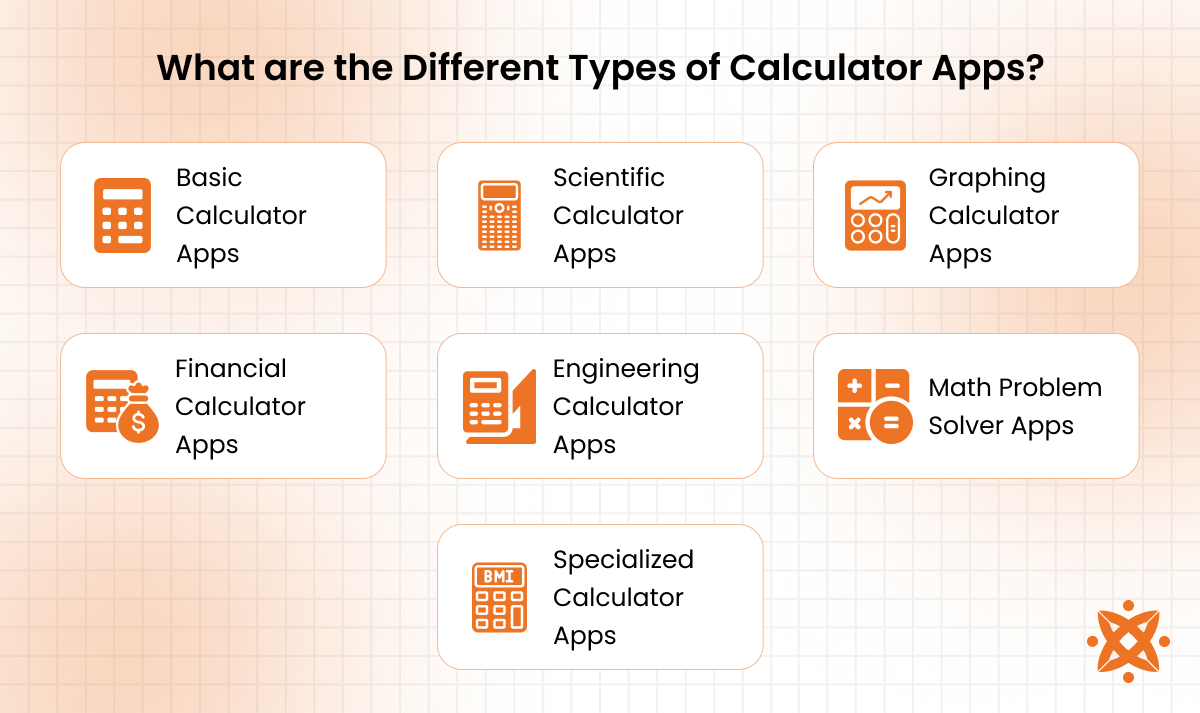
Basic calculator apps perform arithmetic operations like addition, subtraction, multiplication, and division. They are used by over 80% of smartphone users for everyday calculations, according to a study by Statista. Their purpose is to provide quick solutions for general calculations. They feature a simple interface and are suitable for everyday use.
Scientific calculator apps handle advanced mathematical functions, including trigonometry, logarithms, and exponential calculations. They are used in fields like science, engineering, and education. Key features include support for fractions, roots, and scientific notation.
Graphing calculator apps enable users to plot graphs, solve equations visually, and analyze data. Their purpose is to assist in solving complex problems in mathematics and science. These apps offer interactive graph plotting and multi-variable support.
Financial calculator apps assist with budgeting, loan calculations, and interest rate analysis. They are used by finance professionals and individuals managing finances. Common features include investment analysis and amortization schedules. According to Verified Market Reports, titled "Global Financial Calculator App Market," published in December 2024, the global financial calculator app market was valued at $2.22 billion in 2023 and is projected to grow to $6.19 billion by 2030, with a CAGR of 10.6%.
Engineering calculator apps solve equations, perform unit conversions, and calculate material properties. These apps support tasks in fields like civil and mechanical engineering. Features include integrals, derivatives, and other advanced tools.
Math problem solver apps provide step-by-step solutions for algebra, calculus, and geometry problems. They help students understand concepts and solve equations efficiently. Features include equation scanning and real-time solving.
Specialized calculator apps cater to niche needs, such as BMI calculators for health, currency converters for travel, or construction measurement tools. These apps are designed with pre-set formulas for specific tasks.
The most popular examples of calculator apps are Photomath, Mathway, Desmos, MyScript Calculator, Tip Calculator, Loan Calculator, and Hours & Minutes Calculator. These apps cater to a variety of needs, from solving complex math problems to assisting with financial calculations.
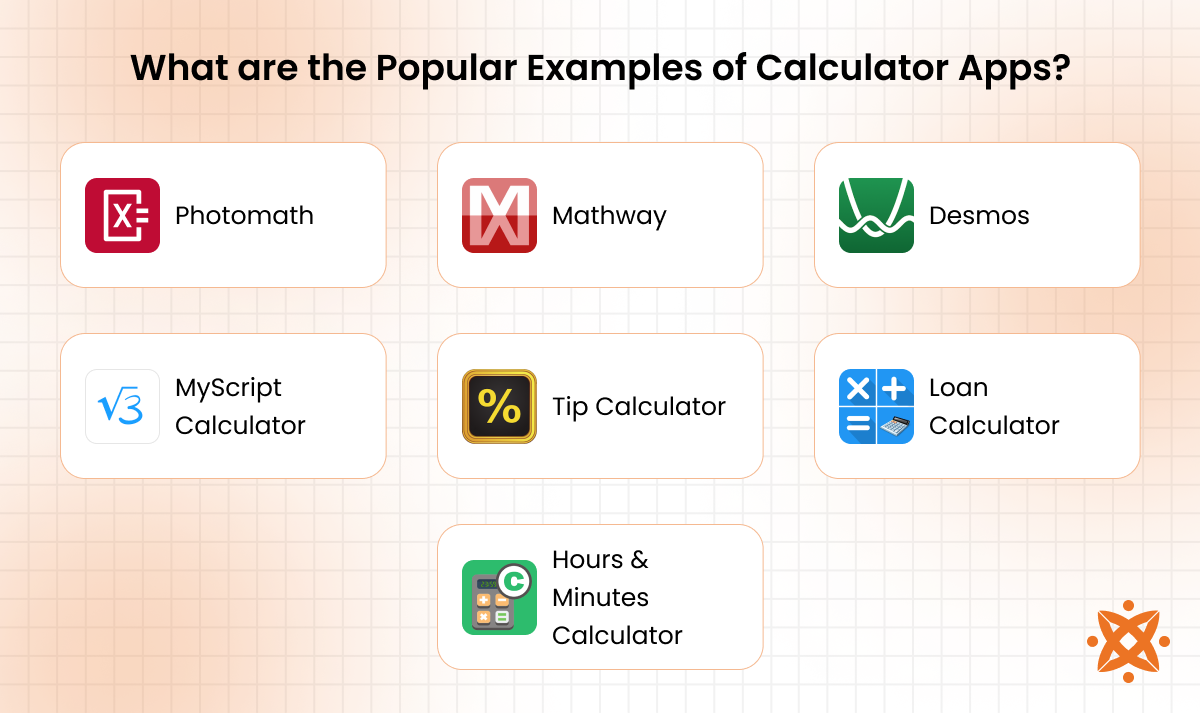
Photomath is a math problem-solving app that uses a smartphone camera to scan and solve mathematical equations. Its purpose is to assist students and professionals by providing step-by-step solutions for algebra, calculus, and more. It simplifies complex problems and serves as an educational tool for understanding math concepts.
Mathway is an all-purpose math problem solver designed to provide instant solutions to algebra, trigonometry, calculus, and statistics problems. It is widely used by students for homework assistance and learning, offering clear explanations to enhance comprehension.
Desmos is a graphing calculator app that allows users to plot graphs, analyze equations, and visualize mathematical concepts. It is commonly used in education to help students and teachers explore functions and data through interactive graphing features.
MyScript Calculator is a handwriting-based app that converts handwritten equations into digital text and solves them in real-time. Its purpose is to offer a natural and intuitive way for users to perform calculations, making it ideal for students and professionals alike.
Tip Calculator is a simple tool designed to calculate gratuity amounts and split bills among diners. Its purpose is to make quick and accurate calculations, often used in restaurants or dining scenarios to ensure fair bill distribution.
Loan Calculator is a financial app that helps users calculate monthly payments, interest rates, and loan amortization schedules. It is used by individuals and businesses to plan and manage loans efficiently, offering precise financial insights.
Hours & Minutes Calculator is designed to calculate time durations for tasks, projects, or schedules. It is commonly used in workplaces to track employee hours or in project management to determine task durations accurately.
The key features of a calculator app are basic arithmetic functions, advanced mathematical calculations, unit conversion capabilities, graphing and plotting tools, customizable settings, a user-friendly interface, and scientific calculator functions.
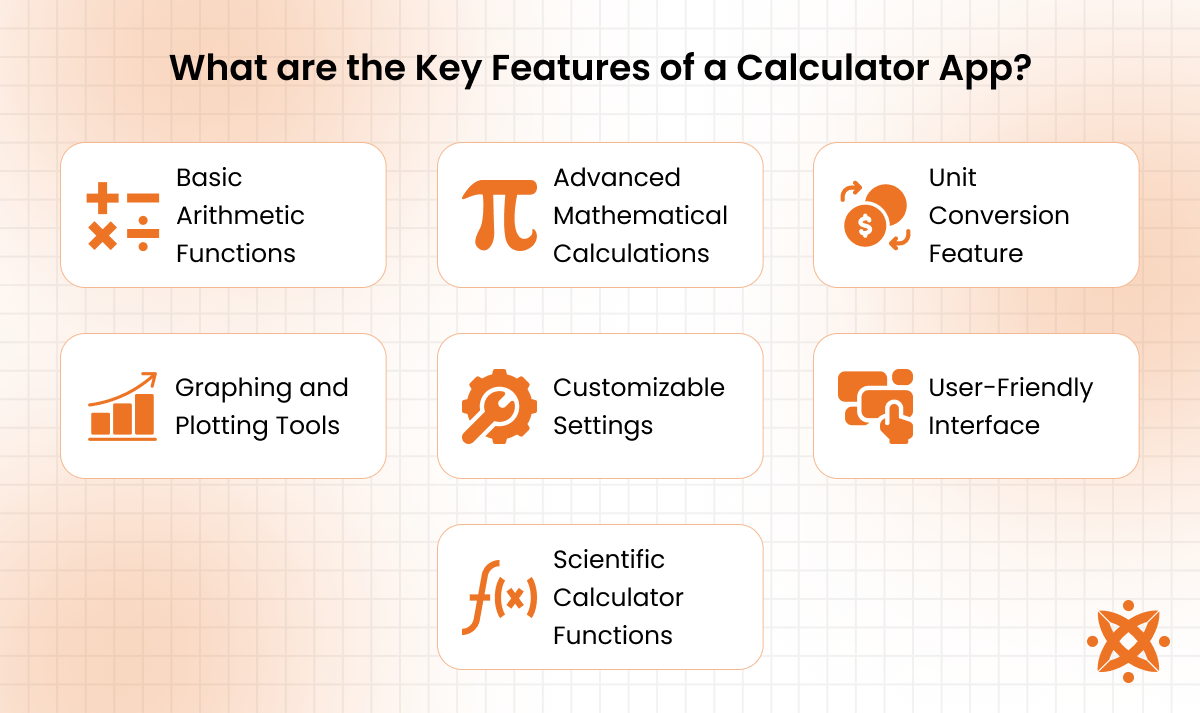
The key benefits of a calculator app are its ability to simplify calculations, provide accessibility, and improve efficiency through advanced features and portability.
To develop and design a calculator app for Android and iPhone, you need to focus on user interface design, functionality development, optimization for performance, and rigorous testing before deployment. The process involves creating an intuitive interface, implementing robust functionalities, and ensuring cross-platform compatibility for Android and iPhone.
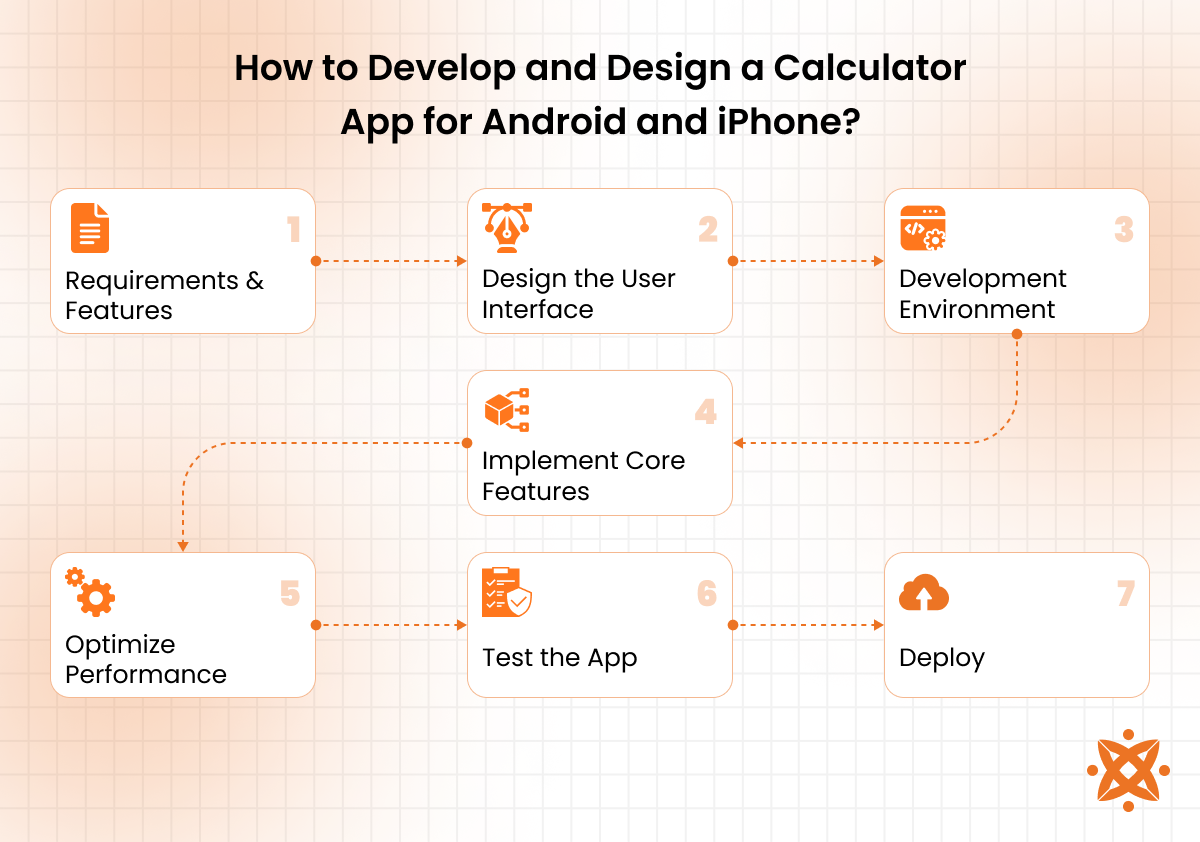
The Android calculator app development process involves using Android-specific tools and technologies to build a feature-rich, user-friendly application optimized for Android devices. The process focuses on implementing core functionalities like real-time calculations and ensuring compatibility across various devices and OS versions.
The Android calculator app design and development process is as follows:
The iPhone calculator app development process involves leveraging Apple’s tools and frameworks to create a seamless application tailored to iOS users. The process emphasizes delivering a high-quality user experience through a clean interface and robust functionalities.
The iPhone calculator app design and development process is as follows:
The cross-platform calculator app development process involves creating a shared codebase using frameworks like Flutter or React Native to build a single app that works seamlessly on both Android and iOS platforms. The process ensures consistent performance and user experience across devices.
The cross-platform calculator app design and development process is as follows:
The cost of developing a calculator app ranges from £8,000 and £12,000, depending on the app's complexity, platform, and features. Simple apps with basic functions like arithmetic calculations are at the lower end, while apps with advanced features such as graphing tools, unit conversion, or cross-platform compatibility cost more.
Factors influencing the cost include the type of functionalities, such as unit conversion or real-time calculations, and the use of frameworks like Flutter or React Native for cross-platform apps. Developer hourly rates, ranging from £30 to £150, also affect the overall app development cost.
To choose an app development company for a calculator app, consider factors such as expertise, experience, and communication to ensure a successful project.
Sign up now and get notified when we publish a new article!
Co-Founder
Hey there. I am Dhaval Sarvaiya, one of the Founders of Intelivita. Intelivita is a mobile app development company that helps companies achieve the goal of Digital Transformation. I help Enterprises and Startups overcome their Digital Transformation and mobile app development challenges with the might of on-demand solutions powered by cutting-edge technology.
