


Co-Founder

Meditation apps help users practice mindfulness, reduce stress, and improve focus through guided sessions and relaxation techniques. They provide structured programs with breathing exercises, progress tracking, and reminders to support consistent meditation habits.
According to the study titled "Efficacy of the Mindfulness Meditation Mobile App 'Calm' to Reduce Stress Among College Students" published on June 25, 2019, by JMIR Mhealth Uhealth, the Calm app significantly reduces stress and improves mindfulness in college students.
Common examples of meditation apps include Headspace, Calm, Smiling Mind, The Mindfulness App, and Aura. Headspace provides step-by-step meditation courses to help people reduce stress and sleep better. Calm offers guided meditation, breathing exercises, and bedtime stories to help users relax and sleep well. Smiling Mind has mindfulness programs created by psychologists to support mental health and emotional well-being. The Mindfulness App gives users guided meditation sessions and features to make daily mindfulness easier. Aura creates personalised meditation sessions to help users feel calmer and reduce stress.
The main features of a meditation app include guided meditation sessions, breathing exercises, and personalised mindfulness plans. Guided sessions help people relax, focus, and reduce stress by following simple meditation techniques. Breathing exercises teach users how to control their breathing to feel calmer and less anxious. Personalised mindfulness plans let users set goals and get meditation suggestions that fit their needs. Other useful features include tracking progress, daily reminders to meditate, connection with smart devices, and offline access so users can meditate anytime, anywhere.
The main benefits of a meditation app are reducing stress, improving sleep, and helping people focus better. Research shows that regular meditation lowers stress hormones, making people feel calmer and less anxious. It also helps the brain work better, making it easier to concentrate and think clearly. Meditation for sleep helps people relax before bed, leading to better sleep. According to the study titled "Practicing Mindfulness May Improve Children's Mental Health" published on October 11, 2023, by MIT News, children who used a mindfulness app for 40 days felt less stressed, lonely, and afraid.
Developing a meditation app includes research, design, coding, adding content, testing, and launching. The process begins by understanding what users need and studying similar apps to choose the best features. UI/UX design makes sure the app is easy to use and has a calming look and feel. Developers use Flutter, React Native, or Swift to make the app work on both Android and iPhone. The app includes guided meditations, breathing exercises, and progress tracking before going through testing to check for any issues. Once the app is available on Google Play and the App Store, regular updates help improve performance, add new meditation sessions, and keep users engaged.
Meditation apps are popular because they help people practice mindfulness and improve their well-being. According to the Statista report "Global Meditation and Mental Wellness App Market Forecast" published on April 18, 2024, by Laura Ceci, the global meditation app market generated $1.4 billion in revenue in 2023 and is expected to surpass $7.25 billion by 2033. These apps provide an accessible way to practice mindfulness, supporting users in building healthier routines for stress management and mental well-being.
A meditation app is a mobile app that helps people practice mindfulness through meditation sessions, breathing exercises, and relaxation techniques to improve mental well-being. The purpose of a meditation app is to make mindfulness easy, helping users reduce stress, focus better, and build a daily meditation habit. Users choose sessions based on their needs, like feeling less anxious or sleeping better, and follow simple guided instructions with calming sounds.
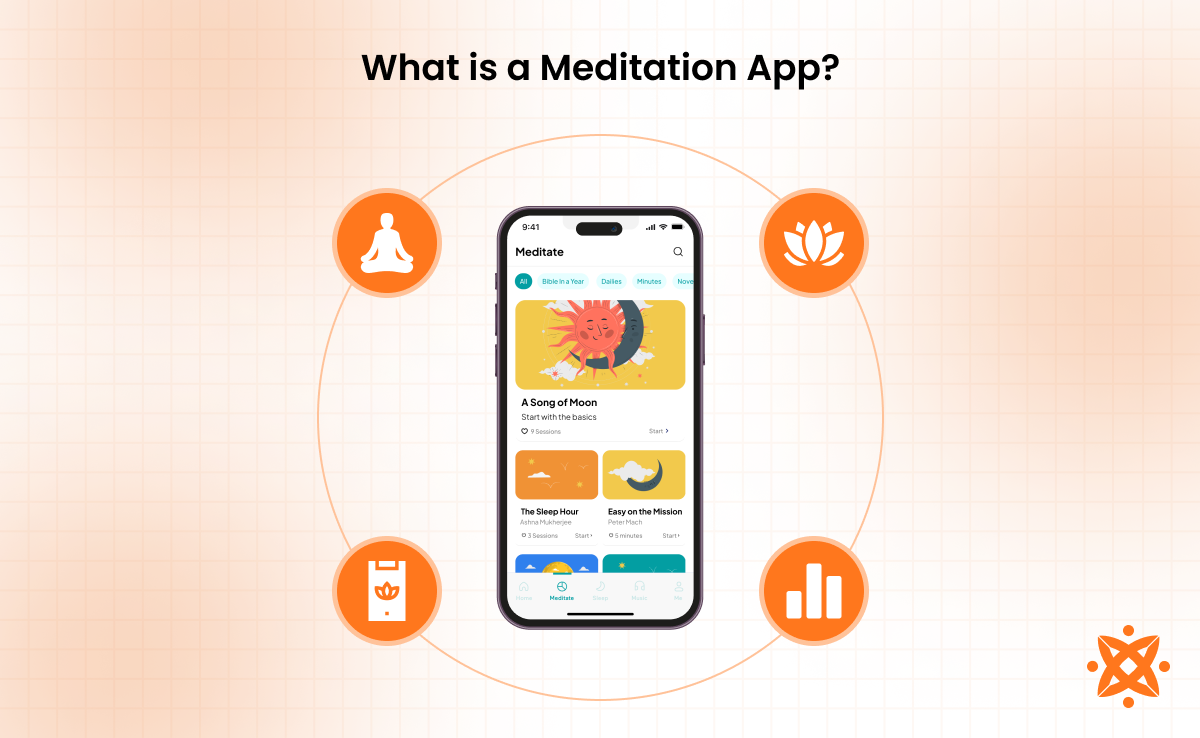
Features like progress tracking and reminders help users stay consistent with their practice. According to a report titled "Meditation and mental wellness apps - statistics & facts," published on July 2, 2024, by Laura Ceci, the global market for meditation and mental wellness apps was valued at over $533 million in 2022.
Meditation is a mental exercise that helps people focus, relax, and become more self-aware. The nine popular types of meditation are Mindfulness Meditation, Loving-Kindness Meditation, Transcendental Meditation, Guided Meditation, Zen Meditation (Zazen), Vipassana Meditation, Body Scan Meditation, Chakra Meditation, and Yoga Meditation. Each type uses different techniques, but all help improve mental clarity and emotional well-being.
The different examples of meditation apps are Headspace, Calm, Smiling Mind, The Mindfulness App, Simple Habit, and Aura.
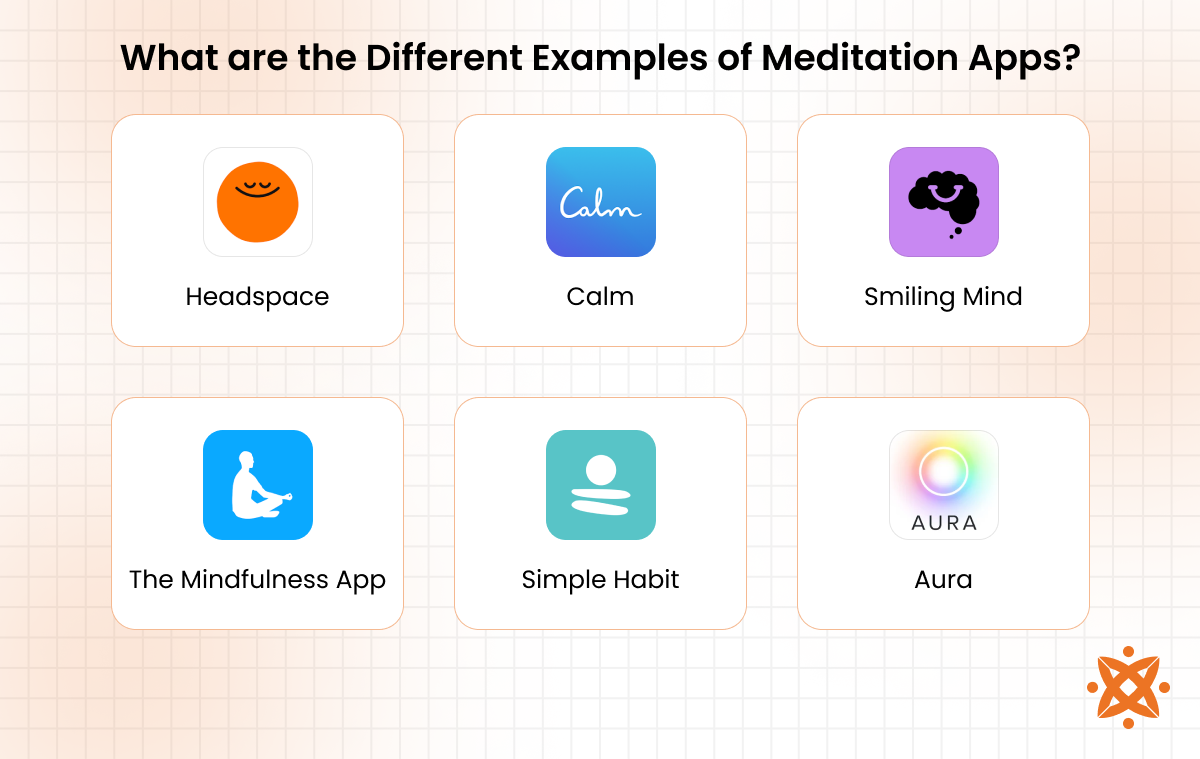
Headspace is a meditation app that provides step-by-step courses to help people reduce stress, improve focus, and sleep better. It offers guided meditation, breathing exercises, and relaxation techniques led by experts to help users build a daily meditation habit.
Calm focuses on guided meditation, breathing exercises, and sleep improvement through relaxation techniques. It includes sleep stories, ambient music, and mindfulness programs tailored for stress management and emotional well-being.
Smiling Mind is a meditation app created by psychologists to help people build emotional strength and mindfulness. It offers structured meditation programs for children, teenagers, and adults, making it easy for anyone to practice mindfulness.
The Mindfulness App provides both guided and silent meditation sessions with customizable options. It includes daily meditation reminders, structured programs, and progress tracking to help users stay on track.
Simple Habit is made for busy people who want quick meditation sessions. It offers five-minute guided meditations led by experts, making it easy to fit mindfulness into a daily routine.
Aura uses AI to create personalized meditation sessions based on user preferences. It includes mood tracking, breathing exercises, and guided meditations to help users manage stress and improve emotional well-being.
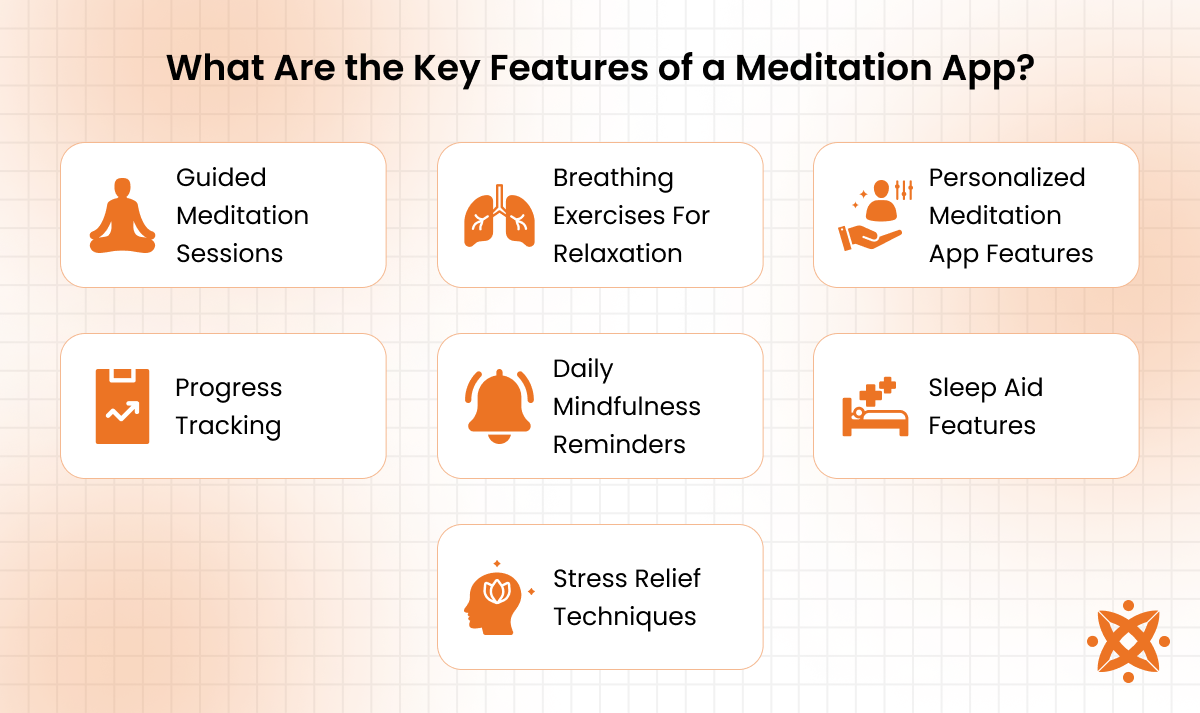
The key features of a meditation app are guided meditation sessions, breathing exercises for relaxation, personalized meditation app features, progress tracking, daily mindfulness reminders, sleep aid features, and stress relief techniques.
The key benefits of a meditation app are stress relief techniques, improved mental health, relaxation and focus improvement, anxiety and stress management, better sleep, mindfulness habit-building, and enhanced sleep through meditation techniques.
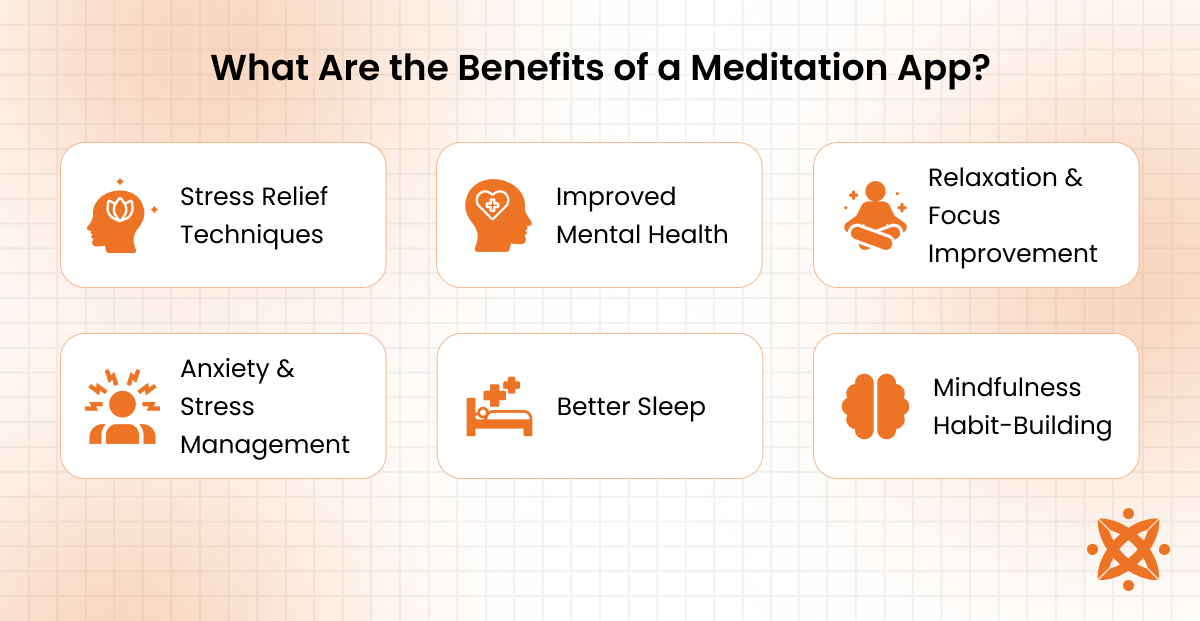
Stress Relief Techniques – Guided meditation and breathing exercises lower stress hormones and help users feel more calm and balanced.
Improved Mental Health – Regular mindfulness practice reduces negative thoughts, improves self-awareness, and supports emotional well-being.
Relaxation and Focus Improvement – Meditation enhances concentration and brain function, helping users stay focused and productive.
Anxiety and Stress Management – Mindfulness exercises help control emotions, reduce anxiety, and provide practical stress-relief techniques.
Better Sleep – Sleep meditation programs help the mind relax, making it easier to fall asleep and maintain a healthy sleep cycle.
Mindfulness Habit-Building – Features like progress tracking and reminders help users build and maintain a consistent meditation routine.
Enhanced Sleep with Meditation Techniques – Sleep-focused features, including guided meditations and ambient sounds, improve sleep quality and duration.
To develop and design a meditation app like Headspace for Android and iPhone, the process involves UI/UX design, functionality development, performance optimization, and testing before deployment. The app must include guided meditation sessions, breathing exercises, and progress tracking while ensuring a seamless experience across platforms.
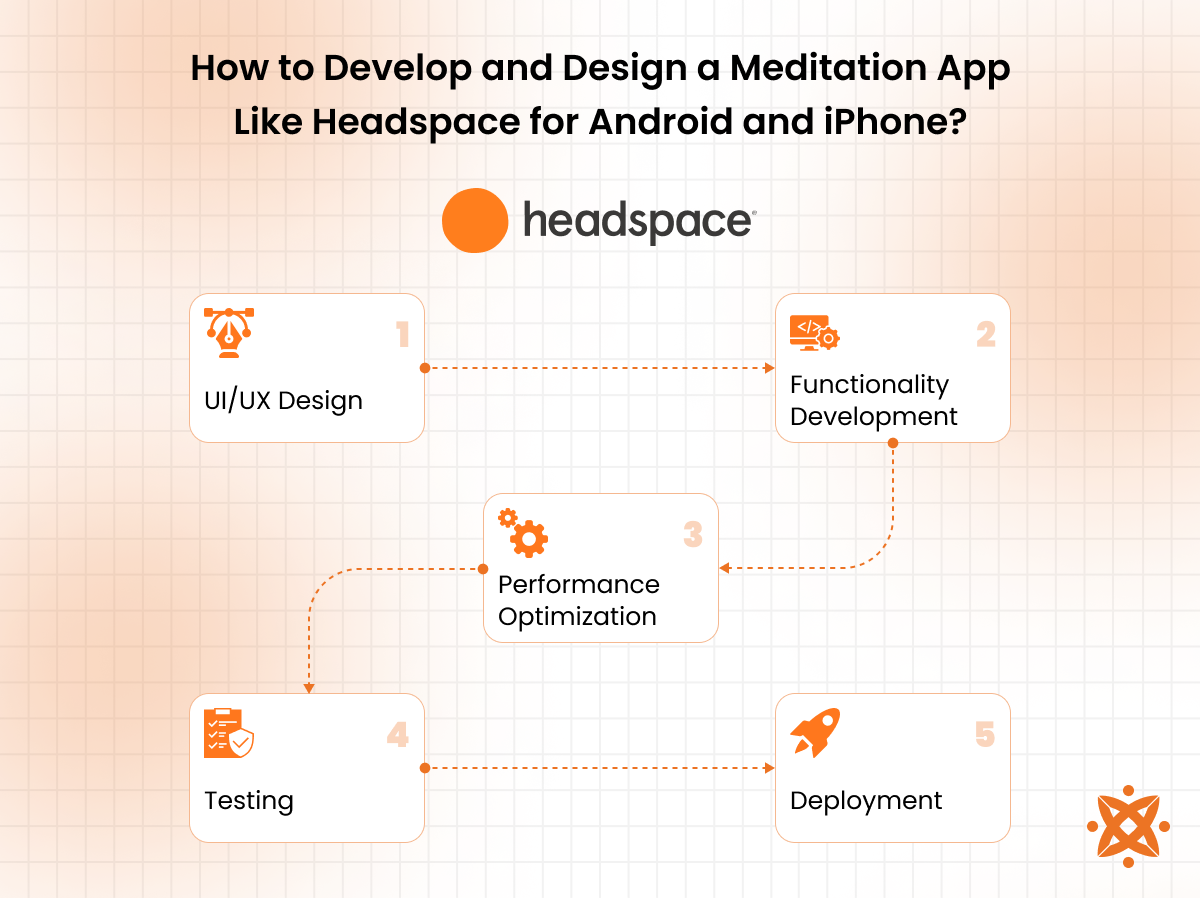
The Android meditation app development process focuses on building a responsive, feature-rich application optimized for Android devices. It involves UI/UX design, functionality development, performance optimization, and testing before deployment.
The Android meditation app design and development process is as follows:
The iPhone meditation app development process involves designing a high-performance, user-friendly application optimized for iOS devices. The process focuses on smooth UI interactions, core feature implementation, and App Store compliance.
The iPhone meditation app design and development process is as follows:
Cross-platform meditation app development ensures compatibility across Android and iPhone while reducing development time and costs. This approach leverages a shared codebase to maintain a consistent user experience on both platforms.
The cross-platform meditation app design and development process is as follows:
The cost of developing a meditation app ranges from £8,000 to £30,000, depending on its features, complexity, and the platforms it supports.
A basic meditation app with guided sessions and breathing exercises costs between £8,000 and £12,000. A medium-complexity app that includes personalized meditation plans, progress tracking, and sleep aid features costs between £15,000 and £30,000. A cross-platform meditation app built with Flutter or React Native typically costs £15,000 to £20,000 or more, depending on customization needs.
App development costs increase with AI-driven recommendations, cloud storage, and premium content subscriptions, adding to overall development expenses.
Choosing the right app development company ensures a high-quality meditation app with seamless functionality and user experience. Key factors to consider include:
The main difference between Headspace and Calm is their approach to mindfulness. Headspace follows a structured, course-based model designed to help users build a daily meditation habit, while Calm provides a more flexible experience with sleep stories, relaxation music, and stress-relief techniques.
Headspace focuses on daily meditation routines with step-by-step lessons, making it ideal for beginners who want a guided approach to mindfulness. Calm offers a wider range of content, including sleep aids, breathing exercises, and ambient sounds, making it better suited for users looking for a customizable and immersive experience.
While both apps provide guided meditation and stress management tools, Headspace emphasizes structured learning, whereas Calm is more focused on relaxation and sleep support.
Sign up now and get notified when we publish a new article!
Co-Founder
Hey there. I am Dhaval Sarvaiya, one of the Founders of Intelivita. Intelivita is a mobile app development company that helps companies achieve the goal of Digital Transformation. I help Enterprises and Startups overcome their Digital Transformation and mobile app development challenges with the might of on-demand solutions powered by cutting-edge technology.
