


Co-Founder

Flutter apps, built using the Flutter framework and the Dart programming language, offer an advanced solution for cross-platform development. With custom widgets and an integrated development process, these apps provide native performance, making them a preferred choice for developing responsive and scalable mobile applications across platforms.
According to a 2024 Statista report, Flutter is the most popular cross-platform framework, with over 2 million developers using it. In 2023, 46% of software developers used Flutter, contributing to over 500,000 Flutter apps published on the Google Play Store. Flutter boasts 160,000+ GitHub stars and high rankings on Stack Overflow, reflecting its growing adoption and community support.
The most notable examples of Flutter apps include the Google Ads app, Reflectly, and Alibaba.com, among others. These apps showcase the framework's ability to deliver high-performance Flutter apps with intuitive interfaces and efficient functionality, demonstrating its versatility in industries ranging from e-commerce to lifestyle.
The architecture of Flutter apps is centred around features like custom widgets, a high-performance rendering engine, and state management techniques. This architecture ensures responsive and scalable apps that cater to varied user needs, focusing on optimising the user experience and simplifying the development process.
The benefits of Flutter apps include faster development cycles through hot reload, consistent native performance, and robust Flutter community support. These advantages empower developers to create apps that are cost-effective, maintainable, and tailored for both Android and iOS platforms.
The Flutter mobile app development process involves designing for cross-platform compatibility, integrating state management techniques, and utilising tools provided by Flutter mobile app development companies. This process combines efficiency and innovation, ensuring high-quality apps that meet industry standards and user expectations.
A Flutter app is a mobile, web, or desktop application built using the Flutter framework. It uses the Dart programming language and Flutter's pre-built widgets to create high-performance, cross-platform apps with native-like experiences. These apps run on iOS, Android, and web platforms from a single codebase.
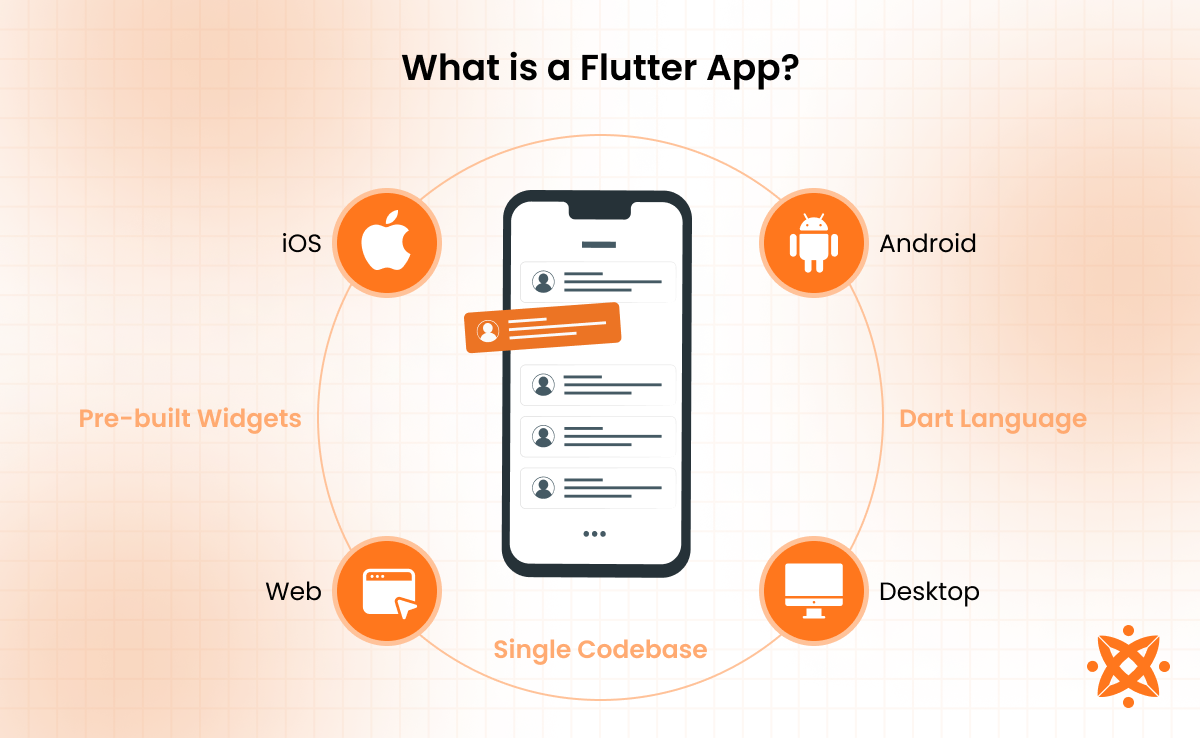
The purpose of a Flutter app is to provide an efficient way to build applications that run across multiple platforms without needing separate codebases. This reduces development time, costs, and maintenance while ensuring a consistent user experience across devices. Flutter apps are widely used for both consumer-facing and business solutions.
Flutter apps work by compiling Dart code into native machine code, which allows them to access platform-specific features. The Flutter framework uses its rendering engine, Skia, to directly draw the UI on the screen, bypassing native components and delivering smooth, responsive animations. This ensures high performance across iOS, Android, and web apps.
According to a report by Statista titled “Cross-platform mobile frameworks used by software developers worldwide from 2019 to 2023”, Flutter has become a popular choice among developers. Over 2 million developers use the framework. Approximately 30-46% of app developers prefer Flutter for cross-platform development. It has over 160,000 stars on GitHub and is frequently ranked as one of the most loved frameworks in surveys.
Flutter is an open-source framework for building high-performance, cross-platform applications. It enables developers to create visually rich, natively compiled mobile, web, and desktop apps from a single codebase, using the Dart programming language and a wide array of customisable widgets for responsive UIs.
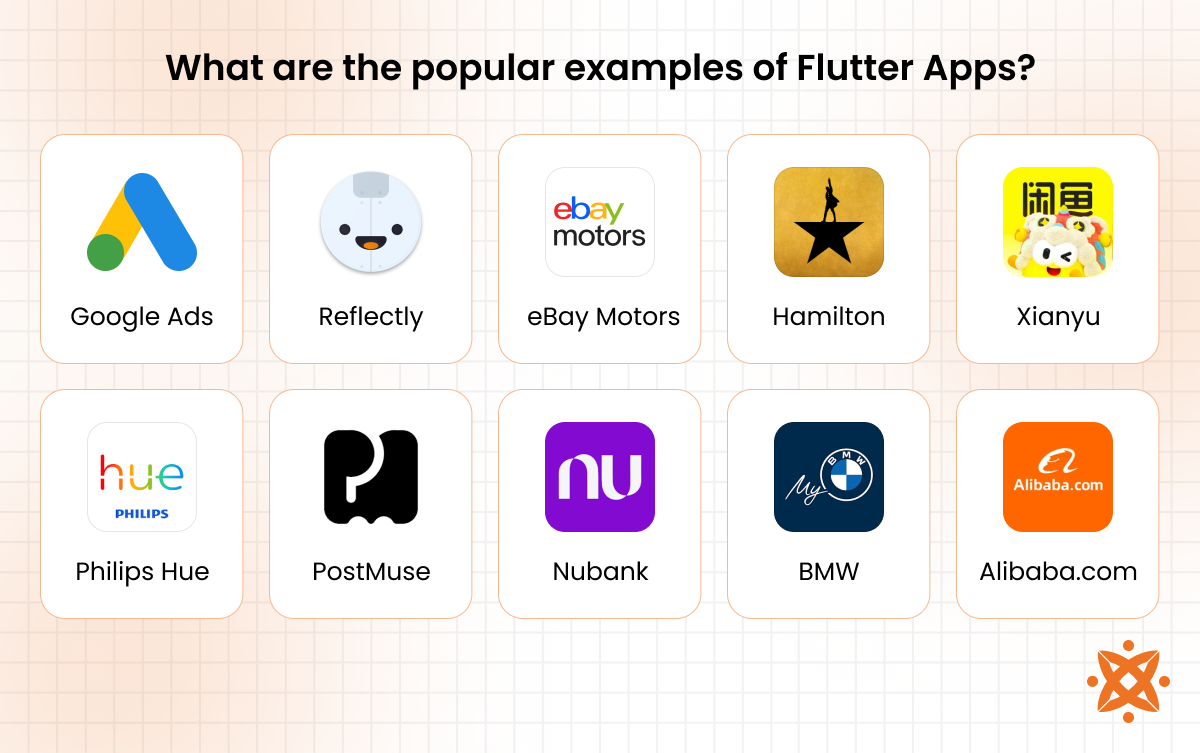
The most popular examples of Flutter apps are Google Ads, Reflectly, eBay Motors, Hamilton, Xianyu, Philips Hue, PostMuse, Nubank, BMW, and Alibaba.com. These apps showcase Flutter's versatility and capability to deliver high-performance, cross-platform experiences across various industries.
The popular examples of Flutter apps are as follows:
The Google Ads app is designed to help advertisers manage their campaigns while on the go. Using Flutter, the app delivers a smooth, responsive interface that allows users to monitor their campaigns, modify budgets, and make immediate adjustments from their mobile devices. This mobile-first approach ensures that users completely control their Google Ads campaigns, no matter where they are.
With Flutter's ability to provide native-like performance, the app supports advanced features such as real-time notifications, instant report generation, and integration with Google Ads services. This ensures advertisers receive updates and make changes immediately, maintaining optimal campaign performance across Android and iOS. The app's consistent UI design and performance across platforms make it a great example of Flutter's potential for mobile app development.
Reflectly is a personal journaling app that uses artificial intelligence to help users track their daily moods, reflections, and mental health. Built with Flutter, Reflectly offers a visually engaging and smooth interface, guiding users through various journaling prompts designed to enhance their emotional well-being. Its sleek design and intuitive navigation allow users to track their thoughts and moods over time easily.
The app also uses Flutter's capabilities to create a highly responsive platform experience. Whether on iOS or Android, users enjoy a top-notch experience with fast loading times and smooth animations. Reflectly's use of Flutter allows it to deliver a consistent and enjoyable journaling experience that promotes mindfulness and helps users improve their mental health with AI-driven insights.
eBay Motors is a dedicated platform for buying and selling vehicles, parts, and accessories. With Flutter, eBay Motors offers an intuitive experience that allows users to easily search listings, manage their purchases, and communicate with sellers. The app supports various features such as photo uploads, messaging, and payment options, providing a comprehensive solution for buying and selling vehicles and car-related products.
Flutter's cross-platform capabilities ensure that the eBay Motors app works effortlessly on both iOS and Android devices, offering a consistent and responsive UI across platforms. Whether users are browsing car listings or managing their transactions, the app's performance remains fast and smooth, ensuring a satisfying experience for users in the automotive marketplace. Using Flutter, eBay Motors maintains high-quality performance while reducing development time and costs.
The Hamilton app is dedicated to the fans of the Broadway musical "Hamilton," offering exclusive content, ticket-purchasing options, and more. Built with Flutter, the app provides a multimedia-rich experience, allowing users to access behind-the-scenes footage, interviews, and special updates related to the musical. The app's engaging interface, powered by Flutter, ensures a smooth and enjoyable user experience.
The app's design includes features like personalised notifications, real-time show availability updates, and easy ticket purchasing navigation. Flutter enables the Hamilton app to deliver high-quality performance while maintaining a visually appealing, responsive interface across iOS and Android platforms. With its robust functionality and engaging features, the Hamilton app is an excellent example of how Flutter is used to build entertainment apps with native-like performance.
Xianyu, also known as Alibaba's second-hand marketplace, is a platform for users to buy and sell used goods in China. Built with Flutter, Xianyu delivers a fast and smooth browsing experience, enabling users to explore thousands of listings easily, communicate with sellers, and manage their transactions. The app offers key features like item categorisation, photo uploads, and in-app messaging, which are necessary for any marketplace platform.
Flutter's cross-platform capabilities allow Xianyu to maintain a consistent user experience across both Android and iOS devices. The app's performance is optimised to ensure fast load times and smooth animations, allowing users to navigate product listings and interact with sellers smoothly. Xianyu's reliance on Flutter helps the platform deliver a native-like experience while simplifying the development process, making it a prime example of Flutter's effectiveness in the e-commerce sector.
The Philips Hue app controls smart lighting systems, allowing users to customise lighting settings, create moods, and manage their bulbs remotely. The Flutter app provides an intuitive interface for controlling various lighting configurations, including dimming and colour adjustments, from mobile devices. Users also integrate the app with other smart home systems for enhanced control.
Flutter's performance optimisations ensure that the Philips Hue app works effortlessly on both iOS and Android, maintaining a smooth user experience when switching between devices. The app's responsiveness, combined with the ease of controlling multiple lighting setups, makes it a standout example of how Flutter is used to create smart home applications that offer both convenience and high performance. The app is a testament to Flutter's ability to manage real-time interactions intuitively and efficiently.
PostMuse is a popular app for designing Instagram posts, offering users a wide range of customisable templates, fonts, and effects. Built with Flutter, PostMuse delivers a responsive, visually appealing interface that enables users to create and edit social media content effortlessly. The app's smooth functionality allows for quick design adjustments and real-time previews, making it ideal for Instagram enthusiasts.
Flutter's ability to provide native-like performance ensures that PostMuse runs smoothly across iOS and Android devices, offering a consistent user experience. Its simple yet powerful design tools and Flutter's high-performance rendering engine allow users to create professional-quality social media content. This app highlights Flutter's potential in the creative space, providing an intuitive design tool for users who need to create eye-catching posts quickly.
Nubank is a leading digital bank in Latin America, offering a range of financial services such as credit cards, loans, and payments. The Nubank app, built with Flutter, enables users to manage their financial activities efficiently, including tracking expenses, paying bills, and applying for loans. The app's clean and intuitive interface makes it easy for users to access their bank accounts and perform transactions securely.
Flutter's cross-platform capabilities ensure that Nubank's app delivers a consistent and fast user experience across both Android and iOS. By using Flutter, Nubank has created a smooth banking experience with high performance, helping users easily manage their finances. The app's focus on security and usability, combined with Flutter's optimisation for mobile performance, makes it a great example of fintech innovation.
The BMW app is designed for BMW vehicle owners, allowing them to manage their cars remotely. Users check fuel levels, lock and unlock doors, and even track the vehicle's location. The app's integration with various BMW services ensures an impressive user experience, giving drivers complete control of their vehicles from the palm of their hands.
Using Flutter, the BMW app delivers a high-performance, responsive experience on both Android and iOS platforms. Flutter's ability to compile code into native machine code ensures that the app runs efficiently, with quick load times and smooth interactions. This app demonstrates Flutter builds apps that interact with hardware and external systems, giving users real-time control over their vehicles.
Alibaba.com is a global e-commerce platform that connects buyers and suppliers for wholesale trade. The Alibaba app, built with Flutter, provides a fast and efficient way for users to browse products, communicate with suppliers, and place orders. With Flutter's cross-platform capabilities, the app delivers a consistent shopping experience across both Android and iOS.
The app's design comprises intuitive navigation, product categorisation, and in-app messaging, enabling users to easily manage their purchases. Flutter ensures that the Alibaba app runs smoothly with quick load times and high responsiveness, even when handling a large amount of product data. By using Flutter, Alibaba.com maintain a high-quality mobile experience for millions of global users across different devices.
The main features of Flutter app architecture are fast development, reactive UI, a single codebase, high-performance rendering, and modularity. These features enable Flutter to deliver highly efficient and scalable applications across multiple platforms, making it a popular choice for cross-platform app development.
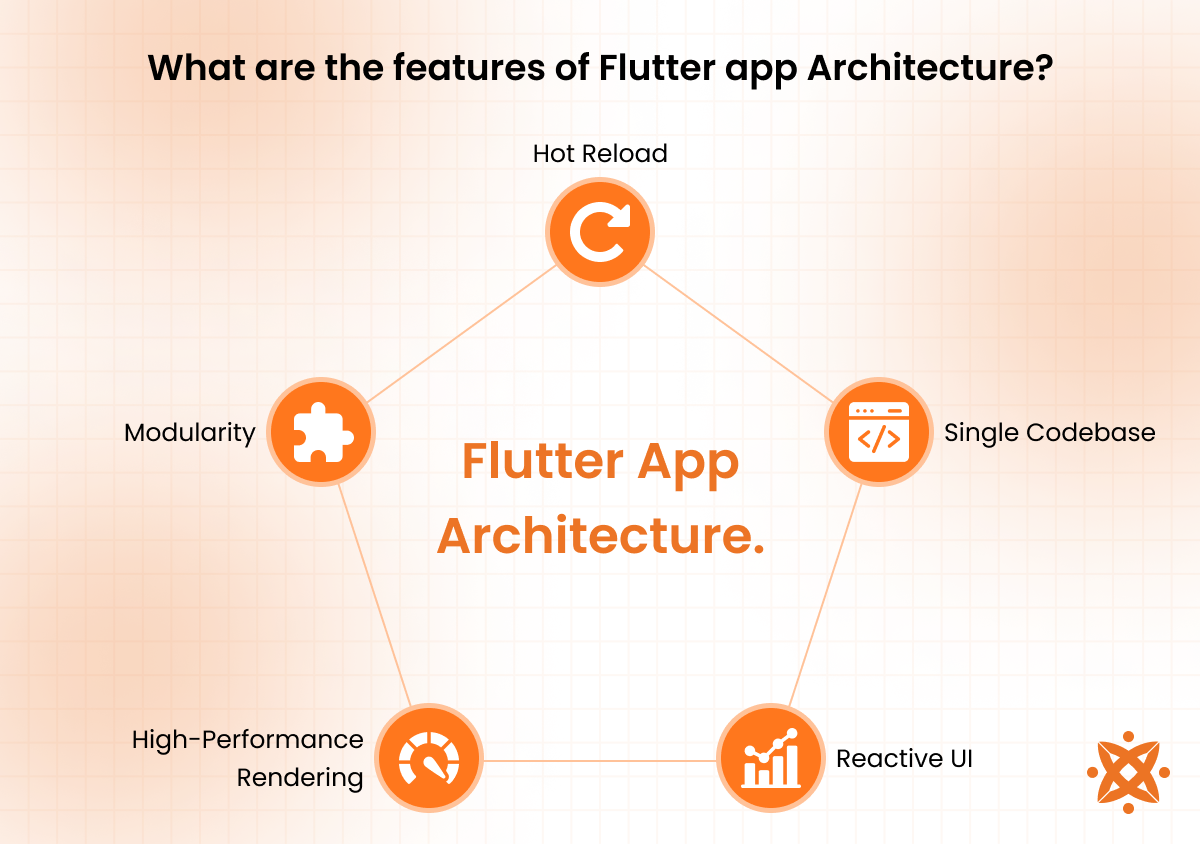
The main features of Flutter app architecture are as follows:
The main benefits of Flutter apps are cross-platform development, high-performance Flutter apps, native performance, responsive and scalable apps, custom widgets, strong community support, and the use of the Dart programming language. These benefits make Flutter a powerful tool for developers building modern, high-quality apps across multiple platforms.
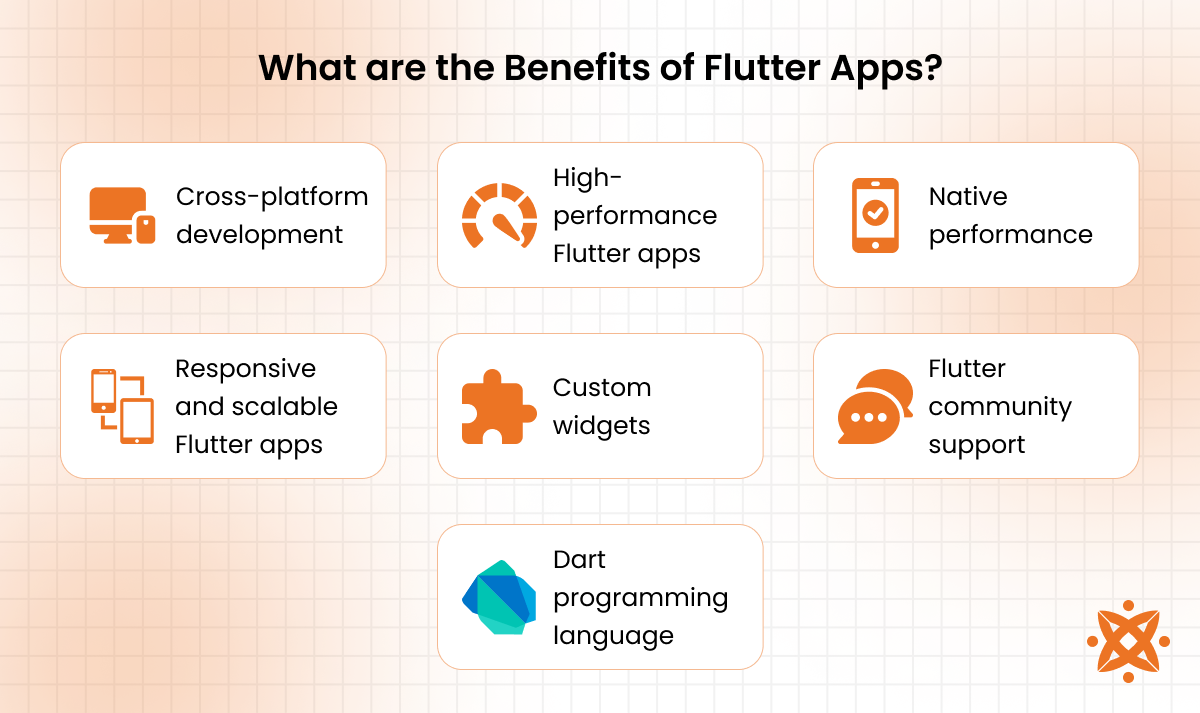
The main benefits of Flutter apps are as follows:
The drawbacks of Flutter apps are limited native API access, large app size, learning curve for Dart, and limited support for some complex UI designs. While Flutter is a powerful framework, these limitations impact its suitability for certain types of projects.
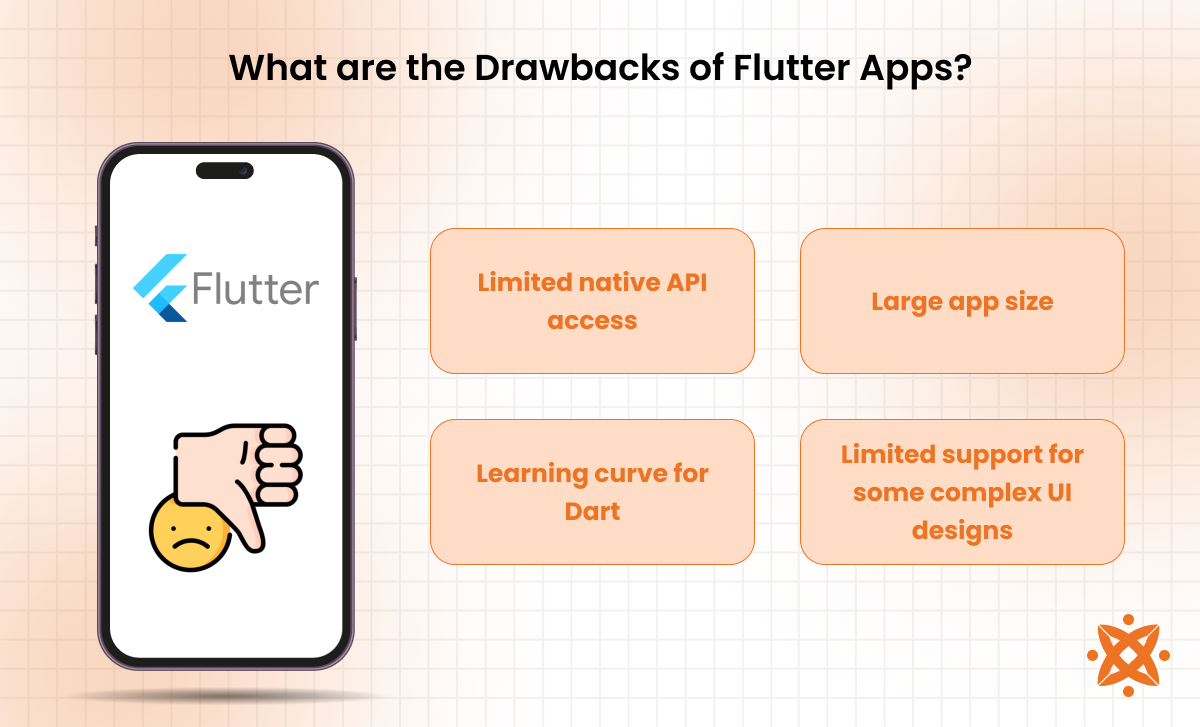
The drawbacks of Flutter apps are as follows:
To design and develop Flutter apps for Android and iPhone, developers follow a series of structured steps to ensure that the app is optimised for both platforms. This process includes using the Flutter framework, Dart programming language, and various tools for developing responsive and scalable applications that perform efficiently on both Android and iOS. By using Flutter's cross-platform capabilities, developers create apps with a single codebase for both platforms, making the process more efficient.
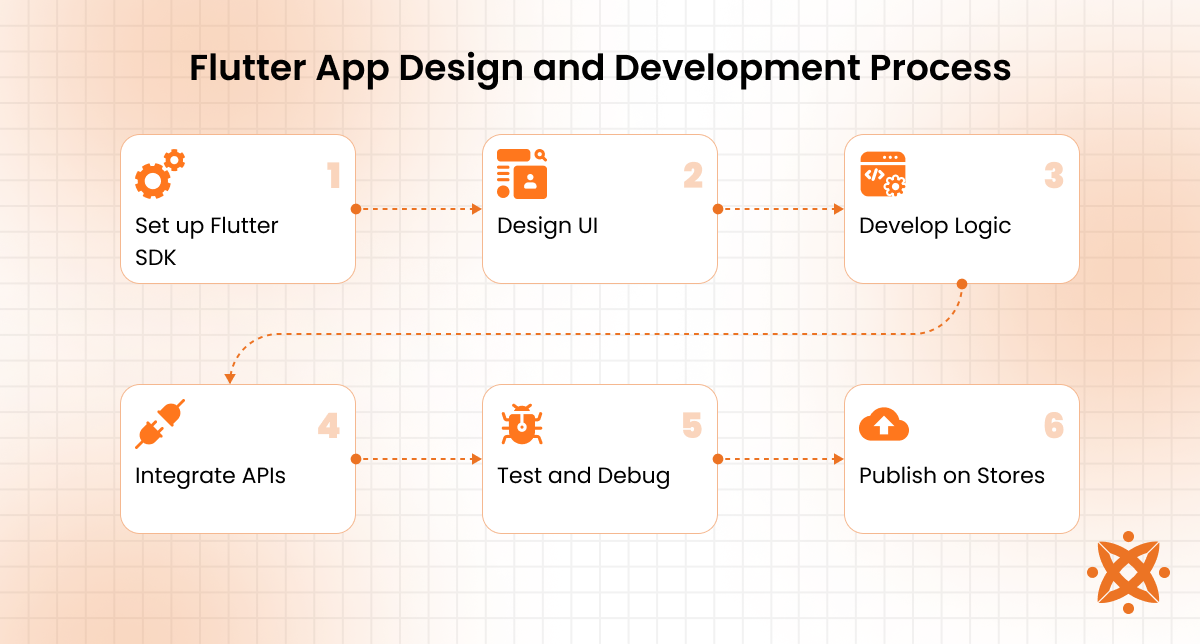
To design and develop Flutter apps for Android and iPhone, the following processes are employed:
The Android Flutter app design and development process involves several stages to ensure the app is optimised for Android devices. The process begins with setting up the Flutter environment, followed by creating the UI using custom widgets and integrating necessary Flutter plugins for Android-specific features. Dart is used to write the app logic and ensure smooth performance. Developers must also test and debug the app using Android-specific tools.
The Android Flutter app design and development process is as follows:
The iPhone Flutter app design and development process is similar to Android but requires specific configurations for iOS. Developers need to ensure that the app is optimised for iOS devices, paying attention to Apple's design guidelines and integrating iOS-specific features through Flutter plugins. Testing and debugging are done using Xcode and the iOS Simulator to guarantee performance and compatibility.
The iPhone Flutter app design and development process is as follows:
Flutter enables developers to build cross-platform apps using a single codebase for both Android and iPhone. The cross-platform development process involves designing and developing the app with responsive and scalable UIs that work smoothly on both platforms. By utilising Flutter's framework, developers ensure that the app maintains native performance across devices, reducing development time and resources.
The cross-platform Flutter app design and development process is as follows:
The cost of developing a Flutter app ranges from $20,000 to $200,000, depending on factors such as app complexity, features, design requirements, and development team location. Simple apps with basic functionality fall on the lower end of the range, while feature-rich, enterprise-level apps reach or exceed the higher end.
For instance, a basic app with minimal customisation costs around £15,000 to £20,000, while a medium-complexity app with advanced UI and backend integration costs between £20,000 and £50,000. Highly complex apps with features like real-time updates, machine learning, or extensive API integrations cost upwards of £100,000 to £150,000. Ongoing maintenance and updates should be factored into the budget.
The hourly rates of developers range from $20 to $150 per hour, depending on the region. Offshore development teams in countries like India or Eastern Europe charge lower rates, while teams in North America or Western Europe are more expensive.
To choose a Flutter mobile app development company, evaluate their experience with Flutter projects, expertise in the Dart programming language, and portfolio of successfully delivered apps. Check client reviews, ensure they offer end-to-end development services and inquire about their approach to cross-platform development.
Assess the company's communication practices, development timelines, and post-launch support. A reliable Flutter app development company will have a proven track record, transparent pricing, and the ability to deliver scalable, high-performance applications customised to your needs. Always request case studies or references to verify their credibility.
The main difference between a Flutter app and a React Native app is the technology stack used. Flutter uses the Dart programming language and a custom rendering engine, while React Native is built on JavaScript and relies on native components for rendering.
Flutter provides a more consistent UI experience across platforms due to its custom widgets, whereas React Native uses platform-native components for a more native look and feel. Additionally, Flutter's "hot reload" is faster, but React Native has broader community support and compatibility with existing web frameworks.
The main difference between a Flutter app and a Native app is their development approach. Flutter apps are built using a single codebase for cross-platform compatibility. In contrast, Native apps are developed separately for each platform (e.g., Android with Kotlin/Java and iOS with Swift/Objective-C).
Native apps provide superior performance and deeper integration with device features, but Flutter apps offer faster development cycles and maintain UI consistency across platforms.
A Flutter developer is a software engineer who builds cross-platform applications using the Flutter framework and Dart programming language. They are proficient in designing responsive UIs with custom widgets, integrating APIs, optimising app performance, and ensuring native-like user experiences across platforms.
Flutter developers have mobile and web development expertise, knowledge of platform-specific requirements, and experience with tools like Android Studio and Xcode. Their skills enable them to create scalable, high-performance apps efficiently.
Sign up now and get notified when we publish a new article!
Co-Founder
Hey there. I am Dhaval Sarvaiya, one of the Founders of Intelivita. Intelivita is a mobile app development company that helps companies achieve the goal of Digital Transformation. I help Enterprises and Startups overcome their Digital Transformation and mobile app development challenges with the might of on-demand solutions powered by cutting-edge technology.
