


Co-Founder

A cross-platform app refers to a software application designed to work across multiple platforms, including Android and iOS, using a single codebase.
According to a report by Statista titled “Mobile App Development Frameworks Usage” (2023), 42% of global developers now prefer cross-platform app development over native approaches due to its cost-effectiveness and faster deployment.
The architecture of a cross-platform app includes three primary layers: the presentation layer, the business logic layer, and the data layer. These layers ensure smooth functionality and data exchange across platforms.
Common examples of cross-platform apps include Facebook, Instagram, and Google Ads. Skype and Slack, which enable communication on mobile and desktop platforms, are also widely known.
The primary benefits of cross-platform apps include reduced development costs and faster deployment times. By leveraging a single codebase, businesses save up to 30-40% on development costs and provide a wider audience reach.
Common programming languages used in cross-platform app development include JavaScript, Dart, C#, python, and Kotlin. These languages, combined with frameworks like react native, enable smooth compilation and superior performance for mobile apps.
The most widely used development frameworks for creating cross-platform apps are Flutter, React Native, and Kotlin Multiplatform. These frameworks support cross-platform mobile development with varying features.
The development process for a cross-platform app involves planning, designing, coding, testing, and deployment. The testing on multiple platforms ensures performance and functionality before deployment.
A cross-platform app is a software application designed to operate on multiple operating systems, such as Android and iOS, using a single codebase.
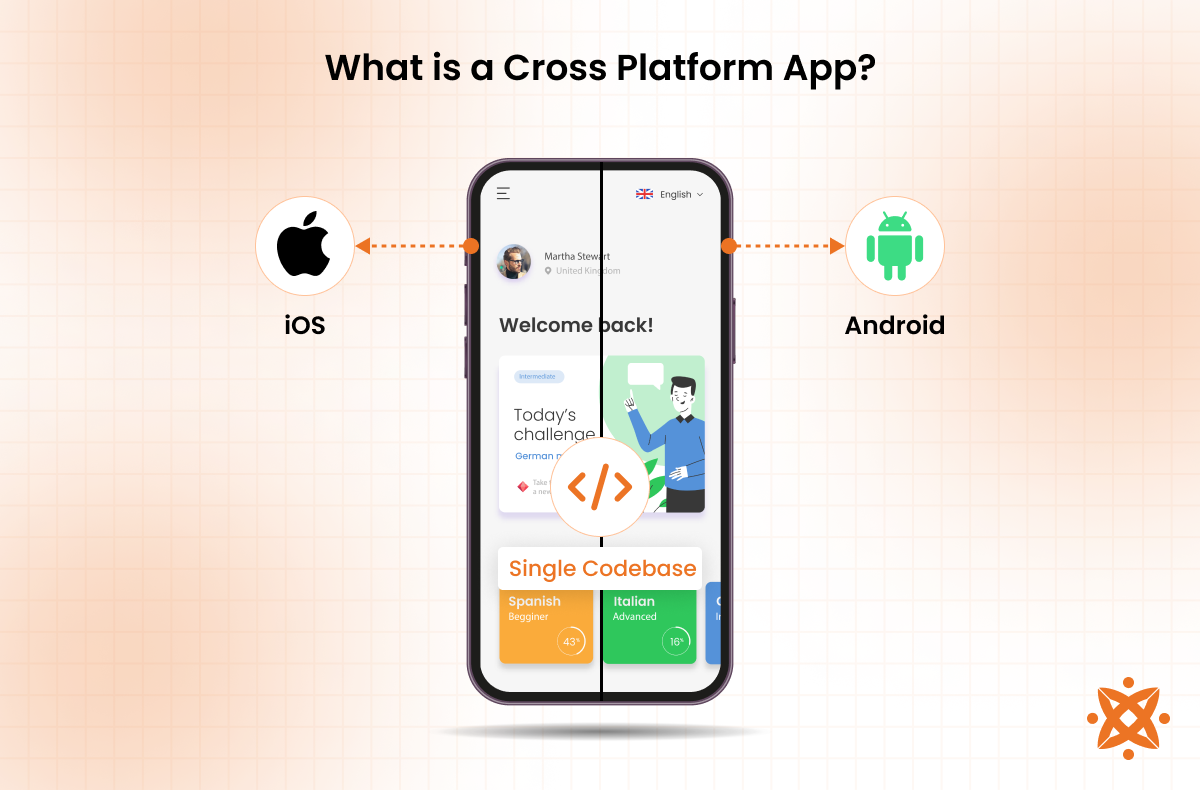
Unlike native apps, which require separate development for each platform, cross-platform apps ease the development process and reduce costs by enabling developers to write code once and deploy it across multiple platforms.
This approach ensures consistent performance and user experience while simplifying app maintenance and updates.
Cross-platform apps are widely used for various purposes, including e-commerce, social media, gaming, and productivity tools.
Businesses leverage them to reach broader audiences, as they ensure accessibility across multiple platforms without duplicating development efforts.
For instance, apps like Facebook and Instagram utilize React Native, while Google Ads relies on Flutter to deliver smooth functionality on both Android and iOS devices.
According to a study by Statista, titled “Mobile App Development Frameworks Usage” (2023), the cross-platform app development market is projected to grow at a CAGR of 17%, reaching a value of $546 billion by 2030, as businesses increasingly prioritize broader accessibility and reduced development time.
A cross-platform app works by utilizing a single codebase to operate on multiple operating systems, such as Android and iOS, without requiring separate development for each platform.
Developers use cross-platform frameworks like Flutter, React Native, and Kotlin Multiplatform, which compile shared code into platform-specific components.
These frameworks act as a bridge, allowing the app to interact with native APIs for features like GPS, camera, or push notifications while maintaining optimal performance and user experience.
The development process involves writing the app's core logic in a unified programming language, such as JavaScript for React Native or Dart for Flutter.
The framework then renders this code into native code, enabling it to function smoothly across different platforms.
This approach ensures that developers save time and resources while delivering a consistent user experience on multiple platforms.
The history of cross-platform apps began in the early 2000s as developers sought solutions to build software that could run on multiple platforms without rewriting code for each system.
Early tools like Java and Adobe Flash allowed applications to run across different operating systems. However, limitations in performance and integration with native features restricted their widespread adoption.
The rise of mobile devices in the late 2000s, particularly with the dominance of Android and iOS, showed the need for more advanced cross-platform development frameworks.
In 2011, PhoneGap (now Apache Cordova) emerged, enabling developers to build mobile apps using HTML, CSS, and JavaScript, which could run on multiple platforms. This marked a significant shift in mobile development, as businesses could now maintain a single codebase for both Android and iOS.
However, cross-platform apps did not achieve native-like performance and features until the introduction of modern frameworks like Facebook's React Native in 2015 and Google's Flutter in 2017.
These frameworks addressed previous shortcomings by offering better speed, smoother user experiences, and access to native device APIs.
Cross-platform app development is the process of creating software applications that run on multiple operating systems, such as Android and iOS, using a single codebase.
Unlike native app development, which requires separate code for each platform, cross-platform development eases the development process by enabling developers to build one application that works across multiple platforms.
Cross-platform app development involves writing the application logic in unified programming languages, such as JavaScript (React Native), Dart (Flutter), or C# (.NET MAUI).
These frameworks translate the code into platform-specific components, allowing the app to access native features like the camera, notifications, and GPS.
The process includes phases such as planning, designing, coding, and testing. It ensures that the app functions optimally across different devices while maintaining a consistent user experience.
The common components of cross-platform app architecture include the User Interface Layer and the Shared Business Logic Layer. Additional elements include the Data Persistence Layer, Network/Service Integration Layer, and Platform Abstraction Layer.
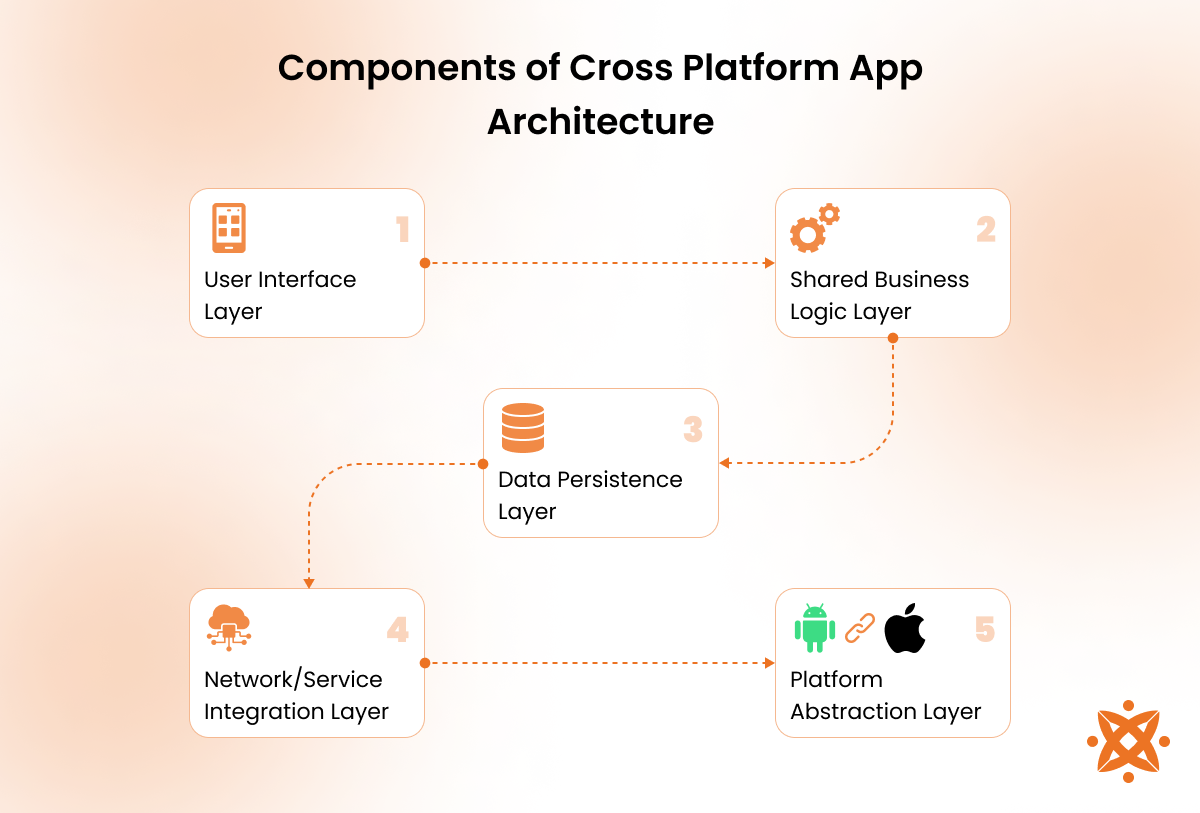
The components of a cross-platform app architecture are explained below:
The different examples of cross-platform apps include chat apps, game apps, fitness apps, calendar apps, and finance apps. These apps provide consistent functionality and user experience across multiple platforms.
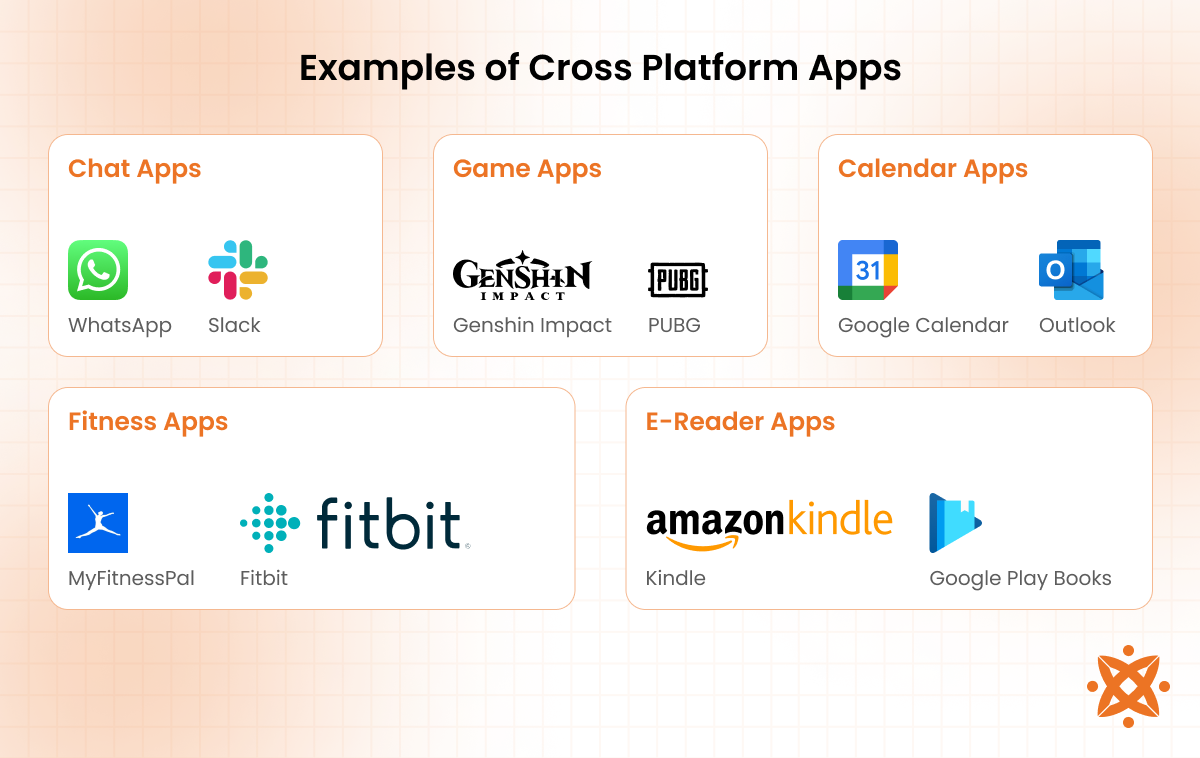
The different examples of cross-platform apps are explained below:
The benefits of cross-platform apps include reduced development costs and faster deployment, as they use a single codebase for multiple platforms. They also ensure wider audience reach and consistent user experience across Android, iOS, and other devices.
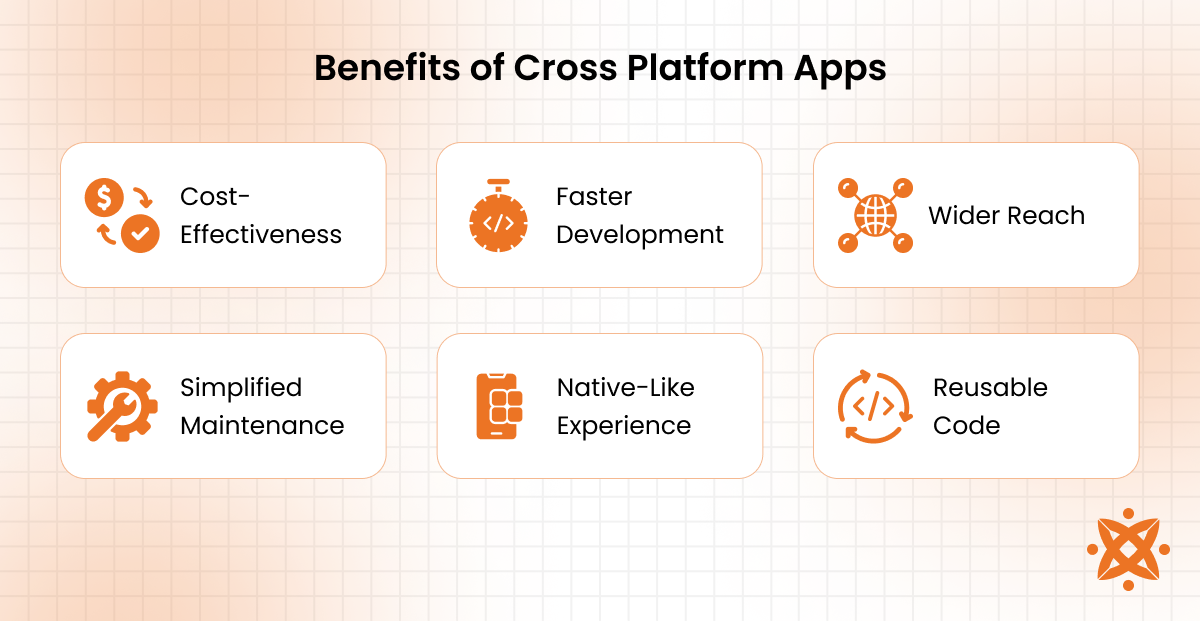
The benefits of a cross-platform app are explained below:
The drawbacks of cross-platform apps include lower performance compared to native apps and limitations in accessing advanced platform-specific features. These cons impact the app's functionality and user experience.
The drawbacks of a cross-platform app are explained below:
The popular programming languages used in cross-platform app development include JavaScript, Dart, C++, Python, Rust, Kotlin, Typescript, and C#. These platforms allow developers to build scalable, cross-platform apps while integrating native features efficiently.
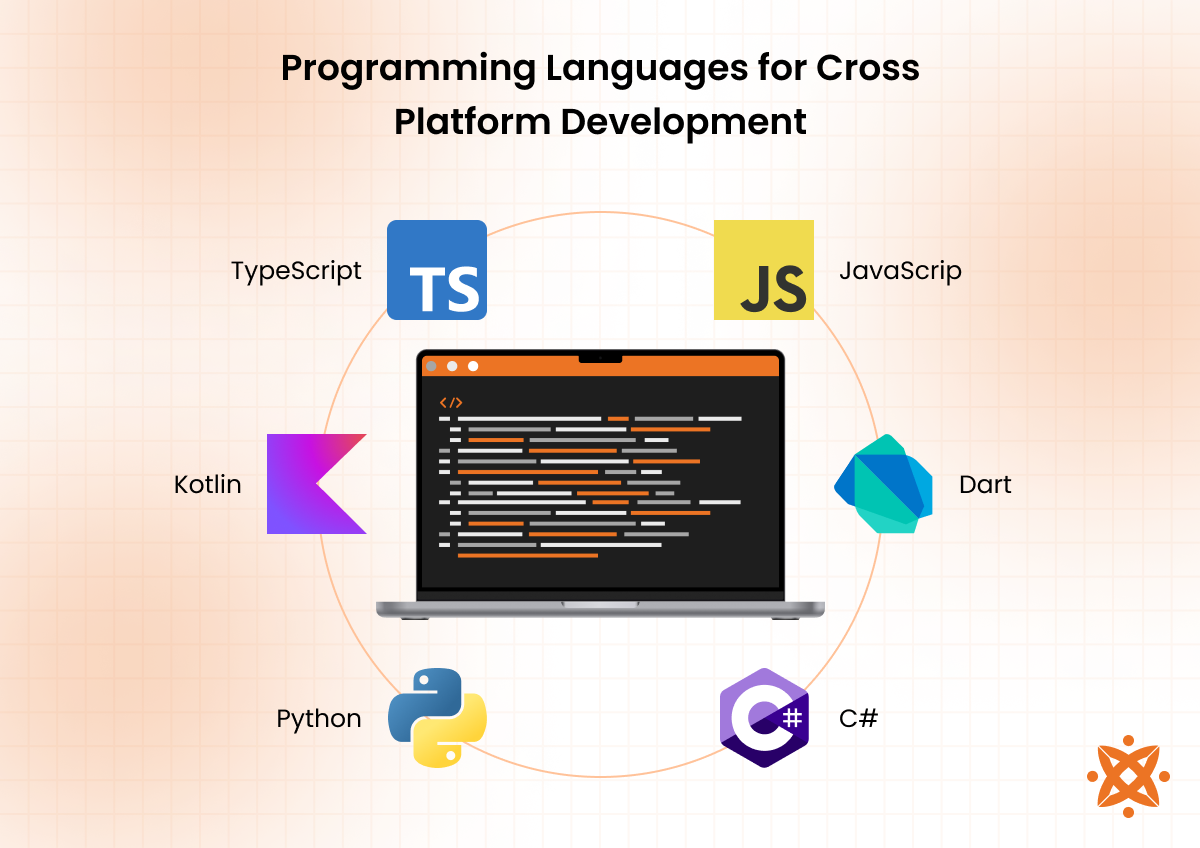
The popular programming languages used in cross-platform app development are explained below:
The popular frameworks used in cross-platform app development include:
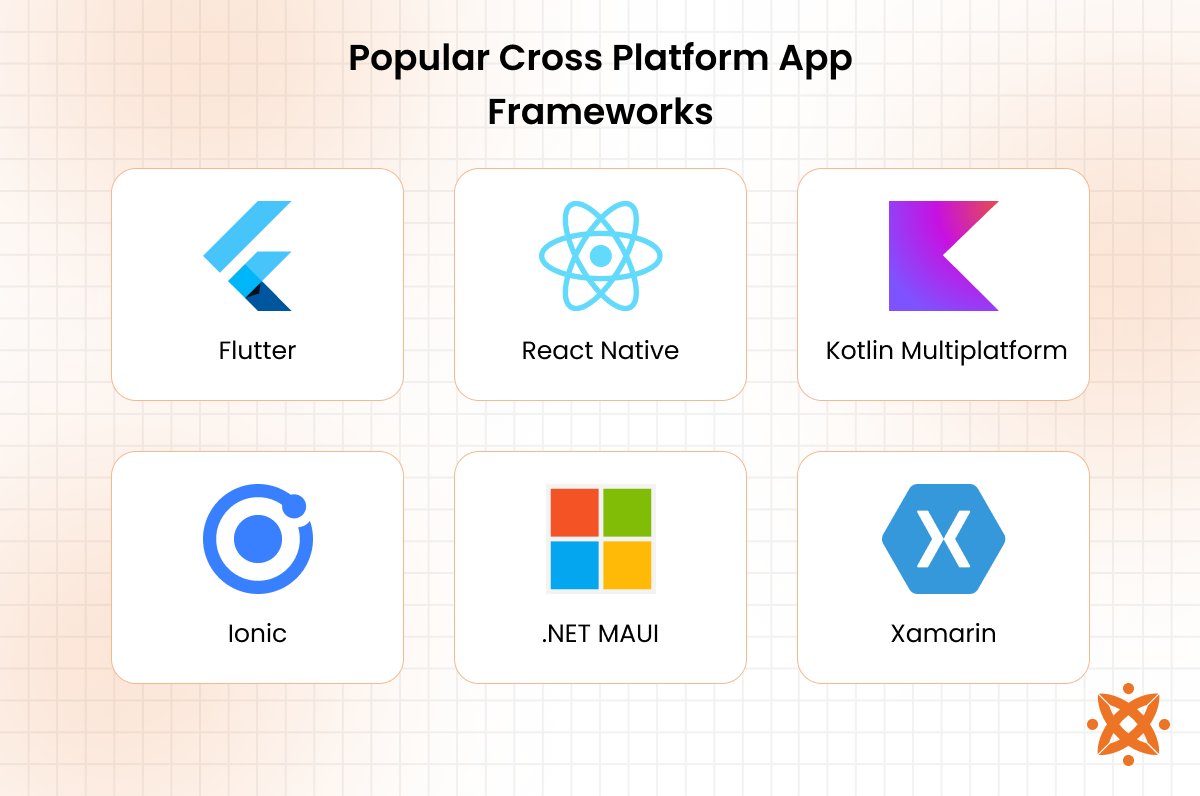
Flutter is a popular cross-platform development framework created by Google. It allows developers to build high-performance applications for Android, iOS, and other platforms using a single codebase.
Its unique defining characteristic is its ability to provide a native-like experience through a rendering engine called Skia, which ensures smooth animations and consistent performance across platforms.
Flutter's main features include hot reload, which allows developers to see changes instantly, a customizable widget-based UI, and support for advanced animations. It also offers excellent performance optimization, ensuring apps run efficiently on various devices.
Flutter uses the Dart programming language, which is known for its fast compilation and versatility in mobile app development.
Notable examples of apps built with Flutter include Google Ads, Alibaba, and Reflectly, a personalized AI-powered journaling app.
React Native is a widely used cross-platform development framework created by Facebook that enables developers to build mobile applications for Android and iOS using a single codebase.
Its unique defining characteristic is its ability to use native components, which deliver a smooth and responsive user experience similar to native apps.
The main features of React Native include support for hot reload, which speeds up development, flexible UI components that adapt easily to platform-specific interfaces, and extensive community support with numerous libraries and tools.
React Native uses JavaScript as its primary programming language, enhanced with TypeScript for better type safety and maintainability. Examples of apps built with React Native include Facebook, Instagram, and Skype.
Kotlin Multiplatform is a cross-platform development framework developed by JetBrains that allows developers to share code across Android, iOS, and other platforms while maintaining native performance.
Its unique defining characteristic is its ability to share business logic across platforms while enabling platform-specific UI development, ensuring flexibility and efficiency.
The main features of Kotlin Multiplatform include code reusability, easy integration with native code, and compatibility with existing native apps and libraries. It allows developers to write common logic while keeping platform-specific adaptation intact.
Kotlin Multiplatform primarily uses the Kotlin programming language, known for its modern syntax, safety features, and interoperability with Java. Examples of apps built with Kotlin Multiplatform include Netflix, Philips Hue, and Cash App.
Ionic is an open-source, cross-platform development framework that allows developers to create mobile, web, and desktop applications using standard web technologies.
Its unique defining characteristic is its ability to leverage HTML, CSS, and JavaScript to build apps that work seamlessly across Android, iOS, and Progressive Web App (PWA) platforms.
Ionic's main features include a component-based UI library, built-in cross-platform tools, and support for third-party integrations like Angular, React, or Vue.js. It also offers a capacitor runtime, enabling access to native APIs for features like cameras and geolocation.
Ionic uses JavaScript as its core programming language, often paired with TypeScript for added structure and reliability in coding. Examples of apps built with Ionic include MarketWatch, Sworkit, and JustWatch.
.NET MAUI (Multi-platform App UI) is a cross-platform development framework created by Microsoft that allows developers to build apps for Android, iOS, Windows, and macOS using a single codebase.
Its unique defining characteristic is its ability to create native user interfaces while leveraging shared logic across platforms.
The main features of .NET MAUI include support for a single project structure, hot reload for faster debugging and smooth integration with .NET libraries, and XAML for UI development. It also provides access to native APIs, ensuring smooth performance and platform-specific functionality.
.NET MAUI primarily uses C# as its programming language. It offers type safety, performance optimization, and robust support for enterprise-level applications. Examples of apps built with .NET MAUI include Microsoft Teams, Weather 21, and eShopOnContainers.
Xamarin is a cross-platform development framework by Microsoft that enables developers to build mobile applications for Android and iOS using a single codebase.
Its unique defining characteristic is its ability to provide near-native performance by compiling code directly into platform-specific applications while leveraging shared logic.
Xamarin's main features include integration with .NET, support for XAML to create platform-specific UIs, and access to native APIs for device features like GPS and camera. It also supports code reusability, reducing development time and costs.
Xamarin primarily uses the C# programming language, ensuring robust performance and strong compatibility with the Microsoft ecosystem. Examples of apps built with Xamarin include Alaska Airlines, Olo, and The World Bank.
Sencha is a cross-platform development framework designed for building data-intensive web and mobile applications that run seamlessly across multiple platforms.
Its defining characteristic is its focus on creating high-performance apps with rich user interfaces using a component-based architecture.
The main features of Sencha include a comprehensive UI toolkit for building visually appealing apps, built-in data management tools, and support for MVC architecture to streamline development workflows. It is widely used for enterprise applications requiring advanced data visualization and grid capabilities.
Sencha primarily uses JavaScript as its programming language, allowing developers to create highly interactive and scalable applications. Examples of apps built with Sencha include Nokia, Samsung, and Airbus.
NativeScript is a cross-platform development framework that enables developers to build native mobile applications for Android and iOS using a single codebase. Its unique defining characteristic is its ability to allow direct access to native APIs, delivering native-like performance without relying on WebViews.
The main features of NativeScript include support for JavaScript, TypeScript, and frameworks like Angular and Vue.js, enabling developers to create flexible and feature-rich applications. It also allows integration with native libraries, providing full access to platform-specific functionality.
NativeScript primarily uses JavaScript and TypeScript as its programming languages, ensuring efficient and scalable app development. Examples of apps built with NativeScript include Strudel, SAP, and Daily Nanny.
Node.js is a cross-platform development framework that allows developers to build scalable and high-performance server-side applications using JavaScript. Its main defining characteristic is its non-blocking, event-driven architecture, which enables fast execution and real-time processing, making it ideal for applications requiring frequent updates.
The main features of Node.js include its lightweight runtime environment, a built-in package manager (NPM) for managing libraries, and the ability to handle thousands of concurrent connections efficiently. It is widely used for both back-end development and cross-platform mobile applications.
Node.js primarily uses JavaScript as its programming language, allowing developers to maintain a unified language for both server-side and client-side development. Examples of apps built with Node.js include Netflix, LinkedIn, and Trello.
Appcelerator Titanium is a cross-platform development framework that allows developers to build mobile applications for Android and iOS using a single codebase. Its defining characteristic is its ability to create native apps by translating JavaScript code into platform-specific components, ensuring near-native performance.
The main features of Appcelerator Titanium include a robust API framework for accessing native device features, a unified development environment, and tools for rapid prototyping and deployment. It also supports real-time analytics to monitor app performance.
Appcelerator Titanium primarily uses JavaScript as its programming language, offering developers a familiar and efficient toolset for mobile app development. Examples of apps built with Appcelerator Titanium include Avis, T-Mobile, and PayPal.
The cross-platform app development process involves a structured set of steps that allow developers to create applications compatible with multiple operating systems using a single codebase. This process ensures smooth development, faster delivery, and consistent performance across platforms.
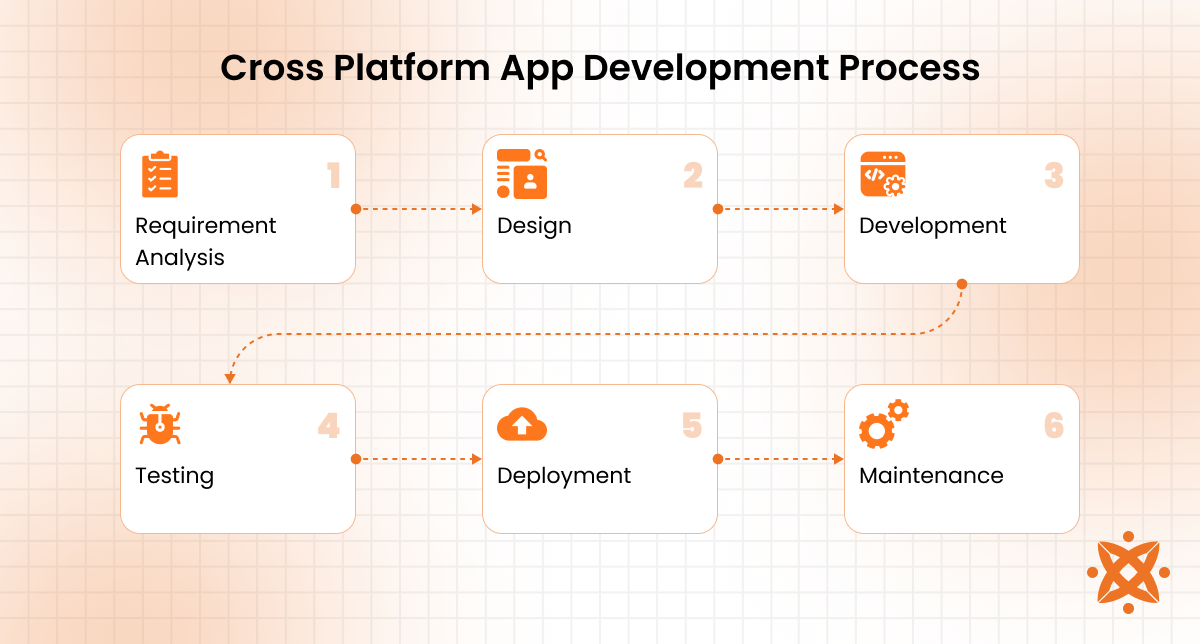
The six steps for cross-platform app development process are explained below:
The average cost of developing a cross-platform app ranges between £15,000 and £20,000, depending on the app's complexity, features, and target platforms.
Simple apps with basic functionality cost between £15,000 and £20,000, while moderately complex apps requiring features like APIs, payment systems, or third-party integrations cost between £20,000 and £50,000.
Highly complex applications, such as enterprise solutions or apps requiring real-time features, advanced UI/UX, and custom integrations, can cost upwards of £100,000 or more.
Several factors influence the total cost of developing a cross-platform app. Development time and the app's complexity are the primary cost drivers.
Adding more features, such as push notifications, payment gateways, and offline capabilities, increases development time and expenses.
The choice of framework also impacts costs; frameworks like Flutter or React Native are cost-efficient, while custom integrations or platform-specific modules require additional investment.
Other contributing factors include developer rates, which vary globally. For example, developers in the US charge an average of £78-£118/hour, while those in Eastern Europe or Asia typically charge between £24–£55/hour.
Additionally, costs for app maintenance and updates must be considered, accounting for approximately 15–20% of the initial development cost annually. Tools like Firebase Analytics and testing platforms like BrowserStack incur additional costs for performance monitoring and testing.
The primary difference between a cross-platform app and a web app lies in its functionality and access to device features.
A cross-platform app is installed directly on devices like Android or iOS. It uses a single codebase to provide a native-like user experience with access to device APIs, such as the camera, GPS, and offline storage. In contrast, a web app runs through a browser, requires an active internet connection, and has limited access to device-specific features.
The main difference between a cross-platform app and a native app lies in their development approach and performance.
A native app is built specifically for a single platform, such as Android (using Kotlin or Java) or iOS (using Swift). It ensures optimal performance and seamless integration with platform-specific features.
On the other hand, a cross-platform app uses a single codebase to run on multiple platforms. It offers faster development but slightly reduced performance compared to native apps.
According to a study by Statista titled “Mobile App Development Trends” (2023), native apps deliver 10–20% better performance than cross-platform apps due to their direct access to platform-specific APIs.
However, cross-platform apps reduce development time and costs by up to 40%, making them ideal for businesses seeking faster market entry with broad platform compatibility.
The key difference between a cross-platform app and a Progressive Web App (PWA) lies in its installation and functionality.
A cross-platform app is installed on devices like Android or iOS and can access native features such as cameras, GPS, and offline storage. In contrast, a PWA runs within a web browser, offering limited access to device-specific features and requiring an active internet connection for full functionality.
According to a study by Google Developers titled “The State of PWAs” (2022), PWAs are 68% smaller in file size compared to cross-platform apps and load faster due to their lightweight nature.
The main difference between a cross-platform app and a hybrid app lies in its development structure and performance.
A cross-platform app uses a single codebase compiled into native components, ensuring near-native performance and smooth user experience across platforms like Android and iOS.
In contrast, a hybrid app combines web technologies (HTML, CSS, JavaScript) with a native container, relying on WebViews to run within a browser-like environment, which can limit performance and responsiveness.
The main difference between a cross-platform app and a desktop app lies in their targeted devices and accessibility.
A cross-platform app is designed to run on mobile platforms like Android and iOS, while a desktop app is built specifically for operating systems such as Windows, macOS, or Linux.
Desktop apps offer higher processing power and access to platform-specific features, whereas cross-platform apps focus on portability and broader accessibility across multiple devices.
While desktop apps excel at handling resource-heavy tasks like video editing or software development, cross-platform apps provide mobility, accessibility, and a unified experience across devices, making them ideal for modern business and consumer needs.
To choose a cross-platform app development company in the UK, businesses should evaluate the company's experience, expertise, and past projects.
Look for firms with a proven track record of delivering successful apps on multiple platforms like Android and iOS using frameworks such as Flutter, React Native, or Xamarin.
Additionally, assess the company's technical capabilities, client testimonials, and ability to meet deadlines within budget.
According to a report by Clutch titled “Top Mobile App Developers in the UK” (2023), companies offering agile workflows, transparent communication, and post-launch support provide the highest client satisfaction.
Examples of leading UK-based firms include Waracle, Apadmi, and The Distance, known for delivering scalable and cost-effective cross-platform solutions.
Sign up now and get notified when we publish a new article!
Co-Founder
Hey there. I am Dhaval Sarvaiya, one of the Founders of Intelivita. Intelivita is a mobile app development company that helps companies achieve the goal of Digital Transformation. I help Enterprises and Startups overcome their Digital Transformation and mobile app development challenges with the might of on-demand solutions powered by cutting-edge technology.
