


Co-Founder

Backend web development runs the systems that support data, logic, and functionality across web applications. It connects the frontend and backend to ensure users interact with secure, dynamic platforms that store and process information in real time.
The best frameworks for backend development include Express.js, Django, Laravel, Spring Boot, Ruby on Rails, and ASP.NET Core. These frameworks power scalable web development projects using ready-made components, structured architecture, and integration support.
The main programming languages in backend development are JavaScript, Python, PHP, Java, C#, and Ruby. These tools support stack development, working alongside HTML, CSS, and JavaScript in full-stack development environments.
The backend process begins with planning the system architecture. Developers then choose a framework, build APIs, write logic, link the frontend, add database functions, secure the stack, and deploy.
In the UK, the Digital Economy Council 2024 notes that 58% of developer job ads now target full-stack roles across all sectors.
Backend web development refers to the process of building the server-side structure of websites and web applications. It involves writing code that manages databases, authentication, APIs, and server logic, everything that happens behind the screen you interact with.
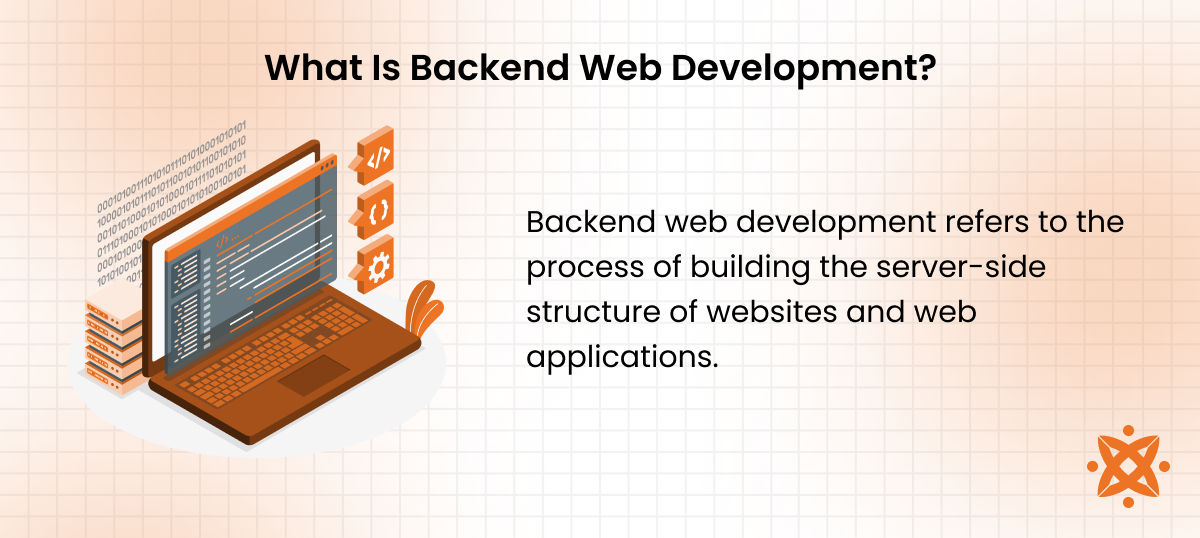
It's important because it ensures data is processed correctly, users stay logged in securely, and systems work as expected. Without a backend, platforms like banking sites, online shops, or booking systems would fail to function.
You use backend development in web development projects involving user authentication, data storage, eCommerce, content management systems, cloud services, and business tools. It's a foundation for both standalone and full-stack development roles.
A backend web developer is a professional who builds and maintains the server-side -logic, databases, and application workflows that power web development projects. They focus on the infrastructure that supports the visible parts of a website or app.
They write code to manage data flow between users and servers, create APIs, connect frontend and backend systems, and ensure secure user sessions. They also handle performance optimisation, error handling, and database queries across web applications.
A backend developer should know backend programming languages like PHP, Python, or Java, understand database systems (MySQL, PostgreSQL), and be familiar with frameworks like Node.js or Django.
Employers expect them to understand stack development, version control (Git), server management, and API documentation. Many have formal training or degrees in computer science or web development.
The best frameworks for backend development are Express.js, Django, Laravel, Ruby on Rails, Spring Boot, and ASP.NET Core. The best frameworks for backend web development are those that simplify complex logic, improve security, and support scalable server-side operations.
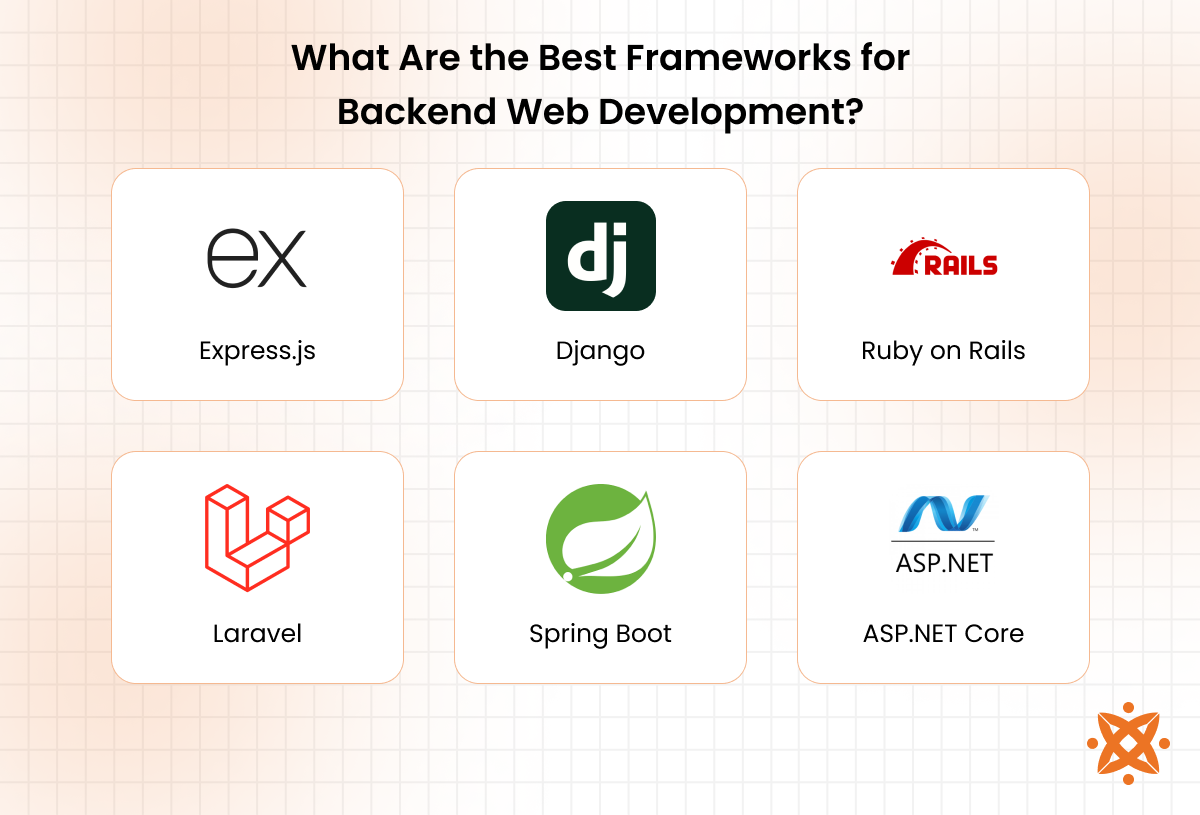
The best frameworks for backend web development include the following:
The main programming languages used for backend web development include JavaScript, Python, PHP, Java, C#, and Ruby. These languages form the technical foundation behind dynamic, interactive platforms used across sectors.
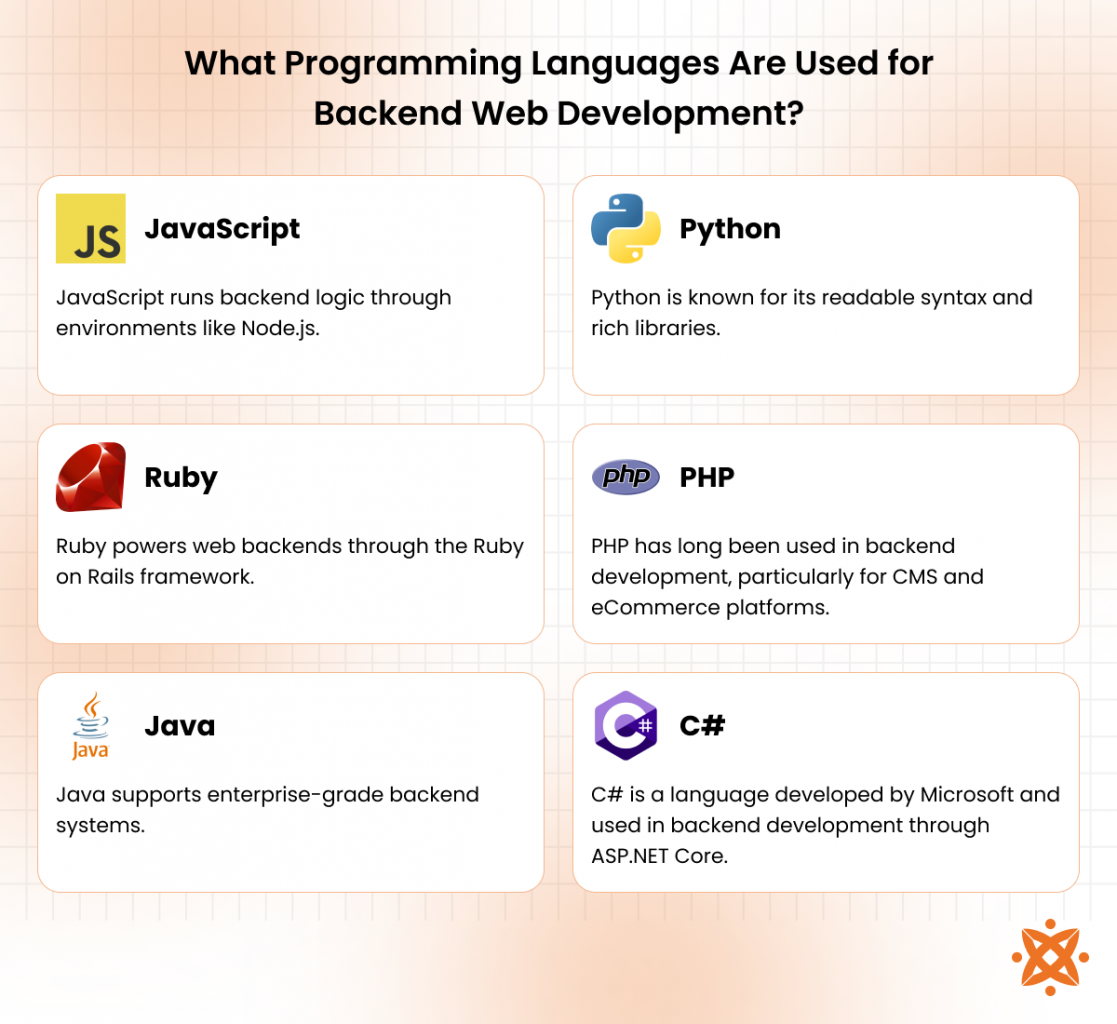
Below are the main programming languages used for backend web development:
To develop the backend of a website, you follow a structured process that covers planning, coding, and deployment. Each step ensures that the server, database, and application logic work together to support smooth user interaction.
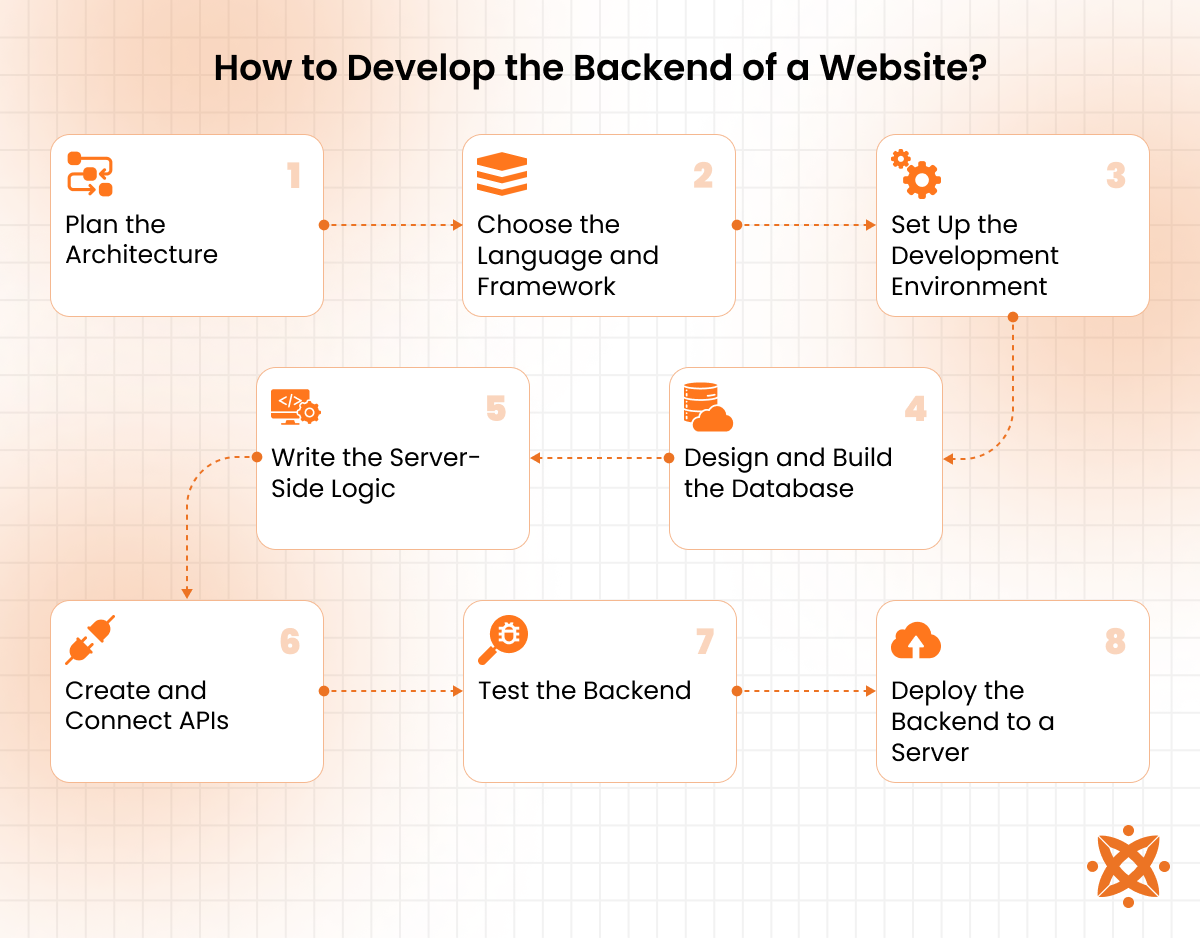
To develop the backend of a website, do the following:
You define how the system will operate, including data flow, user roles, and feature requirements. This includes choosing the server type, storage method, and access structure. It sets the foundation for all future development decisions.
You select the backend language and framework based on project goals. Options like Node.js with Express, Python with Django, or PHP with Laravel offer different advantages in speed, flexibility, and scalability.
You install the tools needed to run backend code locally. This includes a code editor (e.g., VS Code), local server (e.g., Apache or Nginx), and database software (e.g., MySQL or MongoDB). You also configure version control with Git.
You create database schemas that define how data will be stored and retrieved. This involves setting up tables, relationships, indexes, and rules to keep data secure and consistent.
You build the core functions that process requests, handle form inputs, manage sessions, and execute business rules. This is where the application performs real work based on user interactions.
You build REST or GraphQL APIs to connect your frontend to backend logic. These APIs deliver data, trigger backend processes, and keep the application interactive.
You run tests to check for logic errors, security flaws, and performance issues. This includes unit tests, integration tests, and API response tests.
You move the backend to a live server using platforms like AWS, Heroku, or DigitalOcean. You also set up monitoring, backups, and server security for long-term stability. It is best to use a professional web development company for the best results.
The main difference between backend web development and front-end web development is that backend development handles the server-side logic, data processing, and database management. In contrast, front-end development focuses on the visual elements users see and interact with on the browser.
Backend development works behind the scenes using programming languages like PHP, Python, and Java, and deals with security, performance, and server communication. In contrast, front-end web development uses HTML, CSS, and JavaScript to build user interfaces and ensure responsive design across devices. Both roles must work together to deliver a fully functional and interactive web application.
To choose the right backend web developer, look beyond just technical skills. You need someone who understands system logic, database structure, and how to deliver stable, secure performance. Their experience, communication, and problem-solving approach all matter.
Follow these tips to choose the right backend developer:
Hiring the right backend developer ensures long-term performance and stability. For expert results, partner with Intelivita. You'll work with a UK-based team that understands complex backend systems, delivers on time, and supports your project from planning to deployment.
The average cost of backend web development in the UK ranges from £2,500 to £15,000, depending on project size, technology stack, and required features. Smaller projects with basic database handling and server logic fall on the lower end, while complex platforms needing API integrations, authentication systems, and scalable architecture cost more.
Factors that influence cost include the choice of backend language and framework, developer experience, project timeline, hosting needs, and long-term maintenance. Enterprise-level applications or full system rebuilds can exceed £25,000, especially when built with high-performance frameworks like Spring Boot or ASP.NET Core and deployed on cloud infrastructure.
The best practices for backend web development focus on use version control, writing clean, maintainable code, validating and sanitizing inputs, applying secure authentication methods and separate application layers. Following these practices helps you build stable systems that support long-term scaling and efficient operations.
Below are the best practices for backend web development:
The top trends in backend web development include serverless Architecture, microservices structure,API-First Development, flexibility, and Security-First Development. These trends aim to build more responsive, scalable, and secure backend systems that adapt easily to business needs and user expectations.
Below are the trends in backend web development:
Sign up now and get notified when we publish a new article!
Co-Founder
Oliver Baker is a co-founder of Intelivita, a leading Web and Mobile App Development Company based in Leeds, UK. Oliver has been at the forefront of the business, expanding it globally and into new technologies including iOS and Android, AR, VR and Mobile Game applications. Oliver excels in Project Management, Leadership, Quality Assurance and Problem Solving and has qualifications with Prince2 and APM. He aims to develop his skills further through a shared interest with other leaders in the Software Markets and the Clients of Intelivita.
