


Co-Founder

Travel apps have become necessary tools for modern travellers. They offer a wide range of services, from flight booking and hotel deals to creating personalised travel itineraries. These mobile apps simplify travel planning by providing everything from real-time flight updates to offline maps, ensuring users navigate even in areas with limited connectivity.
According to a report by Amazon Web Services, the global online travel booking market, valued at $485.1 billion in 2022, is expected to grow to $1.59 trillion by 2032, with a CAGR of 12.6%. The hotel booking app market, the value is anticipated to increase from $4.86 billion in 2023 to $7.64 billion by 2025, as Trends Global Survey claims, reflecting a growing reliance on mobile platforms for travel arrangements.
The common types of travel apps include flight and hotel booking apps, excursion planners, vehicle rental apps, and apps for language learning. Each type serves a specific purpose, offering budget-friendly travel tips, helping users find the best accommodations, or facilitating transportation arrangements. Popular apps like Airbnb and Skyscanner help users book flights and find unique accommodations, while others focus on social experiences or offer real-time flight updates.
Core features of travel apps include functionalities that enhance the user experience, such as offline maps, personalised itineraries, and integration with payment systems like PayPal or Apple Pay. These apps help travellers save time and money by providing access to the best deals, offering real-time information, and assisting users to stay organised with travel details. Flight tracking, hotel deals, and budget-friendly tips make planning more efficient and convenient.
Developing a successful travel app involves a comprehensive process, starting with concept design and then coding, testing, and deployment. The development process requires selecting the right programming languages, tools, and frameworks, such as Kotlin for Android or React Native for cross-platform compatibility. It also integrates key features like real-time updates, payment gateways, and offline capabilities to ensure the app delivers an efficient and user-friendly experience.
A travel app is a software application designed to assist users with various aspects of travel, including planning, booking, and managing trips. These apps are accessible on smartphones, tablets, and other devices, offering tools for booking flights, hotels, car rentals, or guided tours and providing travel guides, maps, and recommendations.
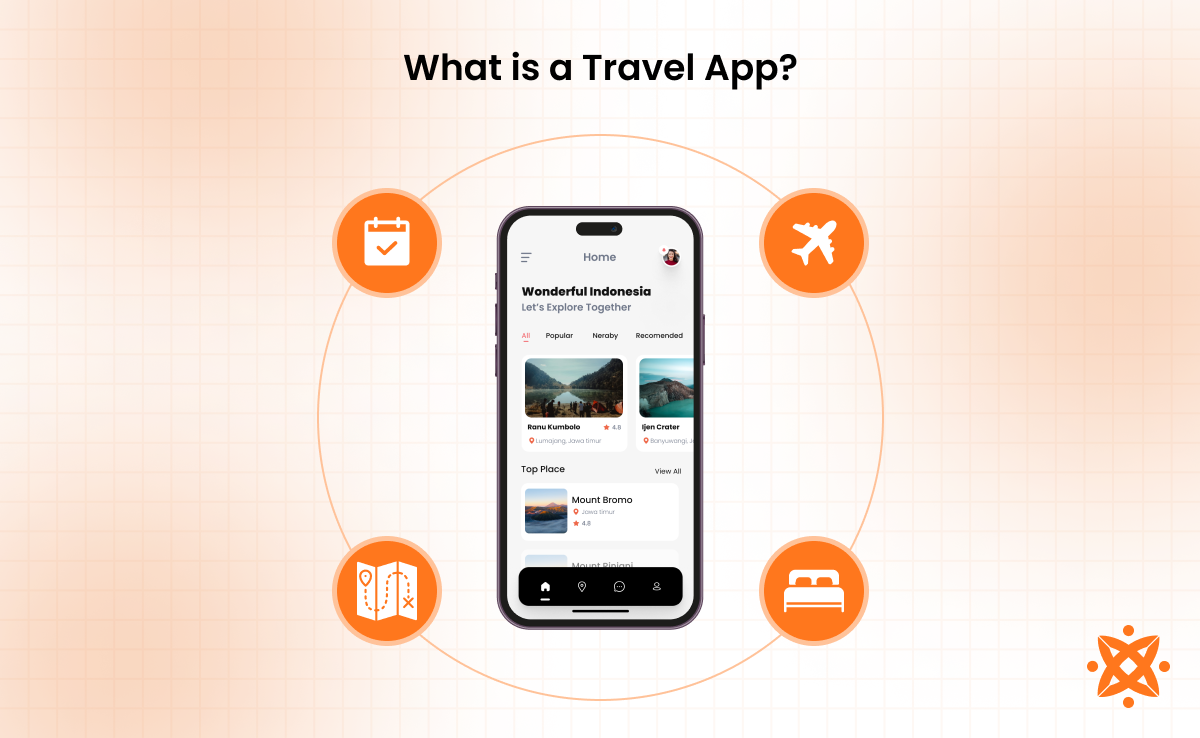
Travel apps include features like price comparison, itinerary management, and real-time updates to improve the overall travel experience.
The primary purpose of a travel app is to simplify and facilitate travel-related activities, offering convenience and efficiency for both leisure and business travellers. They aim to reduce the complexity of planning trips, save time, provide personalised recommendations, and ensure seamless access to important travel services. These apps empower users to make informed decisions quickly by consolidating various travel needs into a single platform.
Travel apps work by integrating with a wide range of third-party services and APIs (Application Programming Interfaces), such as airline databases, hotel reservation systems, and map providers. Users input their preferences, such as destination, dates, and budget, and the app aggregates and displays relevant options. Machine learning and AI offer practical suggestions, while GPS technology provides location-based features like navigation or nearby recommendations.
The history of travel apps began with the rise of the internet and mobile technology. Early online booking platforms emerged in the 1990s, but smartphones revolutionised the industry in the late 2000s. Apps like Expedia, TripAdvisor, and Airbnb gained prominence by providing a mobile-first approach to travel. Over time, these apps evolved to include advanced features such as augmented reality (AR) for immersive experiences and AI chatbots for instant support.
According to a report by Amazon Web Services, the online travel booking market was estimated at $485.1 billion in 2022 and is expected to reach around $1589.6 billion by 2032. It is poised to grow at a Percentage Compound Annual Growth Rate (CAGR) of 12.6% from 2023 to 2032. Apps like Booking.com, Expedia, and Airbnb dominate the market, with millions of daily active users. Over 80% of travellers now use apps to plan or book their trips, with the Asia-Pacific region leading in adoption.
The types of travel apps are expense travel apps, excursion travel apps, visa travel apps, vacation travel apps, translation travel apps, travel tracking apps, and business travel apps. Each type serves a unique purpose and caters to specific traveller needs, combining convenience, efficiency, and tailored features to enhance the travel experience.

The types of travel apps are as follows:
Expense travel apps are tools designed to help travellers manage and monitor their trip expenditures effectively. They are particularly useful for individuals or groups who want to keep track of expenses, allocate budgets, and avoid overspending during their travels. These apps cater to leisure and business travellers who must maintain detailed records for personal use or company reimbursements.
These apps offer features like real-time expense tracking, multi-currency support, receipt scanning, and integration with bank accounts. Many also allow users to categorise spending into accommodation, food, and transportation. These features enhance financial control, reduce the risk of overspending, and simplify end-of-trip budgeting.
Expensify, one of the leading platforms in this category, serves more than 15 million users globally. It offers features like automated receipt scanning, multi-currency expense tracking, and corporate card integration, simplifying employee expense reporting and helping businesses comply with financial policies. Other examples of expense travel apps include Zoho Expense, Splitwise, TripLog, and Rydoo.
According to Allied Market Research, the expense travel app market was valued at $3 billion in 2022 and is projected to reach $15.7 billion by 2032, growing at a CAGR of 18.3%. Over 60% of travellers use expense travel apps to ensure financial organisation and efficiency for their business trips or personal journeys.
Excursion travel apps are designed to help travellers discover, book, and manage local activities, tours, and attractions. These apps are perfect for those looking to improve their travel experience by exploring unique and exciting things to do at their destination. Whether it's a guided city tour, a cultural experience, or an adventure activity, these apps provide comprehensive options customised to user preferences.
Some popular examples include Booking, Expedia, Kayak, and TripAdvisor. These apps offer features like curated itineraries, user reviews, real-time booking, and exclusive discounts. They also use GPS integration to suggest nearby attractions based on the traveller's location. These apps save time, ensure access to verified service providers, and offer deals unavailable elsewhere.
According to a study by Imtiaz H. et al., 2022, titled "Mobile Travel Apps Engagement: Measuring Tourists' Perception," an impressive 76% of global travellers use travel apps to reduce the stress of travel planning. Nearly 60% of all hotel bookings are now made online, with mobile devices accounting for almost 25% of these bookings.
Visa travel apps are specialised tools that simplify the often-complicated visa application process for international travellers. These apps provide valuable information about visa requirements, application procedures, and required documents based on the user's nationality and destination.
Many visa apps also offer services like document preparation, form submission, and appointment scheduling with different embassies. You don't need to pay travel agencies for these services, and rather, you complete the entire process yourself while ensuring compliance with immigration regulations. Some even provide real-time updates on application status and visa approval timelines.
Some leading examples of visa travel apps are Visa Airport Companion (VAC), iVisa, and Atlys, which cater to millions of travellers. According to AppTweak, iVisa experienced a 140% increase in daily app installs from search during the last three months of 2024. With over a decade of experience, iVisa claims to enjoy a remarkable 98% visa approval rate, and it has assisted millions of users in securing visas quickly and efficiently.
Vacation travel apps provide an all-in-one solution for planning, booking, and managing vacations within a country or abroad. They are designed for travellers seeking an effortless way to organise their vacations, offering options for accommodation, transportation, activities, and more.
The core features of a goof vacation app include itinerary creation, budget management, and personalised recommendations, which improve and facilitate the overall travel experience. These apps also include user reviews, real-time updates, and exclusive discounts to ensure the best value.
TripAdvisor, Kayak, and Expedia are among the top vacation travel apps. According to Stories from Hilton, 62% of global adult Gen Z travellers reported using AI tools to save money on travel. In 2023, over 850 million people used travel apps to plan their trips, and by June 2023, travel app log-ins were 87% higher compared to the end of 2019.
Translation travel apps are necessary tools for overcoming language barriers while travelling globally. They enable travellers to communicate effectively in foreign languages by offering real-time text, voice, and even image translations, resulting in a smoother and more immersive travel experience.
The key features of such translation travel apps include support for multiple languages, offline functionality for areas with limited connectivity, and pronunciation guides. Some advanced apps also provide cultural tips to help travellers navigate social norms and etiquette.
Google Translate, iTranslate, and TripLingo are popular translation apps with over 500 million downloads globally. These apps are important for international travellers because they facilitate communication and cross-cultural connections.
Travel tracking apps help users monitor their journeys, keeping track of locations, itineraries, and schedules. They are particularly useful for solo travellers or those embarking on multi-destination trips.
These apps feature GPS integration, real-time location sharing, and notifications for itinerary changes. They also offer historical tracking, allowing users to document their travels. Travel tracking apps improve safety, facilitate better organisation, and enable users to share travel experiences with friends and family.
TrackMyTour, Skyscanner, VizEat, and Findradar 24 are popular Tracking apps used frequently by travellers. As solo travel gains popularity, 40% of such travellers cite these apps as necessary for comfortable and organised voyages.
Business travel apps are designed particularly to facilitate corporate travel by offering booking, expense management, and itinerary coordination tools. These apps cater to companies and employees, ensuring compliance with travel policies while enhancing convenience.
Automated expense reporting, travel approval workflows, and analytics for monitoring travel spending are among the sought-after features of these apps. Business travel apps integrate with corporate systems, making them a strong resource for managing large-scale travel programs.
Apps like SAP Concur, Jetzy, and TravelPerk are leading examples of commonly used business travel apps. According to Stratos Jet Charters, U.S. business travellers take over 405 million long-haul trips annually. In 2023, 68% of business travellers booked trips online, and 66.5% of companies used mobile-enabled expense reporting platforms, according to FinancesOnline.
Solo travel apps are designed and developed to meet the unique needs of individuals travelling alone. These apps focus on enhancing safety, providing social opportunities, and offering personalised recommendations.
Solo travel apps focus on features like emergency contact options, local activity suggestions, and forums for connecting with other solo travellers. They also provide safety tips and travel guides designed particularly for solo adventurers.
Popular apps like SoloTraveller and Backpackr cater to a growing demographic. Solo travel has increased by 30% in recent years, and these apps empower solo travellers to explore confidently and make meaningful connections.
Adventure travel apps cater to thrill-seekers seeking outdoor and extreme activities such as hiking, diving, and skiing. These apps provide tools for discovering, planning, and booking adventure experiences, ensuring safety and convenience.
Adventure travel apps feature guided tour listings, equipment rental options, and safety guidelines. Many apps also integrate with GPS for trail maps and real-time navigation. As adventure travel gains momentum, 20% of travellers actively use apps like AllTrails and PeakVisor to enhance their outdoor experiences.
Ticket booking apps are platforms that allow users to search for and reserve tickets for various modes of transportation, such as flights, trains, and buses, as well as events like concerts, shows, and sports games. These apps serve as a centralised hub for managing ticket reservations, allowing users to compare options, prices, and schedules in one place.
The primary purpose of ticket booking apps is to simplify the reservation process, saving users time and effort while ensuring they get the best deals. Key features of such apps include price comparisons, flexible date and time searches, instant booking confirmations, and secure payment gateways. Many apps offer benefits like fare alerts, loyalty program integration, and refund or cancellation options.
Skyscanner, Omio, RedBus, and BookMyShow are among the most popular ticket-booking apps. Over 80% of travellers use them for transportation bookings. Ticket-booking apps are also gaining popularity in the event industry, enabling users to secure seats for high-demand occasions.
Virtual tour apps provide users with immersive digital experiences of destinations, landmarks, and attractions. They utilise advanced technologies like virtual reality (VR) and augmented reality (AR) to enable users to explore various locations remotely. These apps are particularly valuable for individuals unable to travel due to time, budget, or health constraints.
These apps offer realistic previews of destinations through 360-degree panoramas, guided audio or video tours, and interactive maps. They help users plan trips or explore places they have never visited in person. Some apps, such as Google Arts & Culture, YouVisit, and Matterport, integrate with travel planning tools, allowing users to add destinations to their itineraries.
Hotel booking apps enable users to search for, compare, and reserve accommodations worldwide. These apps provide access to a vast database of hotels, resorts, and other lodging options, accompanied by user reviews, photos, and detailed descriptions to help travellers make informed decisions.
The primary purpose of hotel booking apps is to simplify finding and reserving accommodations. They ensure convenience and cost-effectiveness by offering real-time availability, price comparisons, filters for amenities and locations, and exclusive deals or discounts. Apps like Booking.com, Agoda, Hotels.com, and Expedia allow users to manage bookings, earn loyalty rewards, and access 24/7 customer support.
According to the 2024 Trends Global Survey, 80% of global travellers surveyed feel it's important to be able to book their trips entirely online. In 2023, the international hotel booking app development market was valued at $4.86 billion and is expected to grow to $7.64 billion by 2025, with almost 60% of all hotel bookings being made online.
Vehicle rental booking apps are specialised platforms that allow travellers to find and reserve vehicles for temporary use, either self-driving or with a chauffeur. These apps connect users with rental agencies or private vehicle owners and offer a range of options, from economy cars to luxury vehicles.
Vehicle rental apps primarily provide convenience, flexibility, and cost-effective transportation solutions. These apps usually include location-based vehicle availability, real-time pricing, customisable rental durations, and optional insurance packages. Some apps also offer advanced filters for fuel efficiency, transmission type, and vehicle size.
Popular vehicle rental apps include Hertz, Avis, and Enterprise Rent-A-Car. According to a report by Facts and Figures, the global car rental market was valued at $116.34 billion in 2022 and is projected to reach $246.12 billion by 2032. The vehicle rental booking app market is expected to grow at a compound annual growth rate (CAGR) of 11.2% from 2023 to 2030.
Homestay apps connect travellers with local hosts who offer accommodations in their homes or unique properties. These apps emphasise authentic, immersive experiences by allowing users to stay in private residences with opportunities to engage directly with hosts. Apps enable travellers to choose from various options, including shared spaces, private rooms, or entire homes.
Homestay apps are affordable, culturally enriching lodging alternatives to traditional hotels. They particularly appeal to travellers seeking a personal touch or wanting to experience local lifestyles. Key features include host profiles, detailed property descriptions, real guest reviews, and secure payment systems. Some apps also offer curated collections of unique stays, such as treehouses, farm stays, or luxury villas.
Leading homestay apps include Airbnb, Vrbo, and Homestay.com. Airbnb is the most prominent player, boasting over 150 million users worldwide. As of 2023, approximately 40% of travellers use homestay apps, and many cite affordability, comfort, and a desire for unique experiences as key reasons for their popularity.
Flight booking apps are digital platforms that help users conveniently search, compare, and book airline tickets. These apps provide access to a wide range of flight options from multiple airlines and include tools to monitor prices and secure the best deals. They cater to individual travellers, families, and even corporate clients, simplifying the traditionally complex flight booking process.
The purpose of flight booking apps is to make air travel planning efficient and accessible. Key features include fare alerts, flexible date searches, loyalty program integrations, and multi-destination booking capabilities. Many apps offer additional services like seat selection, meal preferences, and travel insurance. Travellers benefit from real-time updates, transparent pricing, and the ability to customise their travel itineraries.
Popular flight booking apps include Skyscanner, Hopper, Kayak, Expedia, and Google Flights. These apps dominate the travel industry, with an estimated 60% of airline ticket sales now made through mobile platforms. According to Global Market Insights, the Online Airline Booking Platform Market was valued at $210.8 billion in 2023 and is estimated to register a CAGR of over 7.5% between 2024 and 2032.
The main features of a travel app include offline maps, flight booking and hotel deals, personalised travel itinerary planners, and real-time flight updates. These features cater to various aspects of travel, including planning, booking, navigation, and budgeting.
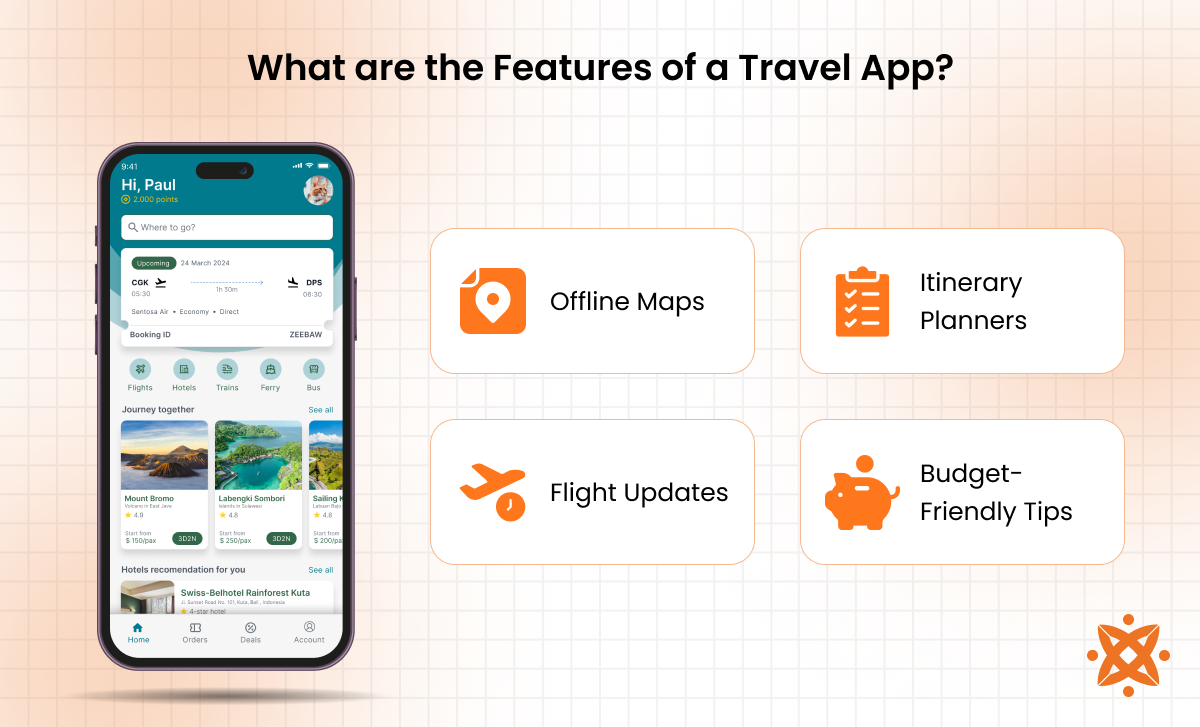
The main features of a travel app are as follows:
To develop and design travel apps for Android and iPhone, developers must focus on creating smooth, intuitive, and feature-rich experiences that cater to the unique requirements of both platforms. The process involves defining app requirements, designing user-friendly interfaces, and building robust functionality using appropriate programming languages and frameworks. Both platforms require rigorous testing and optimisation to ensure high performance and a bug-free experience.
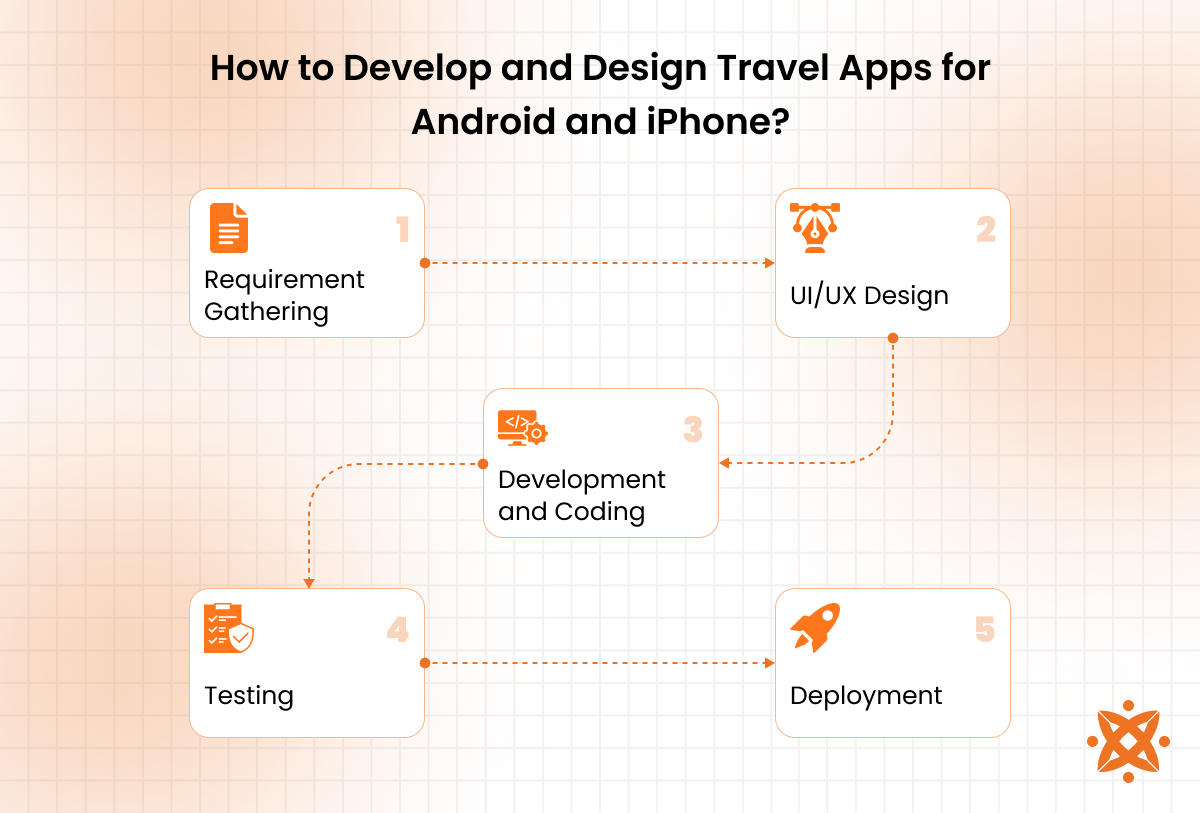
The development process for an Android travel app involves using Android-specific tools and frameworks to create an efficient, responsive, and visually appealing application. Developers focus on utilising Kotlin and Java for programming, integrating AI for advanced features, and employing tools like Android Studio for effortless development.
To develop and design a travel app for Android, the following process is employed:
The development process for iPhone travel apps focuses on using Apple's ecosystem, tools, and guidelines to deliver a high-quality, smooth user experience. Swift and Objective-C are used for programming, and tools like Xcode help developers build and optimise the app efficiently.
To develop and design a travel app for iPhone, the following process is employed:
The cost of developing travel apps ranges between £20,000 and £70,000 for a basic app, depending on features, design complexity, and platform (Android or iOS). For a more advanced app with functionalities like AI integration, real-time updates, offline maps, and cross-platform compatibility, the cost increases to £150,000 or more.
Other factors, such as the development team's location, app scalability, and the time required for testing and optimisation, influence the overall cost of app development. Businesses should carefully evaluate their requirements and budget to achieve the desired functionality without overspending.
To choose a travel app development company, it is important to evaluate its expertise in developing travel apps, including its experience with features like offline maps, flight booking integrations, and real-time updates. Reviewing their portfolio to ensure they have successfully delivered projects similar to your requirements is also important. Check client reviews and testimonials to gauge their reliability, quality of work, and adherence to deadlines.
Ensure the company is proficient in the necessary technologies, such as AI integration and frameworks like React Native, and offers transparent communication throughout the project. If you're in the UK and looking for a reliable travel app development company, consider Intelivita. It specialises in creating innovative travel solutions tailored to business needs.
The best travel apps are Skyscanner, Airbnb, Meetup, TravelSpend, and TripIt, each catering to specific travel needs. These apps excel in finding affordable flights and accommodations, connecting travellers with locals or fellow adventurers, and offering payment flexibility with methods like PayPal and Apple Pay. Each is designed to enhance the travel experience by addressing diverse requirements such as budgeting, safety, and socialising.
The best travel apps are as follows:
The most downloadable travel apps are Google Maps, Uber, and Booking.com, each with downloads exceeding hundreds of millions globally, according to Statista. These apps are useful for navigation, transportation, and accommodations, making them necessary tools for travellers worldwide.
The most downloadable travel apps are as follows:
The best language learning apps for travel are Duolingo, Babbel, and Rosetta Stone, each offering efficient and engaging methods to learn the most commonly used phrases and vocabulary for various languages. These language learning apps stand out for their ease of use, travel-specific content, and accessibility for learners at all levels.
The best language learning apps for travel are as follows:
Sign up now and get notified when we publish a new article!
Co-Founder
Hey there. I am Dhaval Sarvaiya, one of the Founders of Intelivita. Intelivita is a mobile app development company that helps companies achieve the goal of Digital Transformation. I help Enterprises and Startups overcome their Digital Transformation and mobile app development challenges with the might of on-demand solutions powered by cutting-edge technology.
