


Co-Founder

A fitness app refers to a mobile application designed to promote physical activity and overall health by providing tools for workout plans, activity tracking, and fitness progress analysis.
According to a study by Business of Apps titled "Fitness App Market Overview," published in 2023, fitness apps generated $3.58 billion in revenue with 368 million active users globally, reflecting a 9.1% increase in revenue compared to the previous year.
The key features of a fitness app include user-friendly interfaces, customizable workout plans, activity trackers, and progress monitoring tools.
Advanced functionalities also include integration with health apps, virtual coaching, yoga app programs, and specialized tools for running or cycling activities.
Popular fitness apps include MyFitnessPal, known for calorie tracking and diet integration, and Strava, a workout app that tracks running and cycling. Yoga apps like Daily Yoga focus on flexibility and mindfulness, while Nike Training Club provides personalized workout plans.
Developing a fitness app involves stages such as market research, UI/UX design, backend and frontend development, testing, and deployment. This process applies to exercise apps, running apps, cycling apps, and health apps.
According to a study by Kiemute Oyibo et al. titled "Relationship between Perceived UX Design Attributes and Persuasive Features: A Case Study of Fitness App," published in Information (2021), UX design directly impacts user engagement, showing the importance of creating an intuitive user interface with smooth functionality for exercise and health tracking.
Fitness app development costs range from £25,000 to £80,000, depending on the complexity of features like workout trackers, yoga app modules, and health app integrations.
Fitness apps help users achieve healthier lifestyles by addressing sedentary behaviors and encouraging consistent exercise routines.
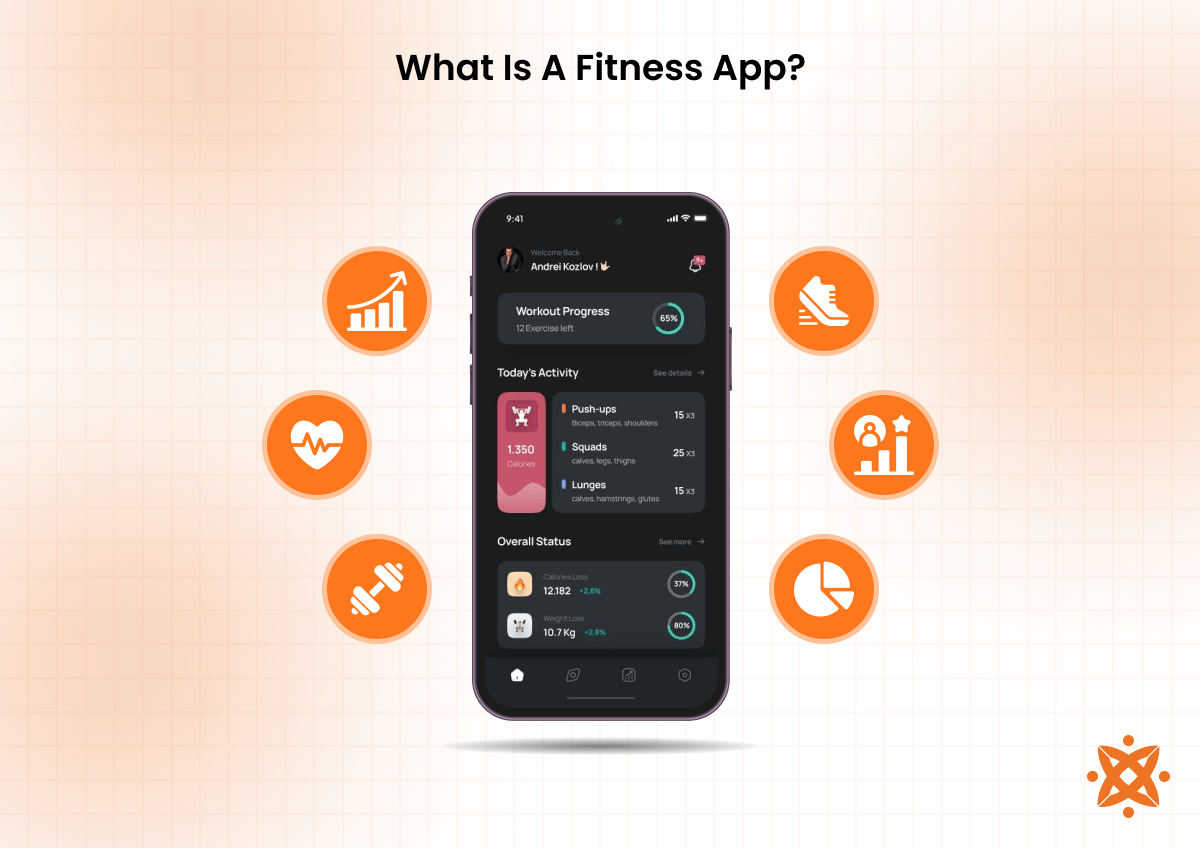
A fitness app is a mobile application designed to promote physical activity, healthy habits, and overall well-being. These apps offer tools for creating and following workout plans, tracking physical activities, and monitoring health metrics like calories burned or steps taken.
They cater to a wide range of fitness needs, including running, cycling, strength training, and yoga, and are a perfect solution for individuals seeking to maintain or improve their physical condition.
Fitness apps' core functionalities include personalized workout programs, activity tracking, and progress reporting. Many apps integrate features like goal-setting, reminders, and virtual coaching to intensify user engagement.
Some apps have social connectivity, allowing users to share achievements, compete with others, or participate in group challenges. These functionalities help users adopt healthier routines and reduce sedentary lifestyles.
Fitness apps have gained massive popularity worldwide. According to research by Statista titled U.S. Health and Fitness Usage 2022, during the COVID-19 pandemic, 74% of Americans reported using at least one fitness app, with 60% considering canceling their gym memberships.
This growth is fueled by rising awareness of health and wellness, increased smartphone penetration, and advancements in-app functionalities.
Revenue from subscriptions and premium features also contributes to the market's financial success, making fitness apps a dominant player in the health tech industry.
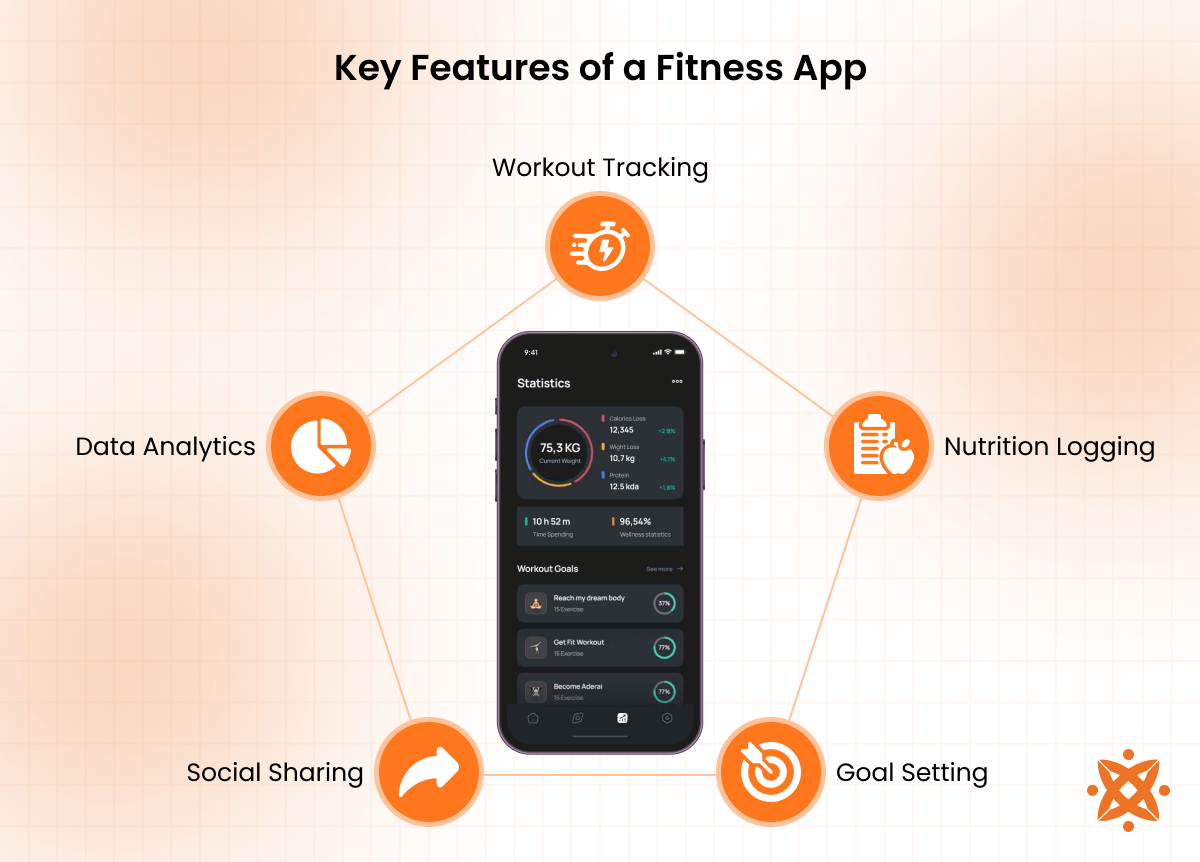
The key features of fitness apps are workout tracking, nutrition logging, goal setting, social sharing, and data analytics.
These functionalities help users monitor physical activity, maintain dietary habits, set and achieve fitness goals, connect with others for motivation, and analyze performance metrics for improved results.
The key features of a fitness app include:
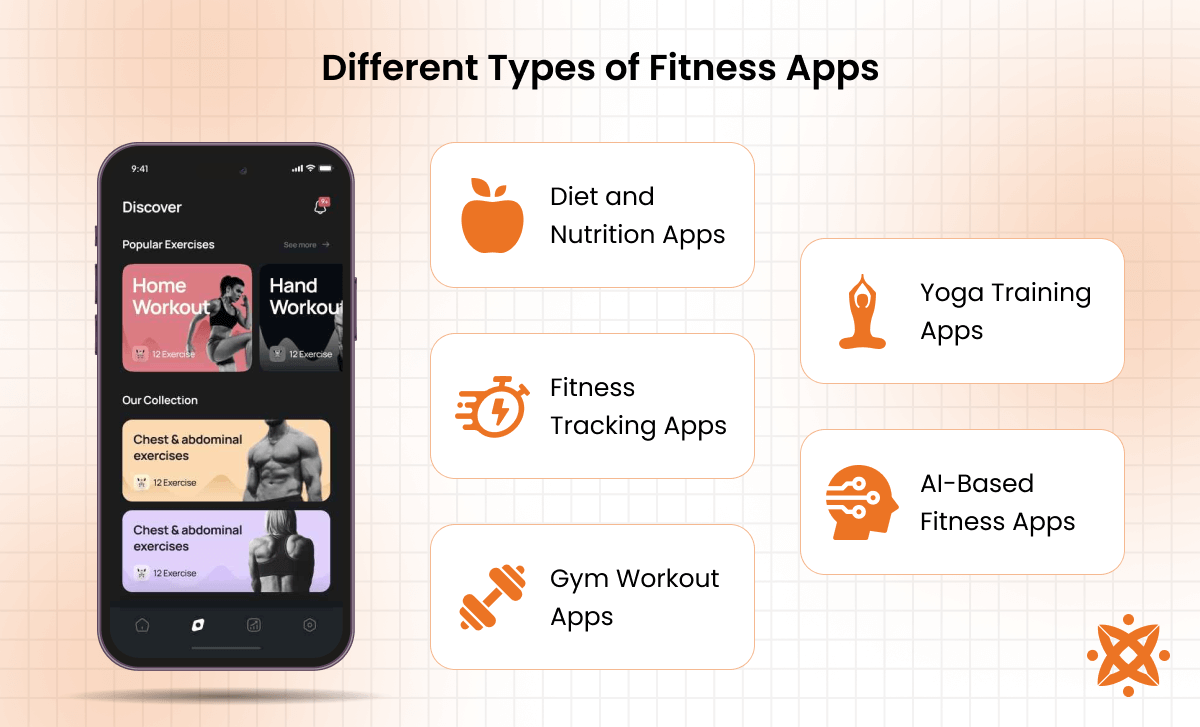
The different fitness app ideas are diet and nutrition apps, fitness tracking apps, gym workout apps, yoga training apps, and AI-based fitness apps.
Examples include MyFitnessPal, known for calorie tracking, and the British Army Fitness App, which gives structured workout routines and calisthenics programs for strength building.
The different fitness app ideas include:
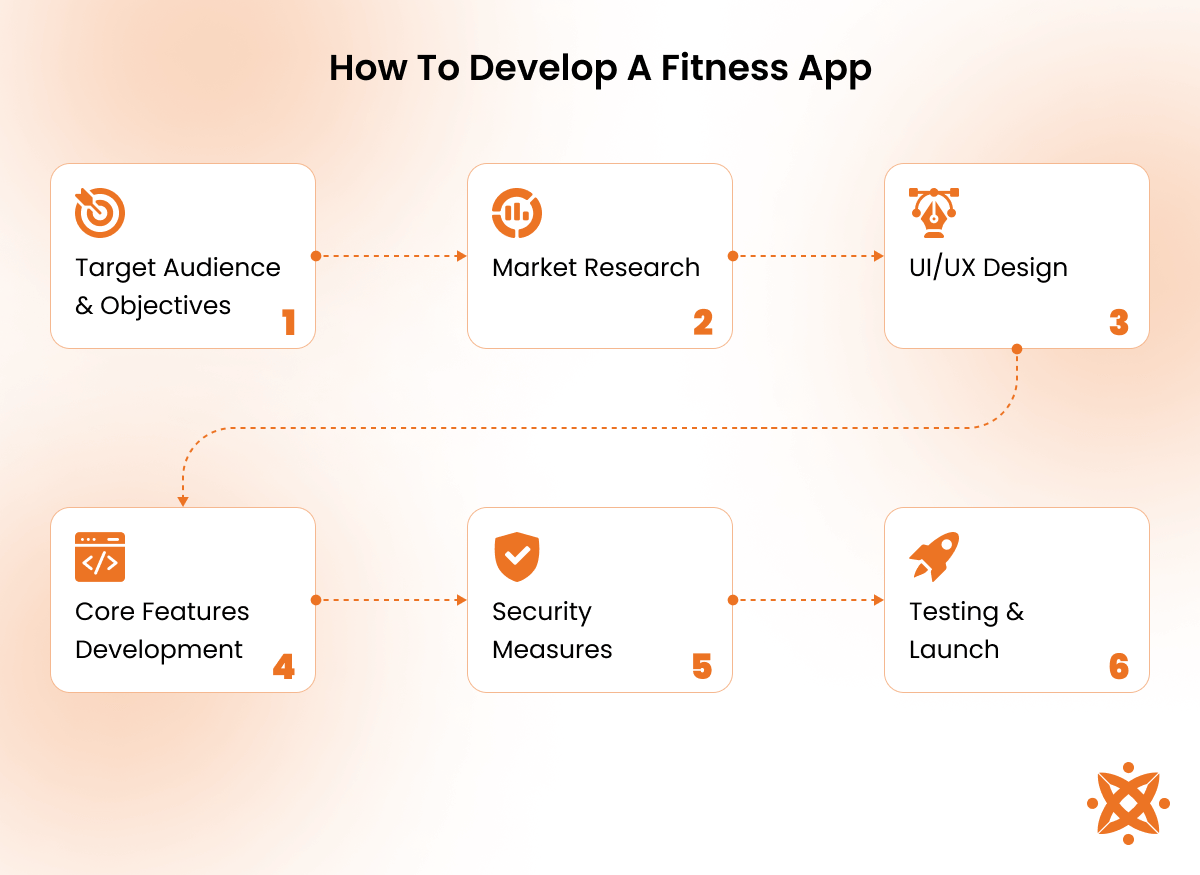
To develop a fitness app, the following steps are involved:
The first step in developing a fitness app is understanding who will use it and why. This step involves identifying user demographics, fitness preferences, and potential pain points.
For example, an app for runners focuses on tracking routes and pacing, while a yoga app emphasizes guided sessions and flexibility routines. Clear objectives, such as reducing sedentary lifestyles or improving activity tracking, provide a roadmap for features and design.
Examining existing fitness apps like MyFitnessPal or the British Army Fitness App helps developers pinpoint gaps and trends. Competitor analysis reveals what works, such as social sharing or workout tracking, and what can be improved.
Developers create a unique product that stands out while meeting user needs effectively by understanding market demands.
The app’s interface must be easy to navigate, visually appealing, and optimized for various fitness activities. A well-designed UI ensures users effortlessly access features like workout plans or calorie trackers.
Similarly, UX design should facilitate interactions, ensuring that users remain engaged and satisfied throughout their fitness journey.
The core features form the backbone of any fitness app. These include workout tracking, activity monitoring, goal setting, and nutrition logging.
For example, a running app focuses on route mapping and pace analysis, while a yoga app offers pose tutorials and meditation exercises. These functionalities ensure the app effectively caters to its intended purpose.
Data privacy is necessary for fitness app development, especially with features like activity tracking and personal health data storage.
Developers must implement encryption and adhere to data protection laws such as GDPR. Secure handling of sensitive information builds user trust and ensures compliance with legal standards.
Comprehensive testing ensures the app works reliably across different devices and scenarios. This includes functionality checks for workout tracking, UI responsiveness, and integration with health apps.
Addressing bugs and optimizing performance during testing results in a smooth and error-free user experience post-launch.
The tools and technologies used in fitness app development include programming languages and frameworks, payment gateways and security tools, and backend infrastructure and database solutions. Each serves a specific purpose in creating reliable, secure, and user-friendly apps.
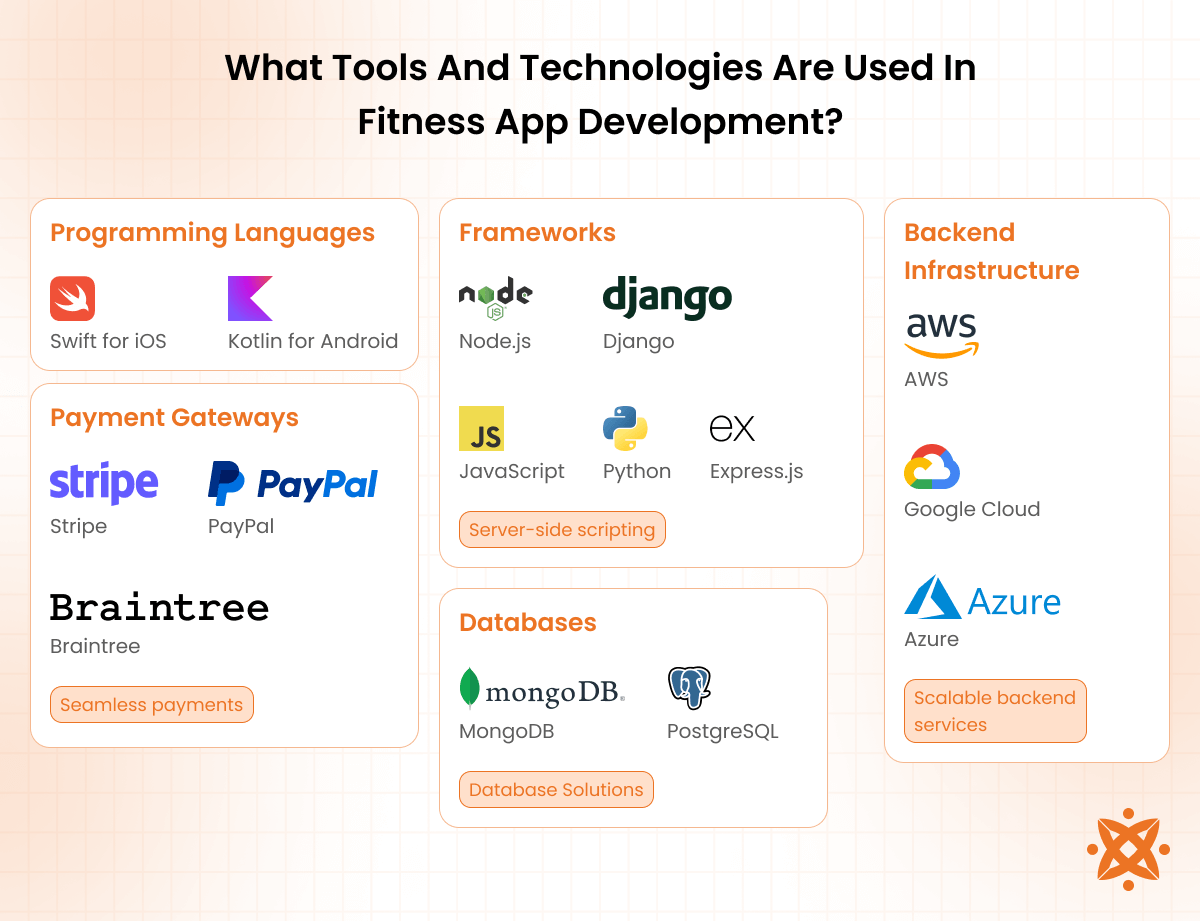
The tools and technologies used in fitness app development are:
Programming languages and frameworks form the foundation of a fitness app's development process, enabling the creation of features like workout tracking, goal setting, and user interaction.
The tools for programming languages and frameworks include:
Frameworks simplify the development process by offering prebuilt tools and libraries. Tools for fitness app framework include:
Payment gateways and security tools ensure secure transactions and protect user data in fitness apps offering subscription-based services or premium features.
Payment gateways and security tools for fitness apps include:
Backend infrastructure and database solutions provide the foundation for app functionality, ensuring seamless data processing and storage.
Backend infrastructure and database solutions include:
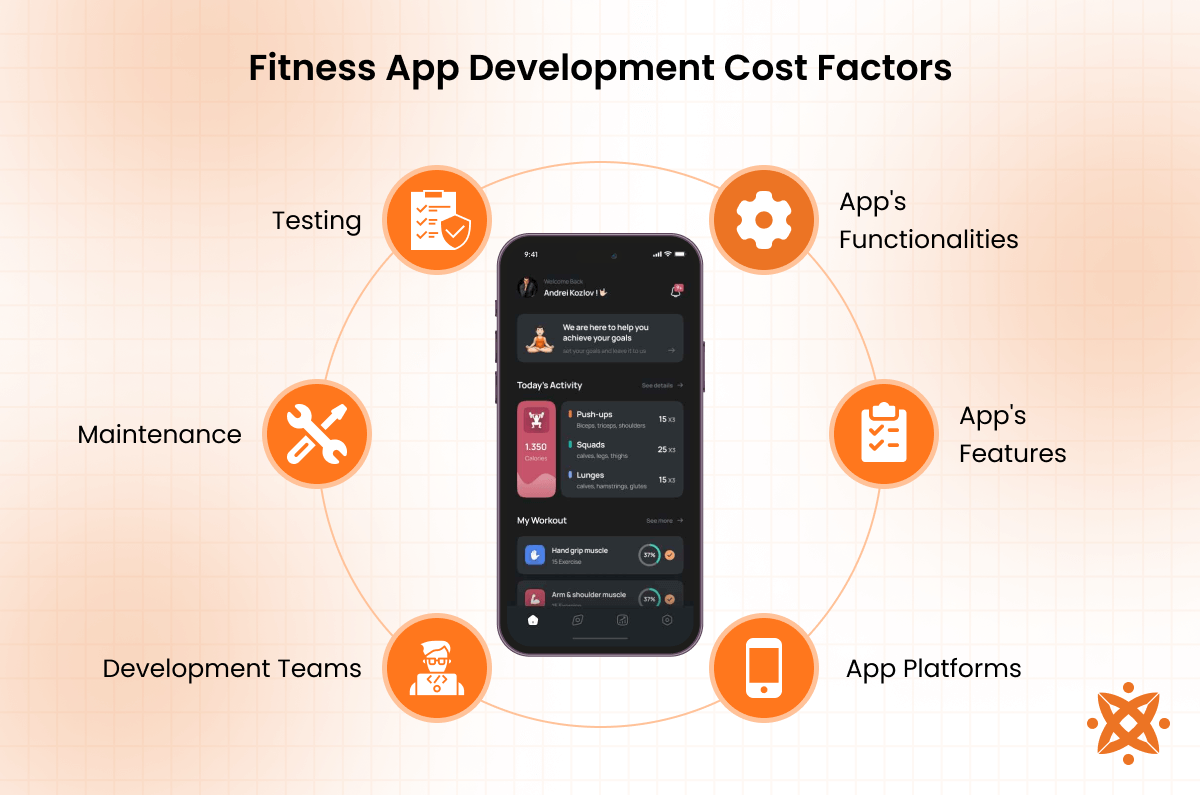
The cost of developing a fitness app ranges from £25,000 to £80,000. This cost variation depends on factors such as the app's complexity, the features included, the number of platforms it supports, and the size of the development team.
Collectively, these factors determine the financial requirements for creating an app that meets user expectations.
The app's features and functionalities are one of the most significant cost drivers. Basic apps that include standard workout tracking and goal-setting features cost between £15,000 and £20,000. However, advanced features like AI-driven workout plans, social sharing options, or integration with health tools increase the price to £80,000 or more.
The choice of platform also affects development expenses. Apps developed for a single platform, such as iOS or Android, cost between £8000 and £12,000. Developing a cross-platform app, however, requires additional coding and testing, which raises the cost from around £15,000 to £20,000.
The size and expertise of the development team play a huge role in determining costs. Hourly rates for development teams range from £50 to £150, depending on the team's experience and skill set.
Backend infrastructure and database management also add another layer of expense. Implementing scalable solutions, such as AWS or Google Cloud, for server maintenance and user data storage requires an initial investment of £5,000 to £10,000. Maintenance after launch ranges from 15% to 20% of the initial development cost annually.
The cost of testing depends on the app's complexity and the number of testing cycles required, ranging from $5,000 to $8,000. A well-tested app provides a smooth user experience and retains users.
The best fitness app builders are platforms and tools that simplify the app development process by offering pre-built templates, drag-and-drop functionalities, and integration options for essential features.
Notable examples include BuildFire, AppGyver, and GoodBarber. These platforms enable developers and businesses to create workout tracking, goal-setting, and activity-monitoring tools without extensive coding knowledge.
BuildFire stands out for its flexibility and ease of use. It allows developers to integrate features like activity trackers, workout plans, and payment systems.
AppGyver's low-code approach focuses on creating high-performance apps that are suitable for both simple yoga apps and complex fitness tracking platforms.
GoodBarber offers advanced customization options, particularly for apps requiring social sharing and data analytics, ensuring a polished user interface and user experience.
According to a 2023 study by MarketWatch titled "Mobile App Builders Market Trends and Growth," platforms like these reduce development time by up to 60%, making them cost-effective options for small businesses and startups.
Their ability to integrate with cloud services and payment gateways further increases the app's functionality, providing a complete solution for modern fitness app development.
The benefits of using fitness apps include custom workout plans, progress tracking, improved health management, and convenience in maintaining fitness routines. These apps provide tools for setting fitness goals, monitoring daily activities, and maintaining accountability, making it easier for users to stay consistent.
Fitness apps excel in individualization by offering customized plans for activities such as running, yoga, and cycling. Social features enhance user motivation by creating a sense of community through shared challenges and progress updates.
These apps also save time and money by providing virtual coaching and insights without the need for expensive trainers or gym memberships. Data analytics further empower users by offering clear metrics on their health and fitness progress.
Yes, you can design a fitness app with AI, and it is increasingly becoming a standard approach in app development. AI enhances fitness apps by enabling distinctive recommendations, real-time feedback, and adaptive workout plans attuned to individual user data.
AI-based fitness apps analyze user metrics, such as activity levels, heart rate, and fitness goals, to provide dynamic suggestions for workouts and nutrition. Features like virtual coaching, automated tracking, and predictive analytics help users achieve their goals more efficiently.
AI also supports advanced functionalities, such as analyzing form during exercises or creating adaptive schedules based on progress. This technology ensures a highly customized experience, making fitness more engaging and results-oriented.
Yes, React Native is a popular framework for developing fitness apps, offering cross-platform compatibility and efficient development processes. It allows developers to create a single codebase that works seamlessly on both iOS and Android, reducing costs and time.
Fitness apps built with React Native integrate features like workout tracking, goal setting, and social sharing. The framework supports third-party libraries and APIs for activity tracking, payment systems, and data analytics.
React Native also enables the creation of visually appealing and responsive user interfaces, ensuring a smooth experience across devices.
Yes, you can develop a fitness app using Kotlin. Kotlin is an excellent choice for developing fitness apps specifically for Android devices. It is the official programming language for Android app development and offers concise syntax, high performance, and seamless integration with existing Java code.
Fitness apps developed with Kotlin include features such as workout tracking, activity monitoring, and individual goal-setting. Its compatibility with modern development tools and libraries helps developers create intuitive user interfaces and robust backend.
Kotlin’s stability and efficiency make it ideal for building reliable fitness applications that perform well on Android devices.
To choose a fitness app development agency, evaluate their experience, technical expertise, and familiarity with the fitness industry. A strong agency should have a portfolio showcasing apps with features like workout tracking, goal setting, and data integration, demonstrating their capability to deliver a high-quality product.
Research the agency’s previous projects to understand its ability to design intuitive user interfaces and implement advanced tools such as AI or cloud-based services. Ensure it provides clear communication, detailed timelines, and post-launch support to handle updates and technical maintenance efficiently.
Selecting an agency with a transparent approach and industry-specific insights ensures that you retain the objectives of your health fitness app development.
The difference between a fitness app and a health app lies in their primary focus. Fitness apps are designed to enhance physical activity by offering workout plans, activity tracking, and goal-setting features, while health apps focus on overall well-being, including tracking vital signs, managing chronic conditions, and monitoring sleep and nutrition.
Fitness apps emphasize physical performance through features like exercise tracking, running routes, and cycling metrics. Health apps take a broader approach, integrating medical data, wearable devices, and personalized health insights.
While both apps overlap in functionality, their core objectives remain to personify and target physical improvement, with health apps focusing on holistic health management.
To make a fitness app for free, use no-code or low-code platforms that offer free plans or trials, such as AppGyver or Adalo. These tools provide pre-designed templates and drag-and-drop functionality, allowing users to create basic apps without programming knowledge.
Start by defining your app's core features, such as workout tracking or activity monitoring, and implement them using the platform’s available components. While these platforms enable free development, additional costs arise for advanced features or publishing the app on app stores.
Free tools are a good starting point for a fully functional app, but professional-level features require paid upgrades.
Sign up now and get notified when we publish a new article!
Co-Founder
Hey there. I am Dhaval Sarvaiya, one of the Founders of Intelivita. Intelivita is a mobile app development company that helps companies achieve the goal of Digital Transformation. I help Enterprises and Startups overcome their Digital Transformation and mobile app development challenges with the might of on-demand solutions powered by cutting-edge technology.
