


Co-Founder

Augmented Reality (AR) apps improve mobile apps by combining digital elements with the physical environment, allowing users to interact with virtual objects in real-world settings. These apps, built on AR technology, use cameras and sensors to overlay virtual elements onto real-world environments, creating unique user experiences. AR apps enable unprecedented interactivity by enriching reality instead of replacing it, making them a growing trend in app development.
In 2020, approximately 83.1 million consumers in the United States used augmented reality (AR) monthly, accounting for 15% of the population, according to a report by Statista. By 2023, this number had increased to around 90 million users. The AR gaming market is projected to reach nearly $11.5 billion by 2025.
Some of the most popular Augmented Reality apps include Google Lens, which provides real-time object recognition; IKEA Place, which enables users to visualize furniture in their homes; and the iconic Pokémon GO, which combines outdoor exploration with AR gameplay. These apps showcase the potential of immersive AR technology to create engaging and practical solutions across various domains, from entertainment to utility.
Key features of AR apps include markerless AR technology, which eliminates the need for physical markers, precise spatial mapping for accurate virtual object placement, and smooth integration with device hardware like cameras and motion sensors. These features ensure AR apps deliver smart and intuitive user experiences, making them a cornerstone of modern mobile apps.
AR apps are versatile in the diverse industries that utilize them, such as healthcare, education, eCommerce, and construction. For example, AR apps enhance classroom learning, facilitate online shopping with virtual shopping carts, and assist architects in visualizing building plans. This adaptability emphasizes AR's transformative role in industries that require innovative digital solutions.
The AR app development process involves defining requirements, selecting AR development frameworks like ARKit or ARCore, creating 3D assets, and rigorous testing. By combining technical expertise with creativity, developers ensure AR apps are functional, user-friendly, and compatible with various platforms. The result is a new generation of mobile apps that revolutionize user interaction and bridge the gap between technology and reality.
An Augmented Reality (AR) app is a software application designed to overlay digital content, such as images, sounds, and other sensory enhancements, onto the real-world environment through a device such as a smartphone, tablet, or AR headset. AR apps blend the physical and digital worlds by utilizing the camera and sensors of these devices, , creating an interactive experience that enhances perception and interaction with the surroundings.
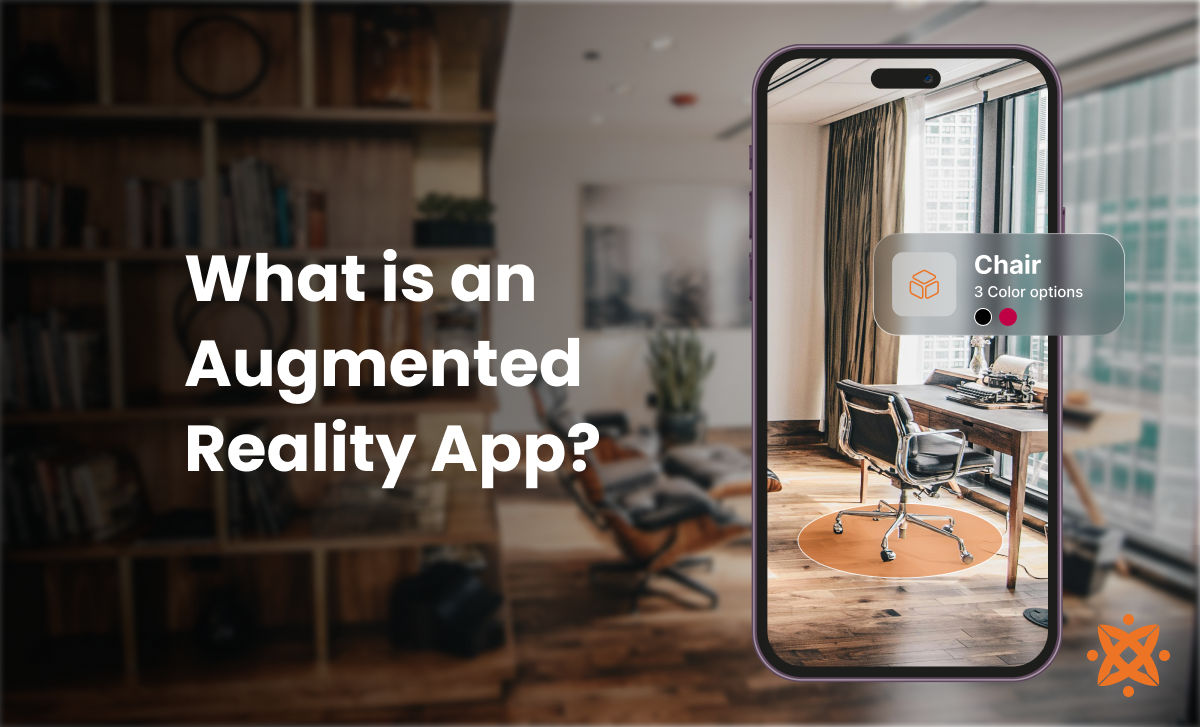
The primary aim of AR apps is to enrich real-world experiences with additional, contextually relevant information or entertainment. They are used in various fields, including gaming, education, healthcare, retail, and real estate. AR apps' benefits include improved user engagement, immersive learning experiences, enhanced visualization for design and planning, and interactive marketing opportunities.
AR apps function by combining hardware and software components. Devices equipped with cameras capture the user's environment, while sensors like GPS, gyroscopes, and accelerometers help determine the device's position and orientation. The AR app processes this data to identify and map physical spaces in real time.
AR apps use spatial awareness to overlay digital elements, such as 3D models, animations, or information onto the real-world view, ensuring they appear perfectly integrated. Advanced AR apps use technologies like SLAM (Simultaneous Localization and Mapping) to achieve greater accuracy and realism.
The concept of AR dates back to the 1960s, when computer scientist Ivan Sutherland developed the first head-mounted display system, considered a precursor to modern AR devices. In the 1990s, Tom Caudell, a researcher at Boeing, coined the term "augmented reality."
AR technology gained mainstream attention in the 2000s with advancements in mobile computing and the release of ARToolKit, an open-source AR development kit. In 2016, AR experienced a massive surge in popularity with the release of the game Pokémon GO, demonstrating its potential for mass adoption.
In recent years, the global AR market has experienced rapid growth. According to a Grand View Research report, the market was valued at approximately $25 billion in 2021 and is projected to exceed $100 billion by 2030, driven by advancements in 5G, AI, and AR devices. Key sectors adopting AR include retail (for virtual try-ons), healthcare (for surgical simulations), and education (for immersive learning tools).
According to a report by Exploding Topics, over 1.4 billion AR-enabled devices were in use globally in 2023. Approximately 50% of consumers report using AR apps at least once. Social media platforms are a major driver, with AR filters on apps like Instagram and Snapchat reaching millions of users daily.
Retail AR adoption is also impressive. Forbes Council shows that 61% of consumers prefer shopping at stores offering AR experiences, and products featuring AR content have an average 40% higher conversion rate.
The different types of augmented reality (AR) apps are marker-based AR, markerless AR, and projection-based AR, among others. Each type uses distinct technology and methods to overlay virtual content onto the real world, serving various applications and industries. These types overlap with specific variations like location-based and superimposition-based AR, offering tailored solutions for unique use cases.
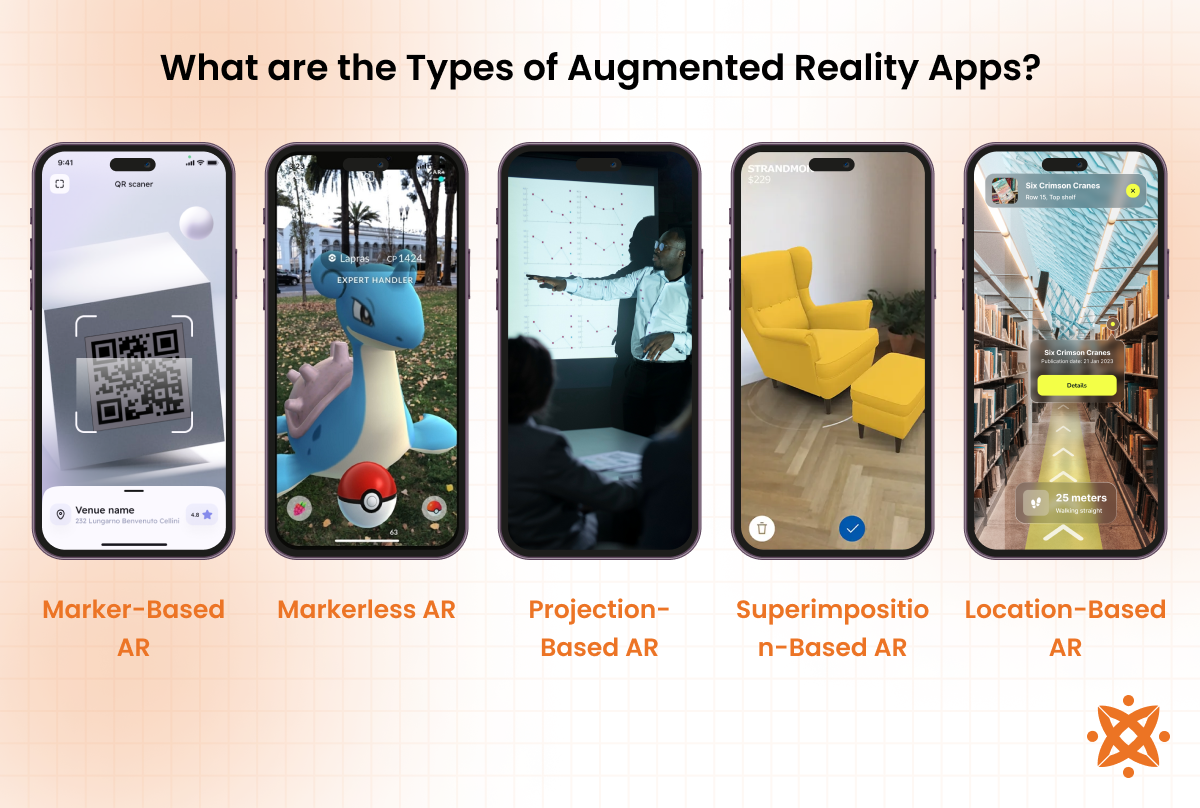
The different types of AR apps are as follows:
The most popular examples of augmented reality apps are Google Lens, IKEA Place, and Pokémon GO. These apps showcase the versatility of AR technology, offering solutions for productivity, retail, and entertainment. Each provides unique functionalities demonstrating how AR enhances user experiences across different domains.
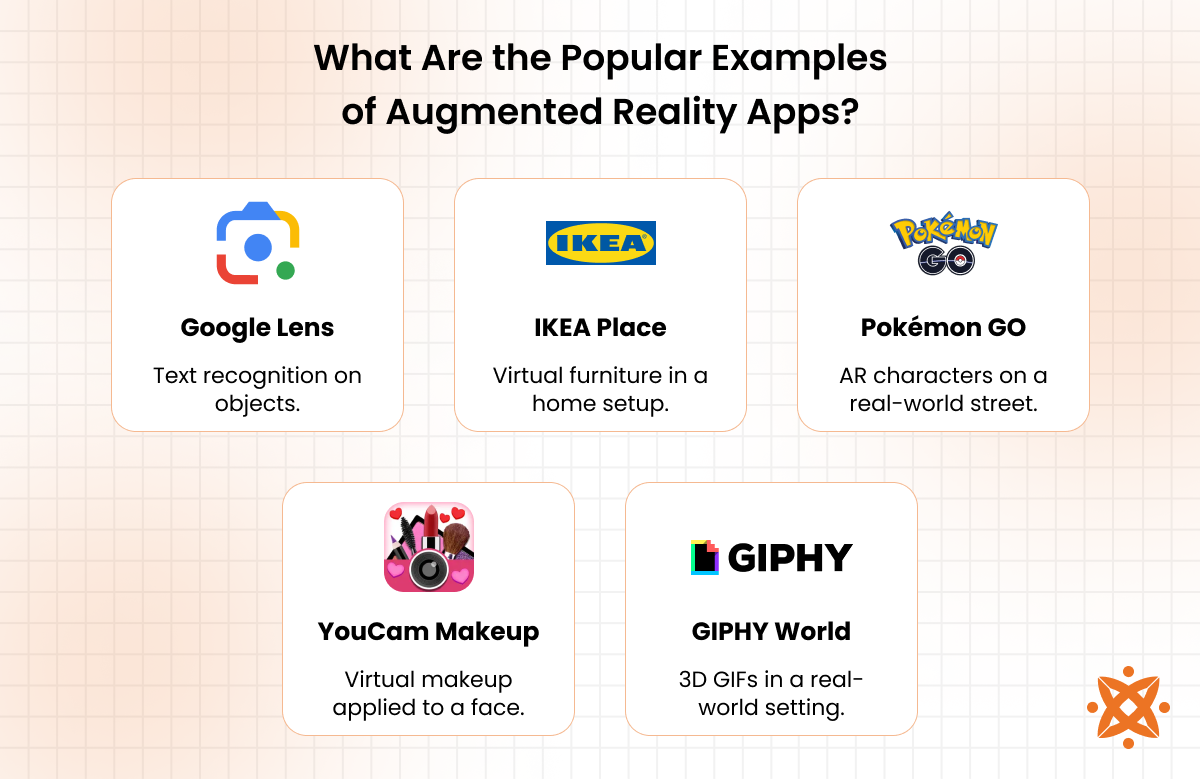
The most popular examples of AR apps are as follows:
Google Lens is an AI-powered AR app that turns your smartphone camera into a visual search tool. Users can identify items, translate text, or explore landmarks by pointing the camera at objects, texts, or places. The app uses AR to overlay contextual information directly onto the real-world view, making it highly intuitive and user-friendly.
The app's practical uses range from scanning QR codes to extracting contact details from business cards and shopping for items online by recognizing physical products. It enhances productivity and learning, making it a versatile tool for students, professionals, and everyday users.
IKEA Place is an AR-based furniture visualization app that helps users design their living spaces. With this app, customers place true-to-scale 3D models of IKEA furniture in their rooms, ensuring the items fit spatially and stylistically. The app simplifies the decision-making process for shoppers by offering a preview before purchase.
This app is particularly valuable for interior designers and homeowners experimenting with layouts. By reducing uncertainty and enhancing customer satisfaction, IKEA Place improves the shopping experience and minimizes returns, demonstrating how AR creates practical solutions in retail.
Pokémon GO is a groundbreaking AR app that combines gaming with real-world exploration. Players use their smartphones to find and capture virtual Pokémon that appear in real-world locations, encouraging them to walk, explore, and engage with their environment. The game also features gym battles, trading, and events that foster community interaction.
The app's success lies in its blend of location-based AR and social elements, which make it entertaining and engaging. It revolutionized mobile gaming and showcased AR's potential for mass-market adoption, with millions of players around the globe embracing this interactive experience.
GIPHY World is a creative AR app that allows users to insert 3D GIFs into their surroundings, creating playful and dynamic scenes. The app uses AR to place these animations in the real world, which users then capture and share with friends on social media.
Its fun, casual appeal makes it a favorite for social interactions and creative expression. Whether decorating a room with animated stickers or creating surreal visuals, GIPHY World highlights how AR is used for entertainment and personal creativity.
YouCam Makeup is an advanced AR app designed for beauty enthusiasts. Using facial recognition and AR overlays, it allows users to try out makeup products virtually in real time. Users experiment with their new look without applying any products, from lipstick and eyeshadow to full makeup looks.
This app is useful for casual users and sweetens online shopping for beauty retailers. Personalized recommendations and virtual try-ons help shoppers make confident purchasing decisions, reduce returns, and increase engagement with beauty brands.
Augment is an AR app tailored for businesses to showcase 3D models of products in real-world settings. Whether for retail, architecture, or manufacturing, this app enables customers and clients to visualize items in their intended environments, facilitating decision-making and presentations.
Augment's focus on productivity supports collaboration and enhances the customer experience. It's particularly valuable for industries requiring precise visualization, making it a powerful tool for professionals and marketers aiming to demonstrate their ideas effectively.
Houzz exploits AR to alter the home improvement and interior design experience. Its "View in My Room" feature enables users to place 3D models of furniture, decor and lighting into their spaces, allowing them to visualize and plan renovations or redecorations with confidence.
This app is ideal for homeowners and professionals, offering inspiration and practicality. By providing an immersive shopping and design experience, Houzz bridges the gap between imagination and reality, making home improvement more accessible and enjoyable.
AR Ruler turns your smartphone into a virtual measuring tool. Using AR to map surfaces and dimensions, users measure distances, angles, and areas with their device's camera, eliminating the need for physical tools.
This app is highly practical for professionals in construction, architecture, and DIY enthusiasts. It simplifies tasks like estimating room dimensions or planning layouts, saving time and effort while ensuring precision.
Pokémon GO exemplifies the fusion of AR and location-based gaming. Players interact with virtual Pokémon scattered across real-world locations, encouraging physical activity and exploration. Social features like battles and events add a communal element, making the app a global phenomenon.
Its innovative gameplay demonstrates AR's ability to create immersive and engaging experiences. The success of Pokémon GO paved the way for other AR apps in gaming and beyond, proving the technology's broad appeal.
Quiver combines traditional coloring with AR to create an interactive experience. Users start by coloring printed pages and then use the app to bring their creations to life as animated 3D models. These models retain the user's unique coloring, making the experience highly personalized.
Quiver is perfect for children and educators, as it adds a layer of fun to learning and creativity. It showcases how AR engages young minds, encouraging creativity while blending digital and physical activities.
The main features of augmented reality (AR) apps are real-time interaction, spatial awareness, and immersive content integration. These features combine to create engaging and flawless experiences by blending the physical and digital worlds. AR apps ensure users interact naturally and intuitively with augmented elements.
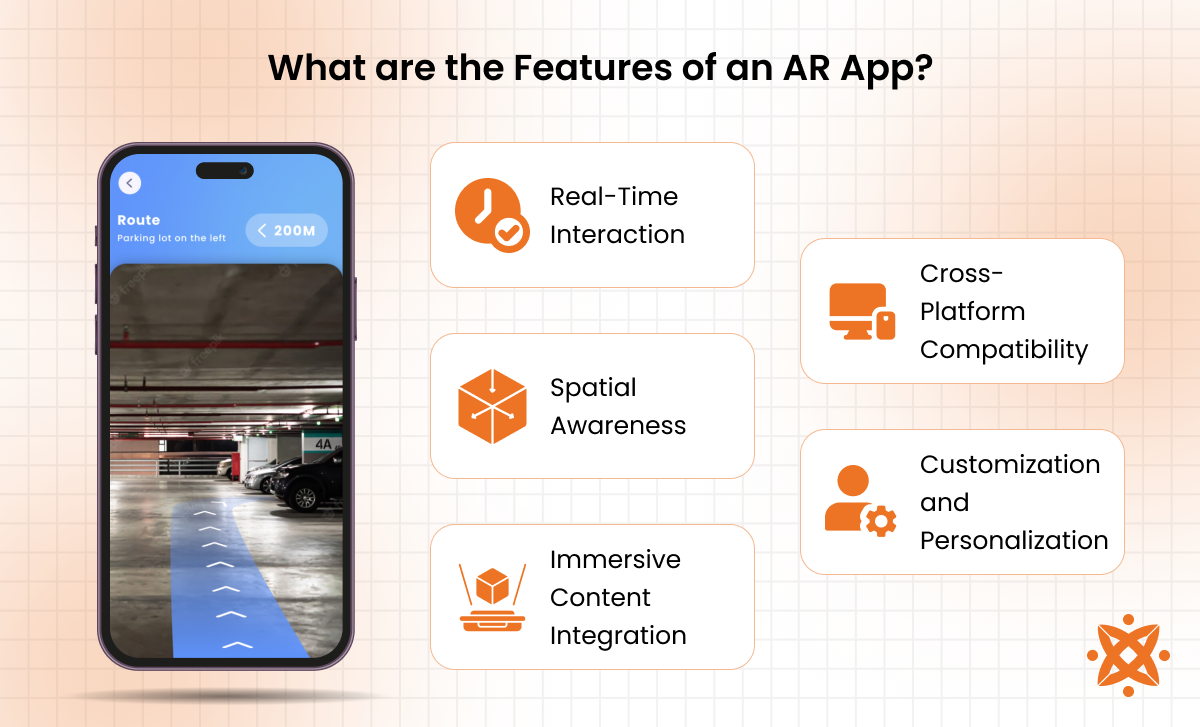
The main features of AR apps are as follows:
The different applications for augmented reality (AR) apps are in industries such as education, healthcare, eCommerce, and entertainment. AR apps improve user experiences by providing interactive, immersive, and practical solutions customized to the needs of each sector.
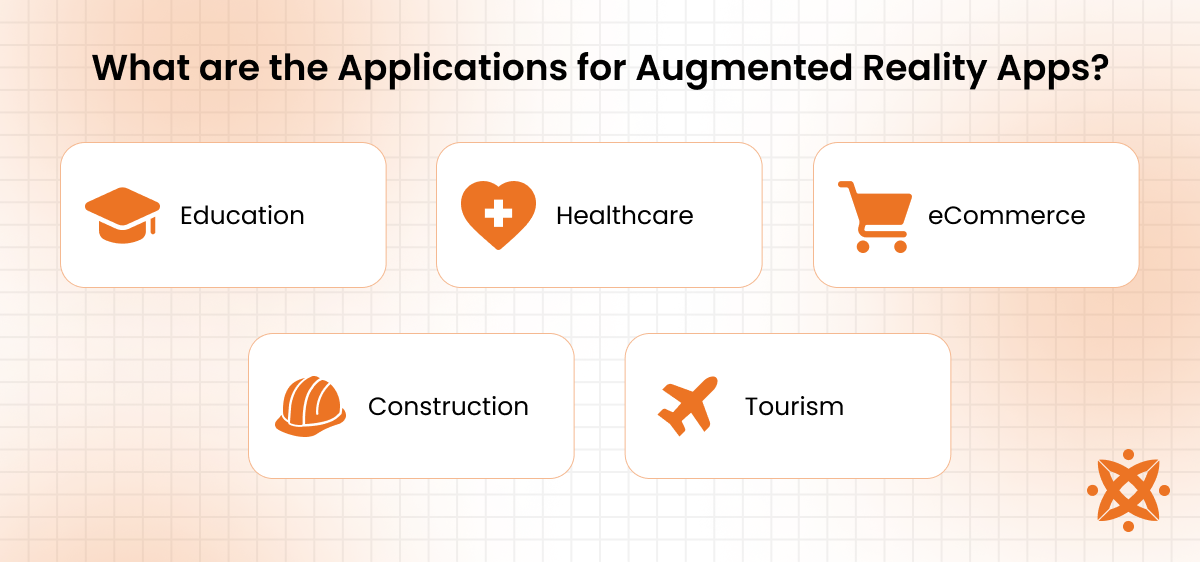
The different applications for AR apps are as follows:
To develop and design augmented reality (AR) apps for Android and iPhone, developers follow a structured process that includes planning, selecting the right AR frameworks, and implementing advanced AR features. Augmented Reality development framework ensures that apps are optimized for platform-specific capabilities while maintaining cross-platform support for broader usability.
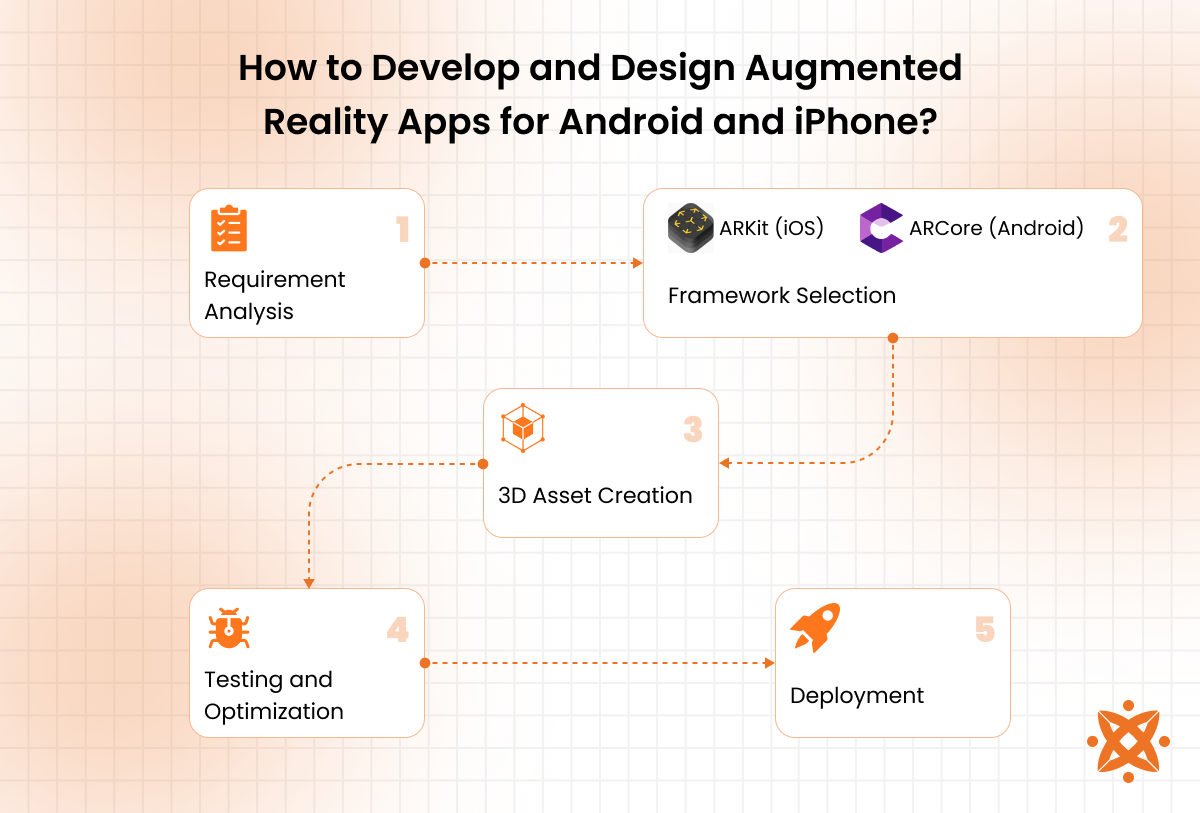
To develop and design mobile AR apps for Android and iPhone, the following steps are employed:
Developing AR apps for Android involves platform-specific tools and frameworks like ARCore. The process focuses on creating interactive experiences through markerless AR technology, using 3D modeling tools, and optimizing performance for a wide range of Android devices.
The Android Augmented Reality app design and development process involves the following steps:
Developing AR apps for iPhone involves utilizing Apple's ARKit and advanced iOS-specific tools like Xcode and Swift. The process emphasizes utilizing iPhone's hardware, such as LiDAR, and creating flawless AR experiences optimized for iOS.
The iPhone Augmented Reality app design and development process involves the following steps:
The cost of developing augmented reality (AR) apps ranges from £10,000 - £30,000, depending on the app's complexity and features. Simple AR applications, such as basic marker-based apps, cost between £5,000 and £10,000, while complex and feature-rich apps, such as those with advanced markerless AR technology, 3D modeling, or integration with IoT devices, range from £100,000 to £150,000.
Several factors influence the cost of AR app development. These include the app's complexity, AR technology (e.g., marker-based, markerless, or projection-based), and the development platform (Android, iOS, or cross-platform). Custom 3D modeling, premium AR development frameworks like ARKit or ARCore, and hardware integration, such as LiDAR or AR headsets, also play a significant role.
The level of interactivity, content personalization, and ongoing maintenance or updates further impact the overall cost of developing augmented reality (AR) apps. Businesses should carefully evaluate their requirements and budget constraints to plan effectively for AR app development.
The common challenges in AR app development are hardware limitations, AR content creation complexity, and ensuring excellent user experiences across platforms. These challenges require innovative solutions and careful planning to deliver high-quality and reliable applications.
Hardware limitations pose a significant challenge, as AR apps rely on advanced sensors, cameras, and processors to function effectively. Not all devices are equipped to handle AR's demands, which impact app performance and accessibility. Creating realistic and engaging AR content is complex, requiring expertise in 3D modeling, animation, and specialized use of AR development frameworks.
Ensuring a perfectly integrated user experience across platforms adds another layer of difficulty. Developers must address differences between Android and iOS ecosystems, integrate markerless AR technologies, and optimize apps for varying screen sizes and hardware capabilities. These challenges emphasize the need for skilled developers and robust testing to deliver immersive and consistent AR experiences.
The main difference between an augmented reality app and a virtual reality app is how they interact with the real world. Augmented reality (AR) apps overlay digital elements onto the physical environment, enriching real-world interactions. In contrast, virtual reality (VR) apps fully immerse users in a simulated environment, blocking out the real world entirely.
AR apps, such as AR games or interior design tools, use cameras and sensors to blend virtual objects with real-world settings. Virtual Reality apps, on the other hand, require specialized hardware, such as VR headsets, to create 360-degree environments for gaming, simulations, or training. While AR improves reality, VR replaces it, offering entirely distinct use cases and user experiences.
To choose an Augmented Reality App development company, prioritize their expertise in AR technologies, such as ARKit, ARCore, and markerless AR. Verify their portfolio for successful projects that align with your industry and app requirements, ensuring they have a proven track record of delivering quality AR apps.
Consider their ability to provide cross-platform support, handle complex 3D modeling tasks, and offer post-development maintenance services. Other evaluation factors include the company's reputation, client reviews, communication process, and understanding of your specific business needs. A well-rounded approach ensures you partner with a company that delivers innovative and reliable AR solutions.
The main qualification for an augmented reality app developer is proficiency in AR development frameworks like ARKit, ARCore, or Vuforia. These frameworks form the foundation of AR app development, enabling developers to integrate features like object recognition, motion tracking, and 3D rendering.
Depending on the platform, developers must also have a strong grasp of programming languages such as Swift, Kotlin, C#, or UnityScript. Skills in 3D modeling and design tools like Blender or Maya are necessary for creating realistic virtual assets. Knowledge of user interface (UI) and user experience (UX) design ensures great interactions with AR content.
Strong problem-solving abilities, attention to detail, and experience with cross-platform development are also paramount for addressing the unique challenges of AR app development. Collectively, these qualifications enable developers to create engaging and functional AR applications.
Sign up now and get notified when we publish a new article!
Co-Founder
Hey there. I am Dhaval Sarvaiya, one of the Founders of Intelivita. Intelivita is a mobile app development company that helps companies achieve the goal of Digital Transformation. I help Enterprises and Startups overcome their Digital Transformation and mobile app development challenges with the might of on-demand solutions powered by cutting-edge technology.
