


Co-Founder

The Android Operating System is a widely used mobile operating system developed by Google that powers billions of devices worldwide. Known for its open-source platform, Android provides developers and users with a versatile ecosystem that enables effortless integration across smartphones, tablets, and even wearable devices.
With access to the Google Play Store, Android is the backbone of countless Mobile Apps, offering unparalleled accessibility and functionality for a diverse global audience. As of November 2024, Android had a 71.42% market share worldwide.
The core features of the Android Operating System include its customisable Android User Interface, robust app ecosystem, and regular Security Updates. Users benefit from intuitive navigation, multitasking, and support for the Latest Android Versions, which ensure compatibility with evolving technologies.
This adaptability makes Android a leader in innovation, catering to both casual users and professionals seeking advanced functionalities.
Developing an Android OS mobile app requires adherence to specific guidelines and tools. Key requirements include knowledge of programming languages like Java or Kotlin, familiarity with the Open-source Platform, and access to fundamental resources such as Android Studio and the Google Play Store developer console.
These components empower developers to create secure, high-performance apps tailored to modern devices, keeping them at the forefront of the growing mobile app industry.
The Android Operating System is a versatile and widely used mobile operating system designed primarily for touchscreen devices like smartphones and tablets.
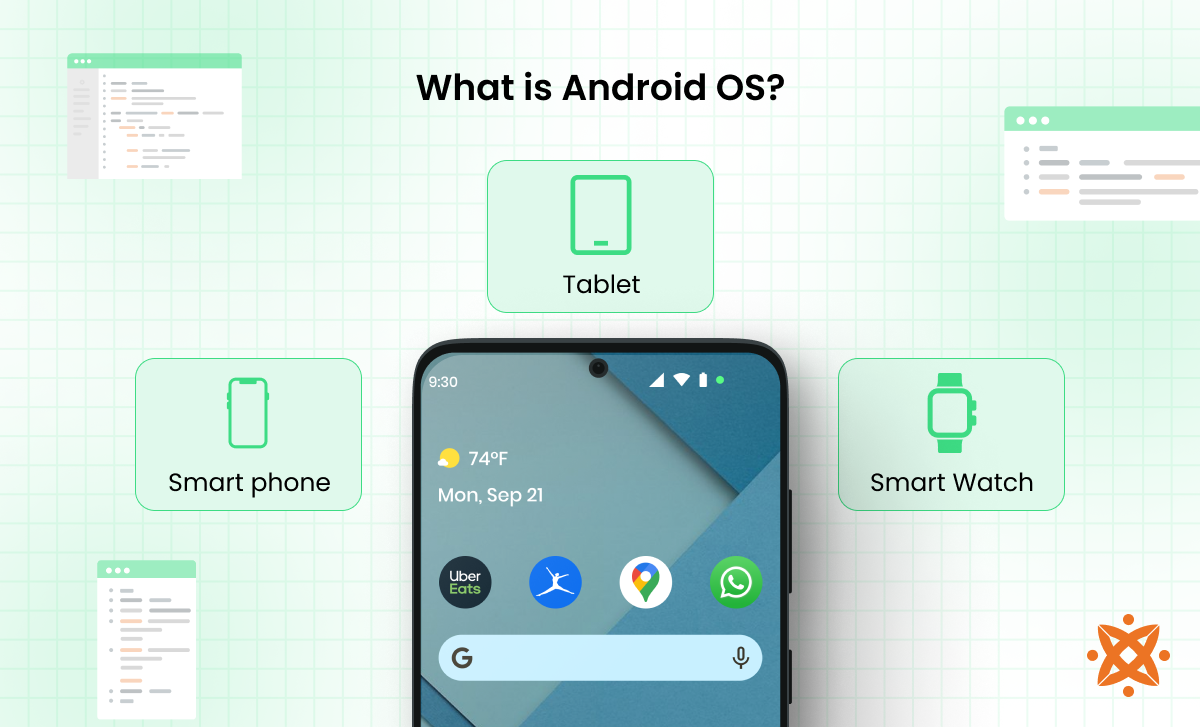
Developed with a focus on customisation and user experience, it is based on the Linux kernel and supports a wide range of applications. Known for its open-source platform, Android allows developers to create diverse apps and functionalities, making it one of the most adaptable operating systems globally.
The Android Operating System drives a vast ecosystem of Android devices, enabling users to perform various tasks such as communication, navigation, entertainment, and productivity.
It supports millions of apps available on the Google Play Store and offers features such as multitasking and an intuitive user interface. The OS also provides robust system features such as voice commands and advanced security options.
Google acquired the Android Operating System in 2005. Under its stewardship, Android has evolved into a market-dominating operating system, powering billions of devices worldwide. Google continuously updates Android to introduce innovative features, improve user experiences, and improve security, solidifying its position as a leader in the tech industry.
Android, as an entity, does not have a direct net worth. Its integration with Google's ecosystem significantly contributes to the company's overall valuation. As of December 2024, Alphabet Inc. (Google's parent company) has a market capitalisation of approximately $2.409 trillion, according to a report by Companies Market Caps.
Android drives substantial revenue for Google through the Google Play Store, app advertisements, and services like Google Cloud, making it a cornerstone of Google's financial success. As of November 2024, Android has a 71.42% market share worldwide. In the US, over 3 billion Android devices are currently active, according to a report by Backlinko.com.
According to a report by Statista, Android holds a substantial market share in the UK, powering over 45.5% of all smartphones as of June 2024. The operating system is particularly popular among younger demographics, who value its customizability and affordability. With access to millions of apps on the Google Play Store, Android continues to dominate as a leading mobile operating system in the UK.
The different versions of Android OS are Android 12, Android 13, and Android 14, showcasing the platform's ongoing innovation and adaptability. Each version builds upon its predecessor, introducing improved features and capabilities to meet evolving user needs. The latest, Android 14, accentuates performance and accessibility with advanced AI-driven features and optimisations for foldable devices and tablets.
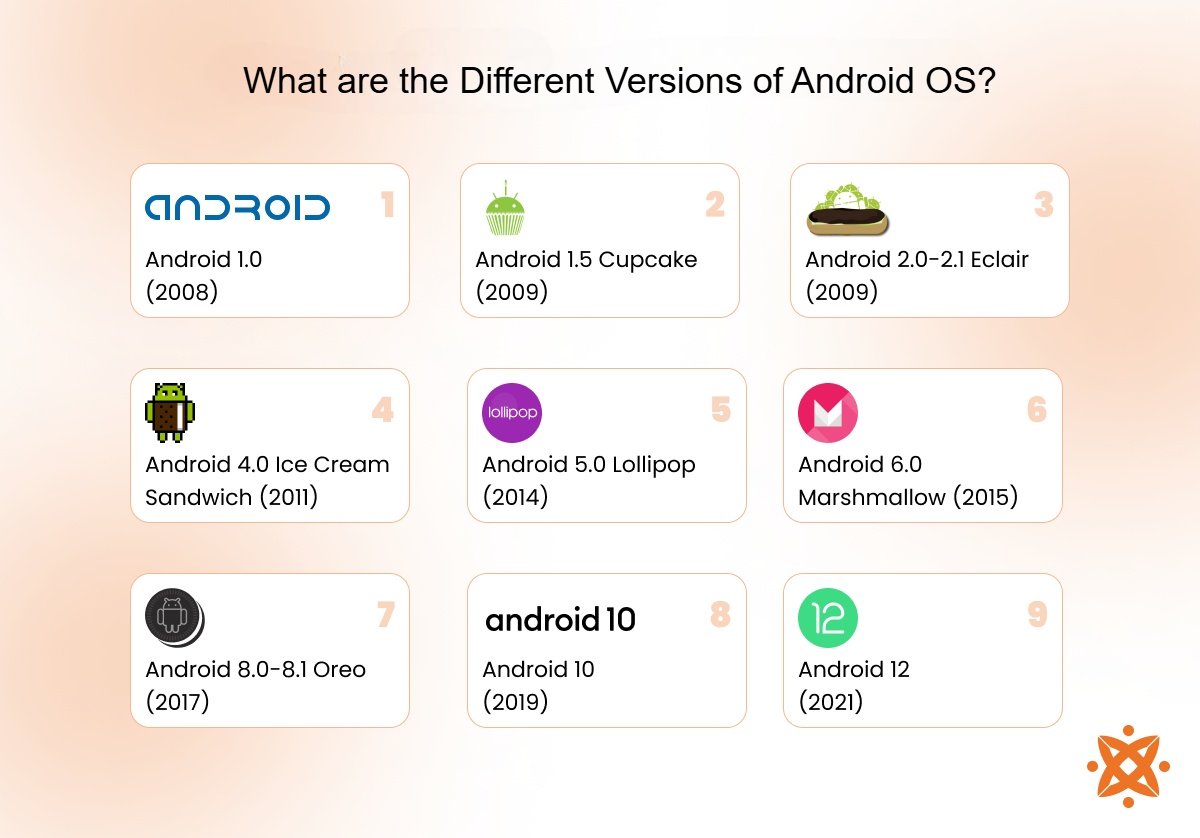
The different versions of Android OS are as follows:
Android uses various hardware platforms, including ARM, x86, and x86-64 architectures, to power its wide range of Android devices. These hardware platforms provide the necessary computational capability and compatibility to support Android's mobile operating system, ensuring improved performance and adaptability across different devices.
ARM (Advanced RISC Machine) is the most commonly used platform for Android devices. Known for its energy efficiency and performance balance, ARM is widely adopted in smartphones, tablets, and wearables. Its design prioritises power-saving, making it ideal for devices requiring long battery life. ARM's broad adoption in Android stems from its compatibility with the system's kernel support and system features.
Android devices, such as laptops and certain tablets, predominantly use the x86 architecture. Developed by Intel, this platform offers high performance and is optimised for multitasking. Android's open-source platform ensures that x86 devices run the OS efficiently, meeting the needs of users seeking powerful computing abilities on Android-based hardware.
An extension of x86, x86-64 supports 64-bit processing, enabling faster performance and the ability to handle larger memory capacities. This platform is particularly suited for high-performance Android devices and applications requiring substantial computational resources. It improves device compatibility checks, ensuring integration of Android's features on advanced hardware.
Yes, Android OS is open source. The operating system is based on the Linux kernel and released under the Android Open Source Project (AOSP), which allows developers to access, modify, and distribute their source code freely. This open-source platform enables widespread customisation and adaptability, making it a favourite among device manufacturers and developers. Some components, like Google Play Services and certain system features, are proprietary and not open source.
The main difference between Android desktop OS and Android mobile OS is their primary design purpose. Android desktop OS is optimised for larger screens and multitasking, while Android mobile OS is designed for smaller, touch-based devices like smartphones and tablets.
Android desktop OS, such as Chrome OS with Android app support, caters to desktop and laptop users and includes features like windowed apps, mouse and keyboard compatibility, and advanced system features for productivity. On the other hand, Android mobile OS prioritises a user interface suited for touch gestures, one-handed use, and mobile connectivity.
The two also differ in device compatibility checks—desktop OS variants support x86-64 hardware platforms, whereas the mobile OS predominantly runs on ARM. Both platforms leverage the open-source platform nature of Android to deliver versatile and adaptable experiences.
The main difference between Android OS and Android System is that Android OS refers to the entire mobile operating system responsible for running Android devices, while Android System refers to the core components and services within the OS that manage fundamental functions like notifications, system updates, and device performance.
Other differences include their scope and functionality. Android OS encompasses the complete framework, including user-facing features, app ecosystems like the Google Play Store, and hardware platform support such as ARM and x86 architectures. In contrast, the Android System operates behind the scenes, ensuring the proper functioning of system features like battery optimisation, connectivity, and kernel support.
Android OS defines the user experience and the interface, while the Android System ensures that the underlying processes work effortlessly to provide a stable and efficient platform.
Android OS works by serving as a bridge between the device hardware and the applications, ensuring streamlined communication and functionality. At its core, Android is built on the Linux kernel, which provides fundamental kernel support for hardware components like processors, memory, and peripheral devices. The OS manages system resources, ensuring efficient multitasking, security, and performance across various hardware platforms, including ARM, x86, and x86-64 architectures.
The Android Operating System functions through layers. The base layer is the Linux kernel, which handles hardware interactions. Above it sits the Android Runtime (ART), which enables apps to run efficiently. The application framework layer offers APIs and system services like notifications, UI rendering, and location services, making it easier for developers to build apps. Finally, the user interface layer provides a customisable experience, allowing users to interact with apps and system features intuitively.
Android's modularity, facilitated by its open-source platform, enables device manufacturers to tailor the OS to their products while maintaining device compatibility checks. This adaptability, paired with features like the Google Play Store, ensures that Android runs efficiently on a wide range of devices, from smartphones to tablets and smart TVs.
The history of Android OS began in 2003 when it was founded by Andy Rubin, Rich Miner, Nick Sears, and Chris White as a startup focused on creating an operating system for digital cameras. Later, the vision shifted to developing a mobile operating system, and in 2005, Google acquired Android Inc., setting the stage for its global expansion.
The first Android version, Android 1.0, was launched in 2008 alongside the HTC Dream (T-Mobile G1). It introduced basic smartphone functionalities like a web browser, email, and the Google Play Store (then Android Market).
Over the years, Android's evolution has been marked by significant milestones, such as the introduction of touchscreen interfaces, app widgets, and advanced system features like voice commands and biometric security.
From early versions like Cupcake and Eclair to modern iterations like Android 12 and 13, the platform has consistently innovated to improve user experience and device compatibility checks. It has also diversified to control devices beyond smartphones, including tablets, smart TVs, and wearables.
Android's open-source platform and adaptability have made it a dominant force in the global tech ecosystem, with billions of active users worldwide.
The core features of an Android OS include its open-source nature, customisable user interface, and extensive app ecosystem. These features make Android one of the most versatile and widely used mobile operating systems globally. The OS's adaptability allows manufacturers to tailor it to different hardware platforms while users benefit from a feature-rich experience with broad app compatibility.
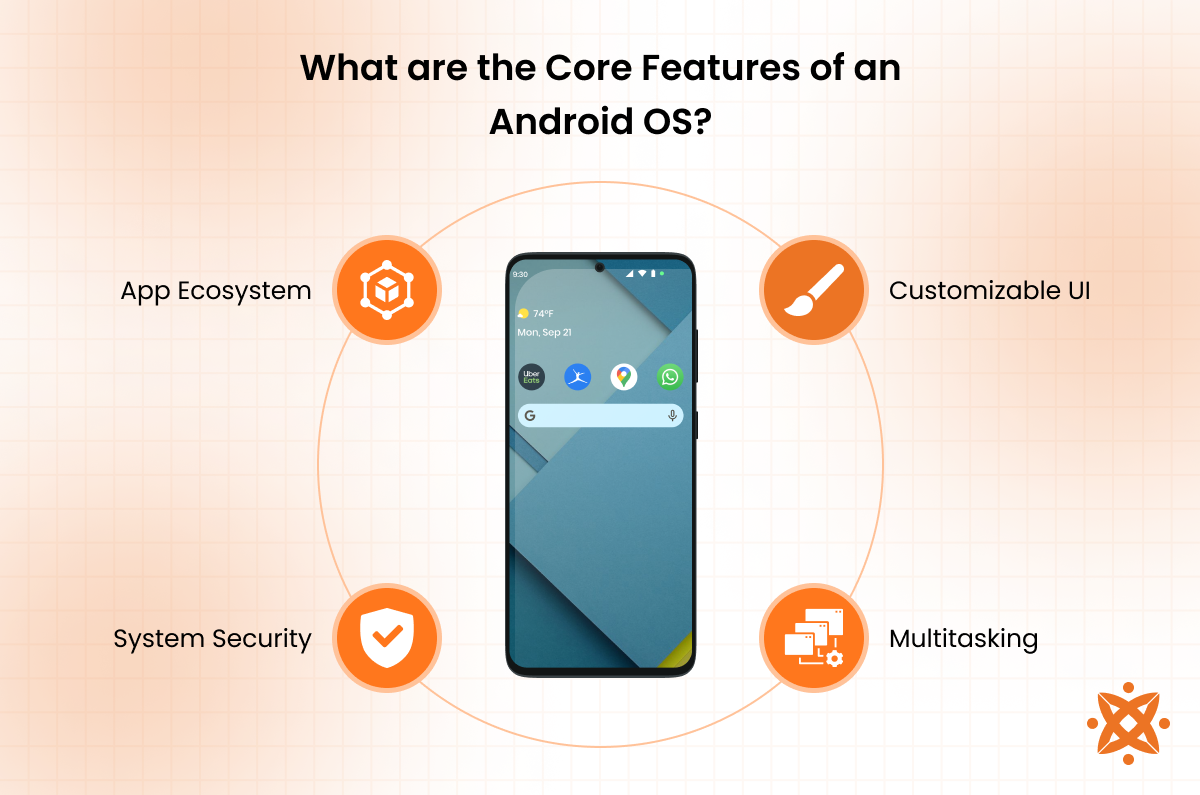
The core features of an Android OS are as follows:
The advantages of Android OS are its customizability, wide hardware compatibility, and app diversity, whereas fragmentation, security risks, and resource dependency stand out as significant disadvantages. These characteristics highlight the OS's flexibility and challenges, making it both versatile and complex.
The advantages of Android OS are as follows:
The disadvantages of Android OS are as follows:
The requirements for developing an Android mobile app include a development environment, programming skills, and app design frameworks. These components are important for building functional and engaging applications tailored to Android devices.
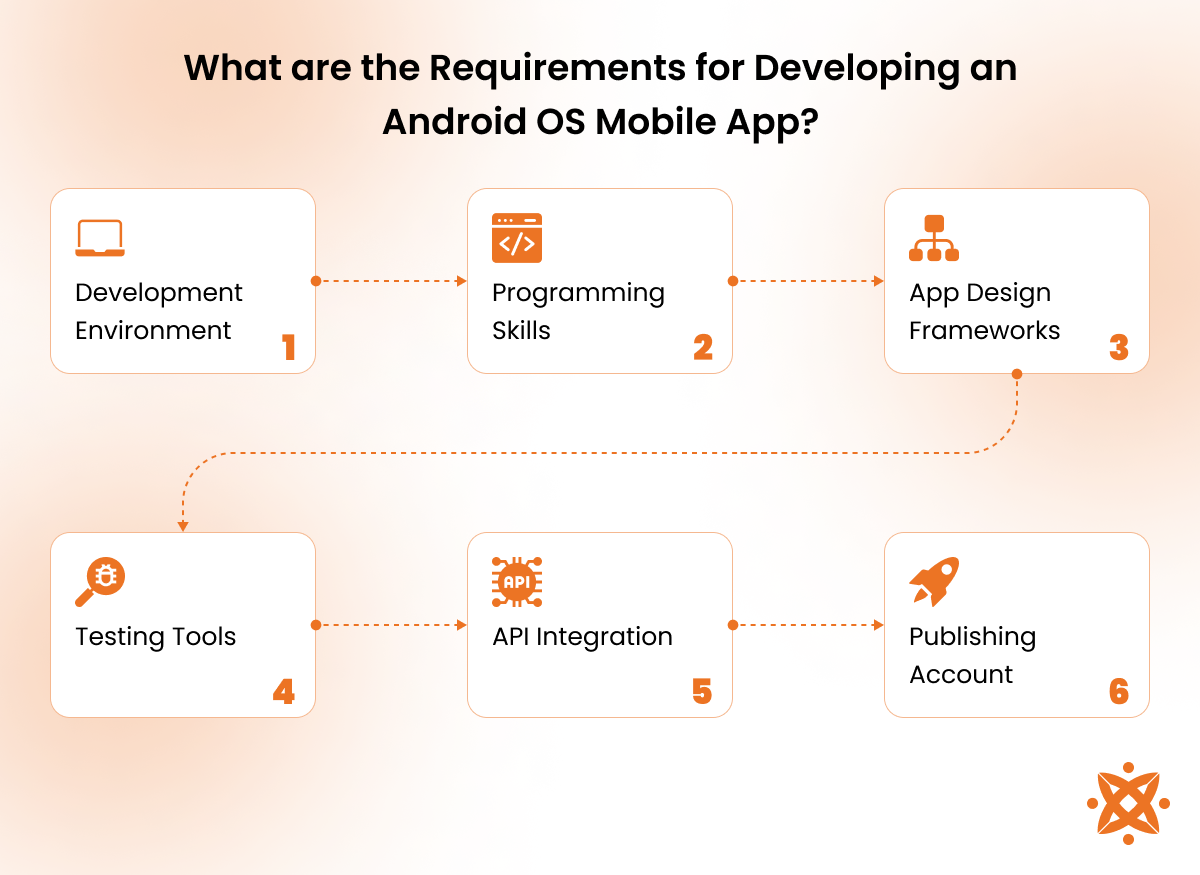
The requirements for developing an Android OS mobile app are as follows:
A robust development environment is the foundation of Android app development. Android Studio is the official IDE, offering features like intelligent code editing, debugging tools, and performance analysis. It includes a Gradle-based build system for efficient app compilation and an emulator that mimics various Android devices for testing.
Additional tools, such as the Android SDK (Software Development Kit), provide libraries, APIs, and command-line utilities to streamline the development process. Mastering these tools ensures an efficient workflow and app development.
Android development requires proficiency in Java or Kotlin. Kotlin, the preferred language for modern Android apps, offers concise syntax and robust safety features, such as null safety. Developers must also understand Android-specific libraries, such as Jetpack, for lifecycle management and UI components. Knowledge of object-oriented programming (OOP), multithreading, and memory management is important for building scalable and efficient apps that perform well across various devices.
App design frameworks, such as XML for layout design and Material Design guidelines, are required to create intuitive and visually appealing user interfaces. Material Design offers a comprehensive set of design principles and components, including typography, motion, and layout grids, ensuring consistency across Android devices.
XML files define the app's UI elements, while tools like ConstraintLayout and Compose simplify layout creation. These frameworks ensure that apps are user-friendly and comfortably adapt to different screen sizes and resolutions.
Testing is a necessary phase of Android app development, ensuring functionality, performance, and stability. Tools like Espresso enable automated UI testing, while Firebase Test Lab allows developers to test apps on various physical and virtual Android devices. Unit testing frameworks like JUnit ensure individual components work as intended. Debugging tools in Android Studio, such as Logcat and Profiler, help identify performance bottlenecks and memory leaks, ensuring the app meets quality standards.
Android apps need to be compatible with a wide range of devices and hardware architectures, including ARM, x86, and x86-64. Developers must also optimise apps for different screen sizes, resolutions, and aspect ratios to provide a consistent user experience. Knowledge of backward compatibility managed through Android's Support Library and Jetpack ensures apps run effectively on older OS versions without compromising functionality.
APIs enable apps to communicate with external services and expand functionality. Familiarity with RESTful APIs is important for tasks like retrieving data from a server or integrating third-party services such as social media, maps, or payment gateways. Android-specific APIs, like Google Maps API for location-based services or Firebase for cloud storage and real-time database access, allow developers to improve app features and provide dynamic user experiences.
A Google Play Developer Account is required to distribute apps on the Google Play Store. The one-time registration fee allows developers to publish and manage their apps, access analytics tools, and respond to user reviews. Publishing involves creating a detailed app listing with descriptions, screenshots, and promotional content. Developers must also adhere to Google's Play Store policies and perform regular updates to maintain app visibility and user trust.
Programming languages that are used to develop Android OS apps include Java, Kotlin, C++, and Dart. These languages are integral to Android development, with each serving different purposes and offering distinct advantages.
Programming languages that are used to develop Android OS apps are as follows:
The best practices for Android app development are optimising app performance, following Material Design guidelines, and ensuring compatibility across devices. These practices provide an integrated, user-friendly experience while maintaining efficiency and reliability.
The best practices for Android app development are as follows:
Android OS alternatives are iOS, HarmonyOS, and Ubuntu Touch. These operating systems offer unique features and cater to various user needs, providing diverse options for mobile devices beyond Android.
Android OS alternatives are as follows:
The main difference between Android OS and iOS is their level of openness. Android is an open-source platform that allows extensive customisation by users and manufacturers, whereas iOS is a proprietary system exclusive to Apple devices with a more controlled and uniform experience.
Android powers a wide range of devices from various manufacturers, whereas iOS is restricted to Apple products such as iPhones and iPads. Android apps are distributed primarily through the Google Play Store, while iOS apps are accessed through the Apple App Store. Both systems offer unique ecosystem experiences tailored to their user bases.
The main difference between Android OS and Chrome OS is their target use cases. Android is a Mobile Operating System designed for smartphones and tablets, whereas Chrome OS is a lightweight, web-centric operating system primarily intended for laptops and Chromebooks.
Android OS focuses on running apps locally on devices, offering a rich ecosystem of applications for various purposes. In contrast, Chrome OS is optimised for cloud-based computing, with most applications running via the Chrome browser. While Android apps run on Chrome OS (via compatibility features), the core design philosophy of the two systems remains distinct.
The main difference between Android OS and Windows OS is their target platforms. Android is a Mobile Operating System designed for smartphones and tablets, while Windows OS is a desktop and laptop operating system geared toward productivity and enterprise environments.
Android OS relies on ARM and x86-64 architectures for mobile devices, offering touch-centric interfaces and app-based ecosystems. In contrast, Windows OS supports a broader range of hardware platforms, including PCs and servers, and provides a more traditional desktop experience with extensive software support for professional and personal use.
The main difference between Android OS and HarmonyOS is their underlying architecture and ecosystem focus. Android is built on the Linux kernel and primarily targets smartphones and tablets, while HarmonyOS is a distributed operating system designed for cross-device connectivity, including IoT devices.
Android OS powers a vast ecosystem of Android Devices, offering extensive customisation and app availability through the Google Play Store. HarmonyOS, developed by Huawei, accentuates integration across a variety of devices, such as smart TVs, wearables, and smartphones, providing a unified and connected user experience.
The main difference between Android and Linux is their purpose. Android is a Mobile Operating System built on a modified version of the Linux kernel, specifically tailored for smartphones, tablets, and other consumer devices, while Linux is a general-purpose, open-source operating system used across servers, desktops, and embedded systems.
Android adds a user-friendly interface, app ecosystem, and features designed for mobile users, making it suitable for consumer electronics. In contrast, Linux offers greater flexibility for developers, administrators, and professionals who need control over system features, with no specific focus on mobile platforms.
The best Android OS emulators are BlueStacks, NoxPlayer, and Android Studio Emulator. These emulators provide powerful tools for running Android apps on PCs or testing apps during development. Each offers unique features tailored to different user needs.
The best Android OS emulators are as follows:
To choose an Android app development company, you should evaluate their expertise, portfolio, and ability to deliver tailored solutions. Look for companies with a proven track record of developing innovative, user-friendly Android apps and a clear understanding of your business needs.
To choose an Android app development company, the following things are considered:
If you're in the UK, consider Intelivita, a leading Android app development company known for delivering innovative solutions tailored to diverse business needs.
Sign up now and get notified when we publish a new article!
Co-Founder
Hey there. I am Dhaval Sarvaiya, one of the Founders of Intelivita. Intelivita is a mobile app development company that helps companies achieve the goal of Digital Transformation. I help Enterprises and Startups overcome their Digital Transformation and mobile app development challenges with the might of on-demand solutions powered by cutting-edge technology.
